
Service guide Life · Nation
Retirement and investing: learn the parts first
Understand accounts, investments, risk, and fees before making a long-term financial decision.
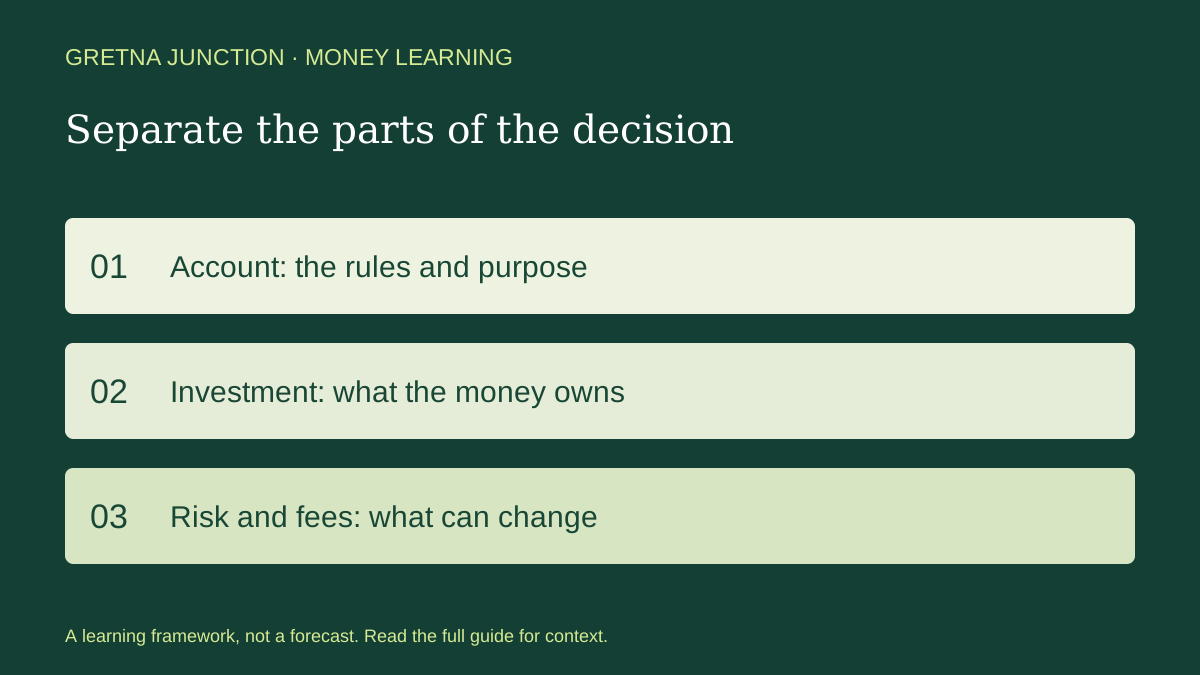
Image provenance · CIE 100/100
Assessment applies to the credited image record and its editorial context. Image delivery, pixels and the pictured event’s current status require separate verification. Receipt: 1d51e34d-fc2a-4559-9a48-7c183a2ea8be
Image & publication standards →In this story
Separate the account from what it holds
An investment account is the arrangement that holds your money and investments. The investments are the assets inside it.
A retirement account can have particular tax rules without making everything held in it safe. An employer plan, an individual retirement account, and an ordinary brokerage account are not interchangeable labels.
Begin with a blank page divided into 'account rules' and 'investment choices.' Under account rules, write questions about eligibility, contributions, taxes, access, and beneficiaries.
Under investment choices, write questions about risk, costs, and what the investment actually owns. This distinction makes a benefits packet or financial conversation easier to follow without requiring an immediate purchase.
Understand what a workplace plan promises
A defined-benefit plan generally uses a formula to promise a retirement benefit. A defined-contribution plan, such as a 401(k), builds an individual account whose value depends on contributions and investment results.
Some employers contribute or match employee contributions. Each plan's documents explain its specific conditions.
When reading your packet, circle unfamiliar terms instead of guessing. Ask when participation begins, how employer contributions work, whether ownership of those contributions depends on service, and where to find the fee information.
Record the answer and the document that supports it. This lesson does not choose a contribution amount or account type for you.
Connect risk to the goal and time
Investment values can fall. Time horizon means when you expect to need the money; risk tolerance includes your willingness and ability to absorb a loss.
A long period before retirement and a payment due next month create different planning questions. Inflation also matters because a dollar may buy less as prices rise.
Consider two fictional goals: replacing an essential appliance soon and supporting living expenses decades from now. Write what would happen if the money for each goal lost value before you needed it.
The exercise does not select an investment. It helps explain why a goal's timing and consequences belong in the decision, alongside the hope of growth.
Learn diversification and compounding carefully
Asset allocation divides money among categories such as stocks, bonds, and cash. Diversification spreads exposure among investments.
Both address risk, but neither promises that a portfolio cannot lose money. Owning several funds also does not automatically mean their holdings differ; a useful question is what each fund actually contains.
Compounding means returns can themselves generate later returns when they remain invested. Losses and fees still affect the outcome.
A smooth calculator line is a model built from assumptions, not a preview of the market. When exploring a calculator, label every assumed return and compare more than one scenario rather than treating the most attractive result as a promise.
Ask what the decision costs
Investment costs can include account charges, transaction costs, fund expenses, and charges for professional advice. Even a fee that looks small can affect a long-term result.
Ask for an explanation of all applicable costs and how the person or firm is paid. Compare like with like: a quoted fee may describe only one layer.
Before signing, try explaining the arrangement in ordinary language: what you own, how you could lose money, when you can access it, and what you pay. If a key answer is missing, add it to your question list.
Current tax rules and contribution limits belong in current official guidance and your plan documents; they are intentionally not quoted here.
Make an investment question card
Write one future goal and an approximate date. Add five questions: What account is this?
What investment would it hold? How could I lose money?
What are the access rules? What are the total costs?
If you have a workplace plan, locate the document that answers one question without making an investment change.
About this learning guide
General financial education. Examples are fictional and do not describe local residents or predict financial results.
Cultural & community review
Assessment passed This recorded version passed its cultural and community assessment.
- Reviews the cultural and community context of this editorial item.
- Source, rights and publisher checks remain separate.
- It does not score people or certify every fact.
Read the assessment record & limits
- This record applies to the identified content revision. Later changes require another assessment.
- Asset
- gj:article:gj-money-retirement-investing-basics
- Engine
- ct.algorithm.cie.v1 · 1.0.1
- Receipt
- 89b102d7-f340-4ba7-b425-ecc73f611618
- Assessed
- Revision
- sha256-0669581dd33bc51d641a83db70935bd041f788e1221676626569daa2b96e0bf9
- Record state
- eligible · PASS
- Binding
- BOUND
Sources & verification
Source date/version: Undated; reviewed September 19, 2026. Scope: Saving versus investing, compounding, retirement accounts
Read the sourceSource date/version: Undated; reviewed September 19, 2026. Scope: Defined-benefit and defined-contribution plans
Read the sourceSource date/version: Undated; reviewed September 19, 2026. Scope: Investment uncertainty, volatility and purchasing power
Read the sourceSource date/version: Undated; reviewed September 19, 2026. Scope: Time horizon, allocation and diversification
Read the sourceSource date/version: Undated; reviewed September 19, 2026. Scope: Investment costs and questions to ask
Read the sourceThis article was written with AI assistance from the linked sources. No firsthand interview or visit is implied. Source dates and limits are identified in the reporting. Advertising does not determine editorial coverage. Request a correction or read our standards.
EVERY NEIGHBOR HAS A VOICE
Keep the conversation going.
Share experiences, ask questions and link evidence for factual claims. Automated publication checks apply to each submitted version. Comments are independent community discussion, not submissions to a government body.
Sign in to join · freeCommunity standards