
Service guide Life · Nation
Build a buffer for the next surprise
Choose a manageable first savings target, a practical place to keep it, and a plan for using and rebuilding it.
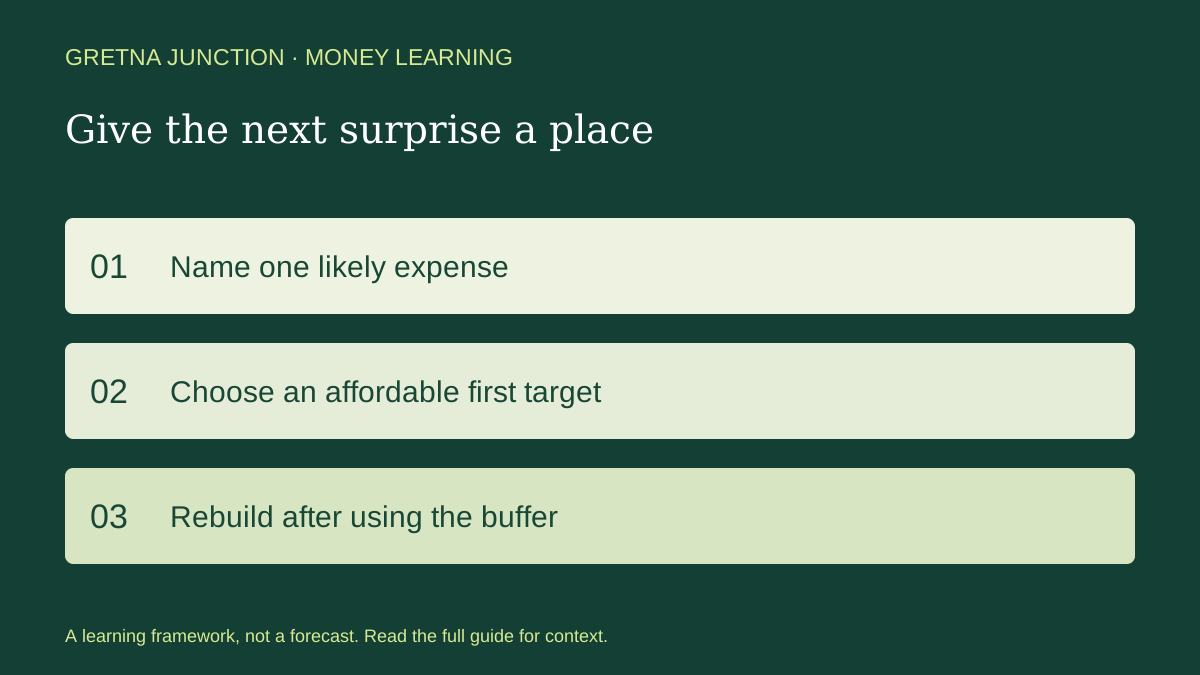
Image provenance · CIE 100/100
Assessment applies to the credited image record and its editorial context. Image delivery, pixels and the pictured event’s current status require separate verification. Receipt: a380a6cc-6460-4812-889a-b8ec8b6b7e61
Image & publication standards →In this story
Choose the problem your buffer will solve
An emergency buffer is money reserved for an unplanned expense or interruption in income. It can be modest and still useful.
The CFPB advises choosing a target that reflects your own circumstances rather than assuming one number fits every household. Think about the surprise that would most quickly disrupt your next week: a necessary repair, a missed shift, or an urgent household expense.
Write a first milestone you can picture. Perhaps it is enough to handle one small repair without borrowing.
That is an illustrative goal, not a recommended dollar amount. A concrete first milestone gives a beginning saver something closer to reach than a distant, intimidating total.
Distinguish a surprise from a known bill
A bill that arrives once a year can feel unexpected even when its date is predictable. Keep a separate list of known irregular expenses: renewals, school purchases, routine maintenance, or a planned trip.
These are useful candidates for their own small reserve. The emergency buffer then has a clearer purpose.
Imagine two notes on a refrigerator: one says 'vehicle registration in November'; the other says 'urgent repair, date unknown.' The notes represent different planning problems.
The first needs a calendar and an amount to set aside over time. The second needs a flexible cushion.
You may initially keep both amounts in one account, but track their jobs separately.
Compare access, costs, and protection
Money for urgent needs should be reasonably accessible. Before choosing where to keep it, ask how quickly you can withdraw it, what fees apply, whether a minimum balance is required, and what happens if a card or phone is unavailable.
The CFPB's savings worksheet compares security, costs, and access across several options. Cash kept at home can be lost, stolen, or damaged.
For an account, ask the institution to explain any applicable federal deposit or share insurance and account ownership rules. Do not assume that every app balance or investment has the same protection.
This lesson does not quote insurance limits or identify a preferred institution. Compare the actual account agreement, including how transfers work.
Make contributions fit real cash flow
A contribution plan must leave enough money for immediate obligations. Automatic transfers can be convenient, but check the timing against deposits and upcoming drafts.
If pay varies, a manual transfer after reviewing the week's bills may be easier to control. Low-balance alerts and a record of pending payments can help you notice pressure before a fee occurs.
Try a small experiment for two pay cycles. Write the intended contribution, the amount actually moved, and whether moving it caused a shortfall elsewhere.
Adjust the experiment from those observations. Saving $10 and then paying a fee because the transfer was mistimed is a signal to change the method, not a reason to abandon the goal.
Write a use-and-rebuild rule
Decide in advance what would justify using the buffer. A useful household prompt is: Is this necessary now, unplanned, and difficult to cover from ordinary spending?
Your answer depends on your circumstances. The point is to reduce indecision when a stressful situation arrives, not to create a punishment for needing your own savings.
After using the money, record what happened and choose a realistic next contribution. The balance going down for its intended purpose is not evidence that the buffer failed.
In a Gretna or Pittsylvania household, the right plan is the one that helps protect the needs you actually have, including work transportation and caregiving responsibilities when those apply.
Write a one-page buffer plan
Name one disruption you want to be better prepared for, a first target, the proposed storage location, and one question about fees or access. Add your next possible contribution date and a sentence explaining when you would use the money.
Review the plan after two pay cycles; revise the contribution if it competes with essentials.
About this learning guide
General financial education. Examples are fictional and do not describe local residents or predict financial results.
Cultural & community review
Assessment passed This recorded version passed its cultural and community assessment.
- Reviews the cultural and community context of this editorial item.
- Source, rights and publisher checks remain separate.
- It does not score people or certify every fact.
Read the assessment record & limits
- This record applies to the identified content revision. Later changes require another assessment.
- Asset
- gj:article:gj-money-emergency-buffer
- Engine
- ct.algorithm.cie.v1 · 1.0.1
- Receipt
- 64a20689-d9c0-4950-b2fc-a696ecc92047
- Assessed
- Revision
- sha256-bf560dcd78bf5c1cb580785654f948f36c3a007e526d08532aa4cb386626cf5a
- Record state
- eligible · PASS
- Binding
- BOUND
Sources & verification
Source date/version: 2025-10-29 (page modified); reviewed September 19, 2026. Scope: Emergency reserve purpose, individual goal, contribution and replenishment
Read the sourceSource date/version: Undated; reviewed September 19, 2026. Scope: Access, security and costs of savings locations
Read the sourceSource date/version: 2018-11 (file version; no publication date printed); reviewed September 19, 2026. Scope: Fees, account balances, alerts and deposit availability
Read the sourceSource date/version: 2018-11 (file version; no publication date printed); reviewed September 19, 2026. Scope: Specific goals linked to household values
Read the sourceThis article was written with AI assistance from the linked sources. No firsthand interview or visit is implied. Source dates and limits are identified in the reporting. Advertising does not determine editorial coverage. Request a correction or read our standards.
EVERY NEIGHBOR HAS A VOICE
Keep the conversation going.
Share experiences, ask questions and link evidence for factual claims. Automated publication checks apply to each submitted version. Comments are independent community discussion, not submissions to a government body.
Sign in to join · freeCommunity standards