
Service guide Life · Nation
Read your credit report and challenge an error
Separate reports from scores, review the details methodically, and document a specific dispute.
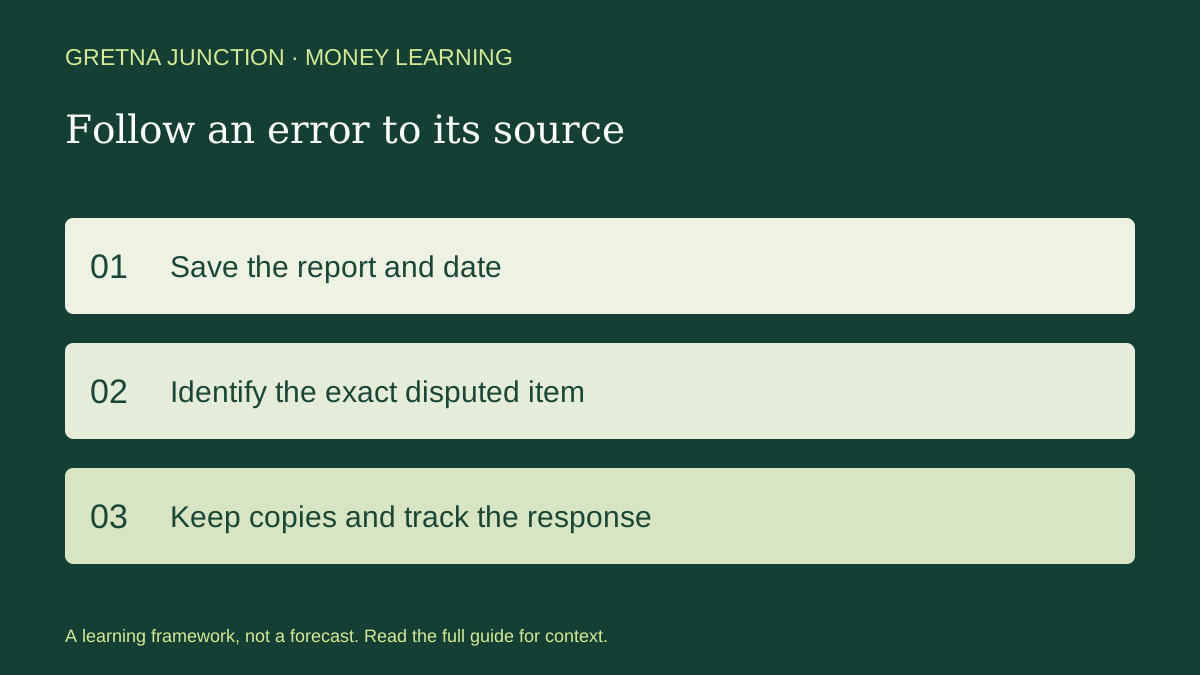
Image provenance · CIE 100/100
Assessment applies to the credited image record and its editorial context. Image delivery, pixels and the pictured event’s current status require separate verification. Receipt: c223bdee-757b-4a83-91b6-7af9f5ac9143
Image & publication standards →In this story
A report is the record behind a score
A credit report contains information about your credit accounts and payment history. A credit score is a calculation based on report information.
You can have different scores because models, source data, and calculation dates differ. A score displayed in an app is therefore not a substitute for reading the underlying reports.
Approach the review as a records check. You are looking for whether the information describes you and your accounts accurately.
You do not need to understand every scoring formula first. For someone preparing to rent, borrow, or simply organize household records, a specific factual question is more useful than repeatedly refreshing a number.
Use the official request route
The FTC identifies AnnualCreditReport.com as the authorized website for the free annual reports provided under federal law. Its current guidance also describes free weekly online access from the three nationwide bureaus.
Start through the FTC's link or carefully type the official address, rather than following an unsolicited message or an advertisement offering repairs.
Review reports from Equifax, Experian, and TransUnion because their information can differ. Keep the reports somewhere private.
If you use a shared computer, avoid leaving downloaded copies, open browser sessions, or printed pages behind. This lesson never asks you to upload a report or enter identifying information into Gretna Junction.
Check in small passes
Make your first pass through identifying information: name and addresses. On the second pass, inspect accounts, balances, payment status, and your relationship to each account.
On the third, look for inquiries or entries you do not recognize. The CFPB's review worksheet provides a structured checklist.
An unfamiliar company name is a reason to investigate, not automatic proof of fraud.
Use three notes beside each questioned item: what the report says, what you believe is correct, and what record could support that belief. For example, a fictional report may show an account open after you received a closure confirmation.
The useful evidence is the confirmation and relevant dates, rather than a general statement that the report is bad.
Make the dispute specific
The CFPB advises contacting both the reporting company showing the error and the company that supplied the information. Explain the item, why you believe it is wrong, and the correction you want.
Include copies of relevant supporting documents, not originals. Follow current instructions for the chosen dispute channel and keep proof of what you submitted.
A clear note might say: 'This account is reported as open. My attached confirmation shows it closed on the stated date.
Please investigate and correct its status.' That is an illustrative sentence, not a complete dispute letter.
Use the actual facts of your situation. Do not challenge accurate information simply because it is unfavorable.
Keep a follow-up trail
Create a private log with the submission date, recipient, confirmation number, and requested correction. Save the response and compare it with the issue you raised.
If you provide more information later, keep that version too. A short timeline can prevent repeated work and make a follow-up conversation clearer.
If unfamiliar activity suggests identity theft, follow IdentityTheft.gov through the CFPB's guidance for recovery steps. If a reporting problem remains after a direct dispute, review the current CFPB complaint instructions before submitting.
No lesson or dispute can promise a particular score increase or deletion. The practical aim is an accurate record and a documented response to a clearly described problem.
Build a private review checklist
Write four headings: identity, accounts, payment status, and inquiries. Review one report in short sessions, noting only questions you can state precisely.
For one questioned item, list the supporting record and the recipient of a possible dispute. Use fictional account labels on any practice sheet you share with another learner.
About this learning guide
General financial education. Examples are fictional and do not describe local residents or predict financial results.
Cultural & community review
Assessment passed This recorded version passed its cultural and community assessment.
- Reviews the cultural and community context of this editorial item.
- Source, rights and publisher checks remain separate.
- It does not score people or certify every fact.
Read the assessment record & limits
- This record applies to the identified content revision. Later changes require another assessment.
- Asset
- gj:article:gj-money-credit-report-review
- Engine
- ct.algorithm.cie.v1 · 1.0.1
- Receipt
- 66ec4190-b524-4f19-89a5-21d5b97eb8ed
- Assessed
- Revision
- sha256-ad716f87cea1abd438feac39bde4e35924408ff13b9d18b3ae3368a0740a2eba
- Record state
- eligible · PASS
- Binding
- BOUND
Sources & verification
Source date/version: 2020-09-01 (reviewed); 2021-11-12 (modified); reviewed September 19, 2026. Scope: Reports versus scores; multiple scoring models
Read the sourceSource date/version: 2026-06 (page date); reviewed September 19, 2026. Scope: Official report request channel and reviewing all three bureaus
Read the sourceSource date/version: Undated; reviewed September 19, 2026. Scope: Identity, account, status and inquiry review; not older report-frequency details
Read the sourceSource date/version: 2026-09-02 (reviewed and modified); reviewed September 19, 2026. Scope: Dispute recipients, supporting copies, recordkeeping and identity-theft referral
Read the sourceSource date/version: 2026-07-15 (page modified); reviewed September 19, 2026. Scope: Complaint channel and direct-dispute prerequisite
Read the sourceThis article was written with AI assistance from the linked sources. No firsthand interview or visit is implied. Source dates and limits are identified in the reporting. Advertising does not determine editorial coverage. Request a correction or read our standards.
EVERY NEIGHBOR HAS A VOICE
Keep the conversation going.
Share experiences, ask questions and link evidence for factual claims. Automated publication checks apply to each submitted version. Comments are independent community discussion, not submissions to a government body.
Sign in to join · freeCommunity standards