
Service guide Business · Nation
Build a Tax Calendar Around Your Actual Business
Organize records, verification dates, payment planning, and professional questions without guessing tax rates or deadlines.
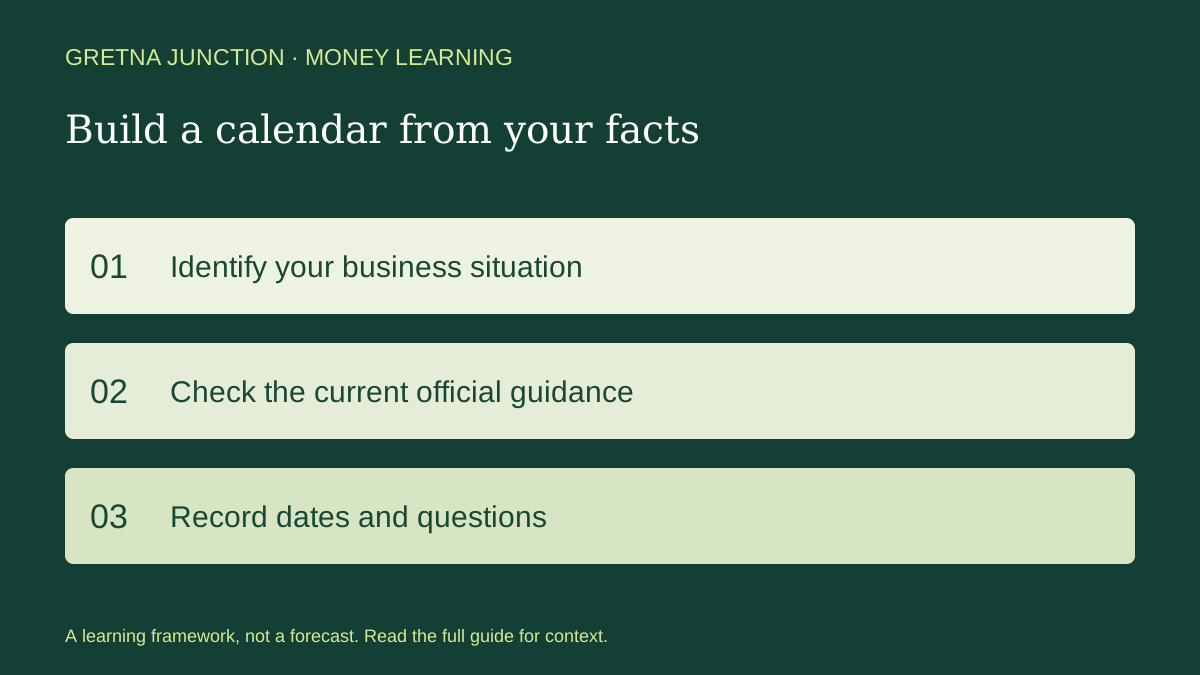
Image provenance · CIE 100/100
Assessment applies to the credited image record and its editorial context. Image delivery, pixels and the pictured event’s current status require separate verification. Receipt: d51da08a-0507-4100-91df-98d4aad63c5a
Image & publication standards →In this story
Separate three jobs
Tax organization becomes easier when you separate recording what happened, estimating what may be owed, and submitting the required payment or return. A creator can keep excellent receipts and still miss a payment deadline.
Another can set aside money yet lack the records needed to calculate a return. Each job needs an owner, a review date, and a reliable source of information.
This lesson is general U.S. small-business education for readers in Gretna Junction, Virginia. It does not determine your filing requirements or calculate your taxes.
It intentionally gives no 2026 tax-rate table, contribution limit, payment deadline, or universal reserve percentage. Those details depend on current rules and your circumstances.
Understand why planning happens during the year
The IRS describes federal income tax as paid during the year through withholding, estimated payments, or both. Self-employment income may create estimated-payment needs, and insufficient or late payments can lead to penalties.
Check the current guidance and your situation instead of assuming everything waits until the annual return. IRS estimated-tax guidance
In a hypothetical example, Avery has wage income and a growing weekend design business. A tax professional asks for expected household income, business results, prior payments, withholding, and relevant changes.
The correct answer cannot be found by multiplying one month's gross sales by a percentage copied from social media. Revenue, expenses, other income, credits, and payment history all matter to the evaluation.
Create a calendar with evidence
The IRS provides a tax calendar for businesses and self-employed people. Use the current official calendar and relevant form instructions as starting points, then confirm which entries apply.
IRS tax calendar
Avery's practice calendar has columns for obligation, agency, tax period, verified due date, preparation date, responsible person, and confirmation record. Federal and Virginia obligations belong in separate rows.
Any applicable local obligation gets its own row as well. An annual filing row and an estimated-payment row should not be merged simply because they concern the same taxpayer.
Leave a date unfilled until it is verified. Add a link or document reference and the date you checked it.
Put an earlier preparation reminder on the calendar so a missing statement or question can be resolved before the actual deadline. A reminder is an organizational aid, not evidence that a payment was made.
Treat a reserve as a planning tool
Suppose Avery has received advice to set aside a particular dollar amount based on an individualized estimate. Avery can track that reserve separately from the money planned for ordinary purchases.
The example does not supply an amount because a reserve should reflect the actual estimate. Moving money to a separate account is not the same event as paying a tax agency.
After a strong month, a lost client, or another material change, Avery updates the business records and asks whether the estimate needs revision. Paying too little and leaving too little available are different problems.
A useful plan considers both the calculation and the cash timing, without treating a reserve balance as a final tax bill.
Prepare questions before the appointment
Avery brings a transaction summary, supporting records, prior payment confirmations, and a short list of changes. The question list might ask which obligations apply, how payments should be identified, which records are still missing, and when the estimate should next be reviewed.
For a Virginia business, confirm state and applicable local requirements through their official agencies rather than assuming the federal answer covers them.
After any filing or payment, save the confirmation with the tax period and agency named clearly. Mark the calendar completed only after checking what actually happened.
This habit creates a traceable process while leaving tax calculations and legal interpretations to the appropriate current guidance and qualified help.
Make a calendar without guessing
Create separate practice rows for federal review, Virginia review, and a check for any applicable local obligation.
Add source, tax period, verified date, preparation reminder, and confirmation fields.
Leave uncertain dates blank and write the question needed to verify each one.
Which item is merely money reserved, which is a payment, and which is a filed return?
About this learning guide
Gretna Junction desk education. Hypothetical examples are for practice, not personalized financial, tax, or legal advice.
No earnings are promised.
Cultural & community review
Assessment passed This recorded version passed its cultural and community assessment.
- Reviews the cultural and community context of this editorial item.
- Source, rights and publisher checks remain separate.
- It does not score people or certify every fact.
Read the assessment record & limits
- This record applies to the identified content revision. Later changes require another assessment.
- Asset
- gj:article:gj-money-tax-planning-calendar
- Engine
- ct.algorithm.cie.v1 · 1.0.1
- Receipt
- 24710538-ae48-4ce6-a756-d8a0bb5402d1
- Assessed
- Revision
- sha256-da77c6c341454ed3405f47122898d481a6a3cad9d5a80d342f0f5d819eebb27f
- Record state
- eligible · PASS
- Binding
- BOUND
Sources & verification
Accessed 2026-09-19
Read the sourceAccessed 2026-09-19
Read the sourceThis article was written with AI assistance from the linked sources. No firsthand interview or visit is implied. Source dates and limits are identified in the reporting. Advertising does not determine editorial coverage. Request a correction or read our standards.
EVERY NEIGHBOR HAS A VOICE
Keep the conversation going.
Share experiences, ask questions and link evidence for factual claims. Automated publication checks apply to each submitted version. Comments are independent community discussion, not submissions to a government body.
Sign in to join · freeCommunity standards