
Service guide Life · Nation
When money feels urgent, pause and verify
Recognize pressure tactics, check a request independently, and know the first steps after a suspicious payment.
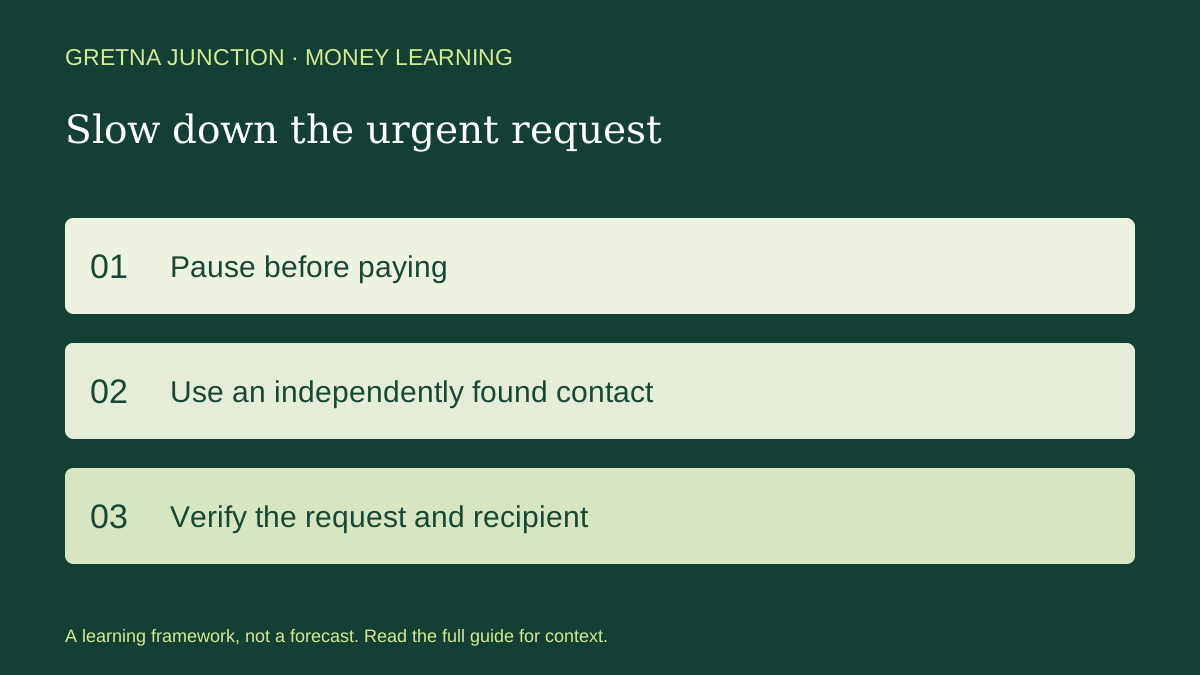
Image provenance · CIE 100/100
Assessment applies to the credited image record and its editorial context. Image delivery, pixels and the pictured event’s current status require separate verification. Receipt: 98f4f4d7-936f-4168-87d2-98fd2cdefc99
Image & publication standards →In this story
Notice the pressure before the story
A scam can arrive as a bank alert, a family emergency, a job offer, or a utility warning. The story changes; the demand for immediate action often stays the same.
The FTC describes impersonation, alarming problems or attractive prizes, pressure, and unusual payment demands as common warning signs. Caller ID alone does not establish who is contacting you.
A useful habit is to name the requested action before responding: 'They want me to send money,' or 'They want my account code.' This small pause shifts attention from the frightening story to the decision you control.
You do not have to prove a message fraudulent before taking time to verify it.
Leave the message and use a known route
If a message claims to come from a company, contact the company through a website, account app, statement, or number you already trust. Do not use the link or callback number supplied by the unexpected message.
Treat demands for gift-card codes, cryptocurrency, or a transfer to protect your money as serious warning signs.
Consider a fictional text claiming that a household's power will be disconnected unless a payment is made immediately. Instead of replying, the learner opens a saved bill and checks with the provider through that existing contact route.
This example illustrates a verification habit; it is not a report of a particular scam in Gretna or a claim about any local utility.
Practice a household response
Agree on a short phrase everyone can use: 'I need to check this through the normal channel.' Practice ending an uncomfortable call.
The phrase is not an argument with the caller and does not require the caller's permission. Its purpose is to create space for an independent decision.
For a supposed family emergency, use an established way to reach the person or another trusted contact. Decide beforehand who can serve as a second pair of eyes.
Avoid shaming someone who asks for help. A household rule that welcomes questions is more useful than a rule that makes people hide a worrying message until money has already moved.
If money or information has already been sent
Contact the bank, card issuer, payment service, or gift-card issuer immediately through a verified channel. Explain the transaction and ask whether it can be stopped or reversed.
The FTC gives instructions organized by payment method. Recovery is not guaranteed, but acting promptly is worthwhile.
Keep receipts, messages, and transaction details.
If an account password was exposed, change it through the legitimate service and enable available multifactor authentication. Follow IdentityTheft.gov if identity information has been misused.
Report the scam through ReportFraud.ftc.gov. Be cautious of a new caller demanding an advance payment to recover the first loss; verify any new claim just as carefully.
Keep the report factual and manageable
Write a brief timeline: when the contact arrived, what was requested, what you did, and which provider you contacted afterward. Separate facts you know from guesses about who was responsible.
This helps you explain the event without having to retell every detail from memory.
Virginia's Attorney General provides a consumer complaint route and an agency-search tool because different complaints belong with different offices. Use that guidance when a Virginia consumer issue needs routing.
State the resolution you seek and provide copies of relevant records. A report is a request for review or assistance, not a promise that an agency will retrieve the money.
Keep your own copy and any response.
Rehearse the pause
Invent a harmless practice message asking for an urgent payment. Identify the requested action and two warning signs.
Find the independent contact route you would use without clicking the message. Write the first provider you would contact if payment had already been sent.
Do not use real account details in the exercise.
About this learning guide
General financial education. Examples are fictional and do not describe local residents or predict financial results.
Cultural & community review
Assessment passed This recorded version passed its cultural and community assessment.
- Reviews the cultural and community context of this editorial item.
- Source, rights and publisher checks remain separate.
- It does not score people or certify every fact.
Read the assessment record & limits
- This record applies to the identified content revision. Later changes require another assessment.
- Asset
- gj:article:gj-money-scam-pause-check
- Engine
- ct.algorithm.cie.v1 · 1.0.1
- Receipt
- ef5a5336-b2a1-468f-b434-212c12521918
- Assessed
- Revision
- sha256-1e55d72cb1dab66ad8294dead4513af39964293084eb81f58cba52730383bf93
- Record state
- eligible · PASS
- Binding
- BOUND
Sources & verification
Source date/version: 2023-07 (page date); reviewed September 19, 2026. Scope: Impersonation, pressure, payment demands and independent contact
Read the sourceSource date/version: 2026-06 (page date); reviewed September 19, 2026. Scope: Immediate payment-provider contact, evidence, account security and reporting
Read the sourceSource date/version: Undated; reviewed September 19, 2026. Scope: Virginia complaint routing and requested remedy
Read the sourceThis article was written with AI assistance from the linked sources. No firsthand interview or visit is implied. Source dates and limits are identified in the reporting. Advertising does not determine editorial coverage. Request a correction or read our standards.
EVERY NEIGHBOR HAS A VOICE
Keep the conversation going.
Share experiences, ask questions and link evidence for factual claims. Automated publication checks apply to each submitted version. Comments are independent community discussion, not submissions to a government body.
Sign in to join · freeCommunity standards