
Service guide Life · Nation
A household money meeting you can repeat
Use a short, respectful conversation to turn shared priorities into clear next steps.
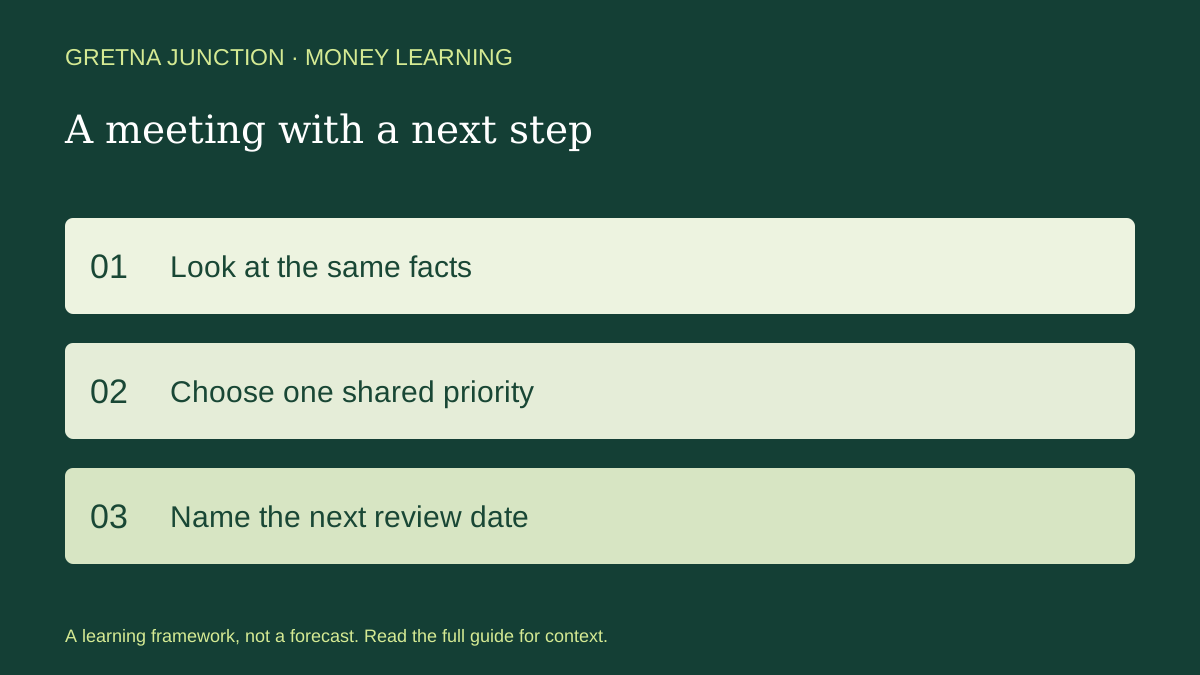
Image provenance · CIE 100/100
Assessment applies to the credited image record and its editorial context. Image delivery, pixels and the pictured event’s current status require separate verification. Receipt: 6bacb986-54ad-4903-8597-f40bead4bf03
Image & publication standards →In this story
Choose one useful purpose
A household money conversation does not have to solve every financial problem. It can answer a smaller question: What needs attention before the next payday?
The CFPB's conversation tools begin with a person's situation and goals. That is a helpful place to start when partners, relatives, or housemates approach money differently.
Set a manageable time and choose one topic in advance. A twenty-minute meeting about next week's bills has a clearer purpose than an open-ended discussion about who is better with money.
For a person managing money alone, the same structure can become a private check-in or a conversation with a trusted helper.
Start with what matters to each person
Ask everyone to name one thing they want the household's money to support. Answers might include reliable transportation, less uncertainty, time with family, education, or helping others.
Listen before debating amounts. Different answers can explain a disagreement that previously sounded like carelessness or stubbornness.
The CFPB's goal-setting worksheet connects goals to values and makes them specific and measurable. An original example is: 'Before our next meeting, we will list the costs of replacing the worn tires and decide what amount can be set aside.'
It is a clearer task than 'We should be better at saving.' The numbers and deadline must fit the household.
Use a shared page with clear boundaries
Put upcoming shared bills, expected contributions, and unresolved questions on one page. Agree on what information belongs there and who can see it.
A shared plan need not include every password, account number, or personal transaction. Consent and a useful level of detail are better starting points than demanding unrestricted account access.
Try three columns: item, person taking the next step, and date to check back. 'Ask about the bill' is incomplete until someone agrees to do it.
If one person usually handles everything, use the meeting to explain the routine and identify a backup. Understanding a bill is different from taking over another person's finances.
Replace blame with a specific observation
Compare two openings: 'You always waste money' and 'Our grocery total was higher than we planned; what changed?' The second gives the conversation something concrete to examine.
Perhaps prices changed, guests visited, work hours disrupted meal planning, or the original estimate was unrealistic. A useful response depends on the reason.
This is a suggested conversation practice, not a claim that one phrase can solve serious conflict. Agree that either person can request a pause and a return time.
Avoid making a decision while someone feels rushed or unable to ask questions. If you cannot discuss money safely, do not use this exercise to force disclosure or shared access.
Finish with one experiment and a review
Choose one action small enough to finish before the next meeting. It might be comparing two bills, checking an automatic renewal, or writing the next two paydays on a calendar.
Include a success measure: what will be done, by whom, and when? Leave unresolved issues on a separate list so they do not disappear.
At the next meeting, ask what happened rather than whether someone was good or bad. If the action was too complicated, simplify it.
If circumstances changed, revise it. End by recording the next check-in date.
A routine that survives a busy week is more useful than a perfect system that nobody wants to reopen. Keep private notes in a place everyone has agreed is appropriate.
Hold a fifteen-minute practice meeting
Use a fictional household budget if you prefer privacy. Spend three minutes naming priorities, five reviewing one upcoming issue, five choosing an action, and two recording who will do it and the next check-in date.
Afterward, ask whether the conversation felt understandable and whether the task is realistic.
About this learning guide
General financial education. Examples are fictional and do not describe local residents or predict financial results.
Cultural & community review
Assessment passed This recorded version passed its cultural and community assessment.
- Reviews the cultural and community context of this editorial item.
- Source, rights and publisher checks remain separate.
- It does not score people or certify every fact.
Read the assessment record & limits
- This record applies to the identified content revision. Later changes require another assessment.
- Asset
- gj:article:gj-money-household-money-conversation
- Engine
- ct.algorithm.cie.v1 · 1.0.1
- Receipt
- 59a91cbb-e7d3-4816-ad04-ca3feac5751f
- Assessed
- Revision
- sha256-d3ec979f43ed10424daed89fc077890868ca80854d538828ca5bd1a69f3ae586
- Record state
- eligible · PASS
- Binding
- BOUND
Sources & verification
Source date/version: 2018-11 (file version; no publication date printed); reviewed September 19, 2026. Scope: Starting a money conversation and keeping information private
Read the sourceSource date/version: 2018-11 (file version; no publication date printed); reviewed September 19, 2026. Scope: Specific goals linked to household values
Read the sourceThis article was written with AI assistance from the linked sources. No firsthand interview or visit is implied. Source dates and limits are identified in the reporting. Advertising does not determine editorial coverage. Request a correction or read our standards.
EVERY NEIGHBOR HAS A VOICE
Keep the conversation going.
Share experiences, ask questions and link evidence for factual claims. Automated publication checks apply to each submitted version. Comments are independent community discussion, not submissions to a government body.
Sign in to join · freeCommunity standards