
Service guide Life · Nation
Make sense of your first paycheck
Read your pay statement, plan around take-home pay, and prepare useful questions for payroll.
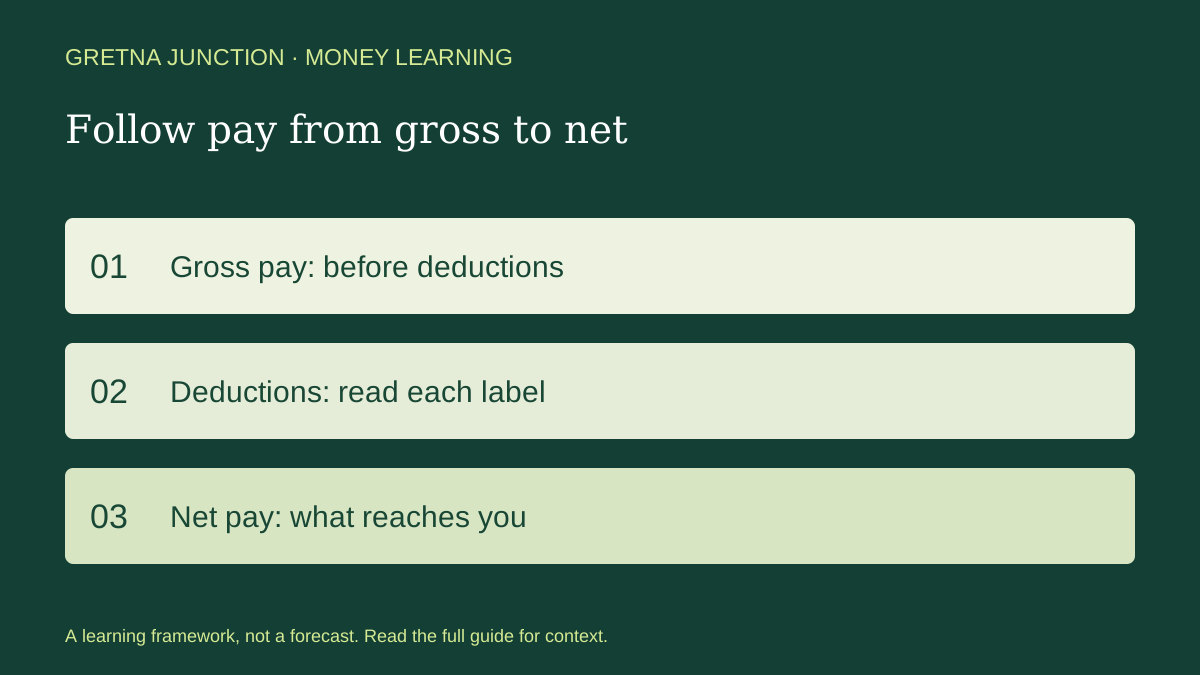
Image provenance · CIE 100/100
Assessment applies to the credited image record and its editorial context. Image delivery, pixels and the pictured event’s current status require separate verification. Receipt: ca5961bc-a9e4-4b0a-b3cd-e7caa839ebdb
Image & publication standards →In this story
Find the period the payment covers
Your first paycheck may cover fewer days than a typical check. Start by locating the pay period, payment date, and the hours or salary used for that period.
Compare them with your own records and employment information. A deposit alone does not explain how the amount was calculated.
If something is unclear, ask payroll a specific question: 'Which dates and hours are included in this payment?' Keep the response with your pay statement.
This is an organizational habit, not a conclusion that an employer made an error. A calm comparison between the statement and your records is usually more useful than guessing from the bank balance.
Separate gross pay from take-home pay
Gross pay is the amount before deductions. Net pay is what remains after taxes and other deductions, such as elected benefits, are taken out.
The CFPB's income tracker uses net income when planning money available for bills. Build your spending plan around the amount available to you, not the headline wage alone.
Use a fictional example: gross pay of $600 minus a combined $90 of deductions leaves $510 in net pay. The $90 is made up for arithmetic practice; it is not a tax estimate or a typical deduction percentage.
On an actual statement, read each deduction separately and ask what unfamiliar labels mean. Do not assume every deduction is a tax.
Understand what withholding is doing
Federal income tax withholding sends part of an employee's pay to the IRS during the year. The amount depends on earnings and the information provided to the employer.
Withholding is a payment toward tax, not a final calculation of everything you may owe. Starting another job or having other income can change the picture.
The IRS Tax Withholding Estimator uses current pay statements and other relevant records to help eligible users review federal withholding. Follow its instructions and give any updated Form W-4 to your employer.
State withholding is a separate question; ask payroll which current Virginia instructions apply to your situation. This lesson does not calculate federal or Virginia tax.
Check how and when you can use the money
Ask which payment methods the employer offers and when funds become available. Paper checks, direct deposit, and payroll cards can differ in convenience, access, and fees.
Read the terms for any account or card you plan to use. A convenient method for one person's routine may be awkward for someone else's.
For someone traveling between home, work, and caregiving responsibilities in Pittsylvania County, practical questions include where cash can be accessed, whether that access costs money, and how to get help when a card stops working. Do not share login credentials to arrange direct deposit.
Use the employer's established payroll process and verify instructions through a known contact.
Give the deposit a simple first plan
Before committing the whole amount, list what it must cover until the next payday: transportation, meals, household contributions, and other obligations that apply to you. Then identify a possible amount for a near-term goal or buffer.
The order is a way to see your choices, not a rule prescribing the same percentages to everyone.
Keep the first few pay statements and compare them. A later check may change because it covers a full period, benefit deductions begin, or your hours differ.
Mark the reason you confirm instead of assuming the first deposit will repeat. The next payday becomes easier to plan when you understand both the amount and the calendar.
Annotate a practice pay statement
Using a fictional statement or your own private copy, label pay period, gross pay, deductions, and net pay. Check the arithmetic.
List two expenses due before the next payday and one question for payroll. If using the IRS estimator, enter information only through the official IRS website and follow its eligibility instructions.
About this learning guide
General financial education. Examples are fictional and do not describe local residents or predict financial results.
Cultural & community review
Assessment passed This recorded version passed its cultural and community assessment.
- Reviews the cultural and community context of this editorial item.
- Source, rights and publisher checks remain separate.
- It does not score people or certify every fact.
Read the assessment record & limits
- This record applies to the identified content revision. Later changes require another assessment.
- Asset
- gj:article:gj-money-first-paycheck
- Engine
- ct.algorithm.cie.v1 · 1.0.1
- Receipt
- c333b310-b976-4134-88e3-370092faecd0
- Assessed
- Revision
- sha256-1b56bd6bb50bc6a4c677cecbddc51db1ab6676251de770ea94c8851954d893bc
- Record state
- eligible · PASS
- Binding
- BOUND
Sources & verification
Source date/version: 2018-11 (file version; no publication date printed); reviewed September 19, 2026. Scope: Income variability, restricted benefits, net pay
Read the sourceSource date/version: Undated in retrieved page; reviewed September 19, 2026. Scope: Withholding, estimated tax and W-4 updates
Read the sourceSource date/version: Undated in retrieved page; reviewed September 19, 2026. Scope: Estimator purpose and required records
Read the sourceSource date/version: Undated; reviewed September 19, 2026. Scope: Direct deposit, checks and payroll-card access and fees
Read the sourceThis article was written with AI assistance from the linked sources. No firsthand interview or visit is implied. Source dates and limits are identified in the reporting. Advertising does not determine editorial coverage. Request a correction or read our standards.
EVERY NEIGHBOR HAS A VOICE
Keep the conversation going.
Share experiences, ask questions and link evidence for factual claims. Automated publication checks apply to each submitted version. Comments are independent community discussion, not submissions to a government body.
Sign in to join · freeCommunity standards