
Service guide Life · Nation
A budget for weeks when your pay changes
Build a weekly money calendar that works with changing hours, seasonal work, and uneven deposits.
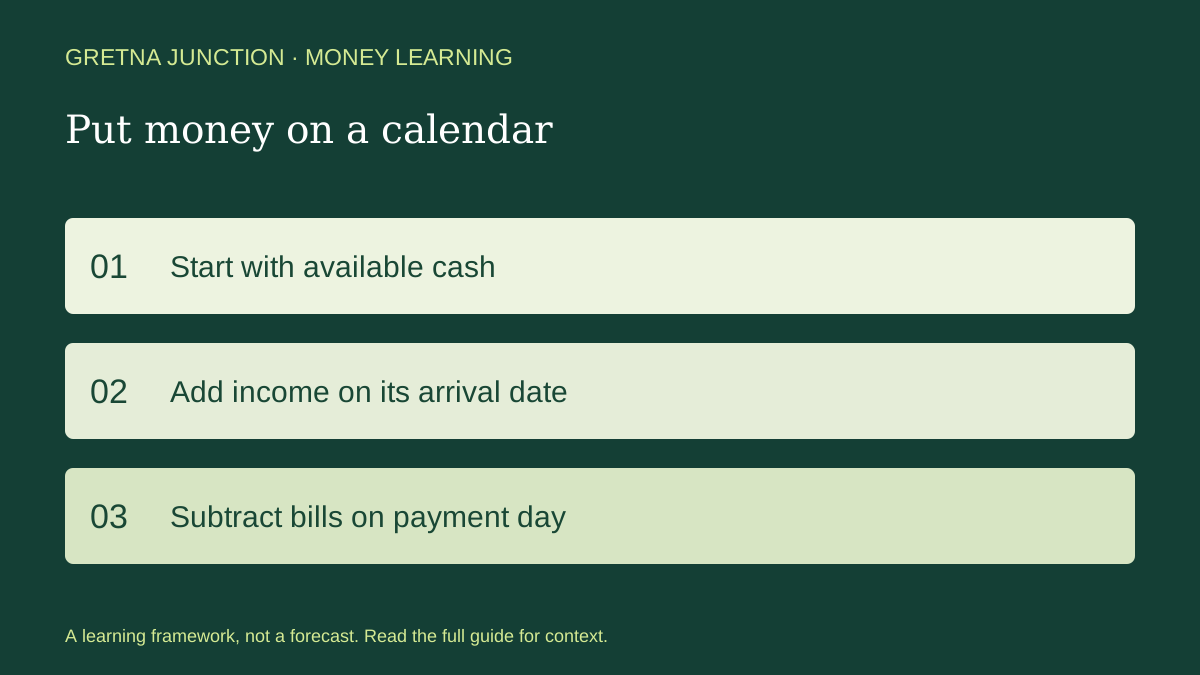
Image provenance · CIE 100/100
Assessment applies to the credited image record and its editorial context. Image delivery, pixels and the pictured event’s current status require separate verification. Receipt: c2aff7bc-41a9-4823-9be1-d2a045e0f4f2
Image & publication standards →In this story
Start with the next few weeks
A monthly budget can look balanced while Tuesday's checking balance cannot cover Tuesday's bill. That is especially frustrating when work hours change, a customer pays late, or income arrives on different schedules.
A useful starting question is: What money will actually be available before the next essential payment? For a Gretna household, include the ordinary costs of getting to work and keeping the household running; use your own amounts, not someone else's model budget.
The CFPB's cash-flow worksheet organizes money by week. Begin with spendable money already available, add income arriving during that week, and subtract planned outflows.
Carry the result into the next week. A negative week deserves attention even when the monthly total looks positive.
Separate certainty from possibility
List income in three columns: received, reasonably expected, and uncertain. Use take-home pay rather than the amount before deductions.
Mark overtime, commissions, seasonal receipts, and one-time gifts so they do not quietly become permanent promises to your budget. If benefits pay for a specific purpose, track them separately from cash you can use for any bill.
Then make two versions of the coming month. The first uses income you can reasonably count on.
The second shows what you will do if additional income arrives. This is an original planning exercise, not a prediction of your earnings.
It makes an extra shift useful without making next week's groceries depend on it.
Put dates beside the amounts
A bill calendar should show when money must leave your account, not merely when a statement arrives. Include automatic drafts and allow for the payment method's processing time.
Add paydays on the same calendar. If several payments crowd one week, ask the provider whether a different due date is available; confirm any change before relying on it.
For example, imagine a household begins Monday with $180, receives $420 on Friday, and owes $250 on Wednesday. The week ends with money left over, but Wednesday still has a $70 gap.
The possible fixes depend on the real agreement and available resources. Writing down that gap early creates time to ask questions.
Give a stronger week a job
Before spending an unusually large deposit, look ahead at the next two pay periods. Write down the amount already needed for upcoming essentials, any known irregular bill, and a possible cushion.
The remainder is the amount available for other choices. This prevents a high-income week from disguising a low-income month.
Consider two envelopes, notebook columns, or account labels: money committed to known bills and money still available to decide about. You do not need a paid budgeting app.
A piece of paper works if you update it. Choose a system that you can maintain when you are tired, busy, or away from reliable internet.
Use a short weekly reset
Pick a repeatable moment, such as after the work schedule arrives. Check what was actually paid, replace estimates with real numbers, and scan the next seven days.
If the plan is short, identify the amount and date of the gap before changing anything. Avoid treating every category as equally flexible: delaying a hobby purchase and missing a housing payment have different consequences.
A budget cannot create income that does not exist. Its value is making choices visible.
If essential costs repeatedly exceed available resources, record that pattern rather than calling it a failure of discipline. A clearer record can make a conversation with a service provider or assistance program more specific.
Make a two-week cash map
On paper, write your available starting balance, confirmed income dates, and essential payment dates for fourteen days. Calculate the running balance after each item.
Circle the earliest negative balance, if any. Write one question you can ask or one flexible purchase you can reconsider before that date.
Keep identifying account information off the worksheet.
About this learning guide
General financial education. Examples are fictional and do not describe local residents or predict financial results.
Cultural & community review
Assessment passed This recorded version passed its cultural and community assessment.
- Reviews the cultural and community context of this editorial item.
- Source, rights and publisher checks remain separate.
- It does not score people or certify every fact.
Read the assessment record & limits
- This record applies to the identified content revision. Later changes require another assessment.
- Asset
- gj:article:gj-money-budget-irregular-income
- Engine
- ct.algorithm.cie.v1 · 1.0.1
- Receipt
- df849ee2-1740-4e74-9923-239f0c0d4c91
- Assessed
- Revision
- sha256-023af38f86796fead6aa9172b73220e0290726b7e248706d83cf5c6e4c1a1d72
- Record state
- eligible · PASS
- Binding
- BOUND
Sources & verification
Source date/version: 2018-11 (file version; no publication date printed); reviewed September 19, 2026. Scope: Weekly timing and balance carry-forward
Read the sourceSource date/version: 2018-11 (file version; no publication date printed); reviewed September 19, 2026. Scope: Income variability, restricted benefits, net pay
Read the sourceSource date/version: 2018-11 (file version; no publication date printed); reviewed September 19, 2026. Scope: Payment and income calendar
Read the sourceThis article was written with AI assistance from the linked sources. No firsthand interview or visit is implied. Source dates and limits are identified in the reporting. Advertising does not determine editorial coverage. Request a correction or read our standards.
EVERY NEIGHBOR HAS A VOICE
Keep the conversation going.
Share experiences, ask questions and link evidence for factual claims. Automated publication checks apply to each submitted version. Comments are independent community discussion, not submissions to a government body.
Sign in to join · freeCommunity standards