
Explainer Sports · Virginia
Wendell Scott’s record is a racing history, a family enterprise and a lesson in delayed recognition
The Danville driver’s documented career connects competitive results, workshop skill, family work and the long distance between winning and recognition.
Checking whether this browser can read the story aloud.
Explore related topics
Sources & editorial review
Sites editorial review recorded for this exact revision. This AI-assisted article or learning resource includes source links and credited contextual imagery.
This is a local editorial review, not a canonical Cultural Imprint Engine assessment. No CIE score is claimed. Source review does not verify third-party playback, provider availability or image pixels.
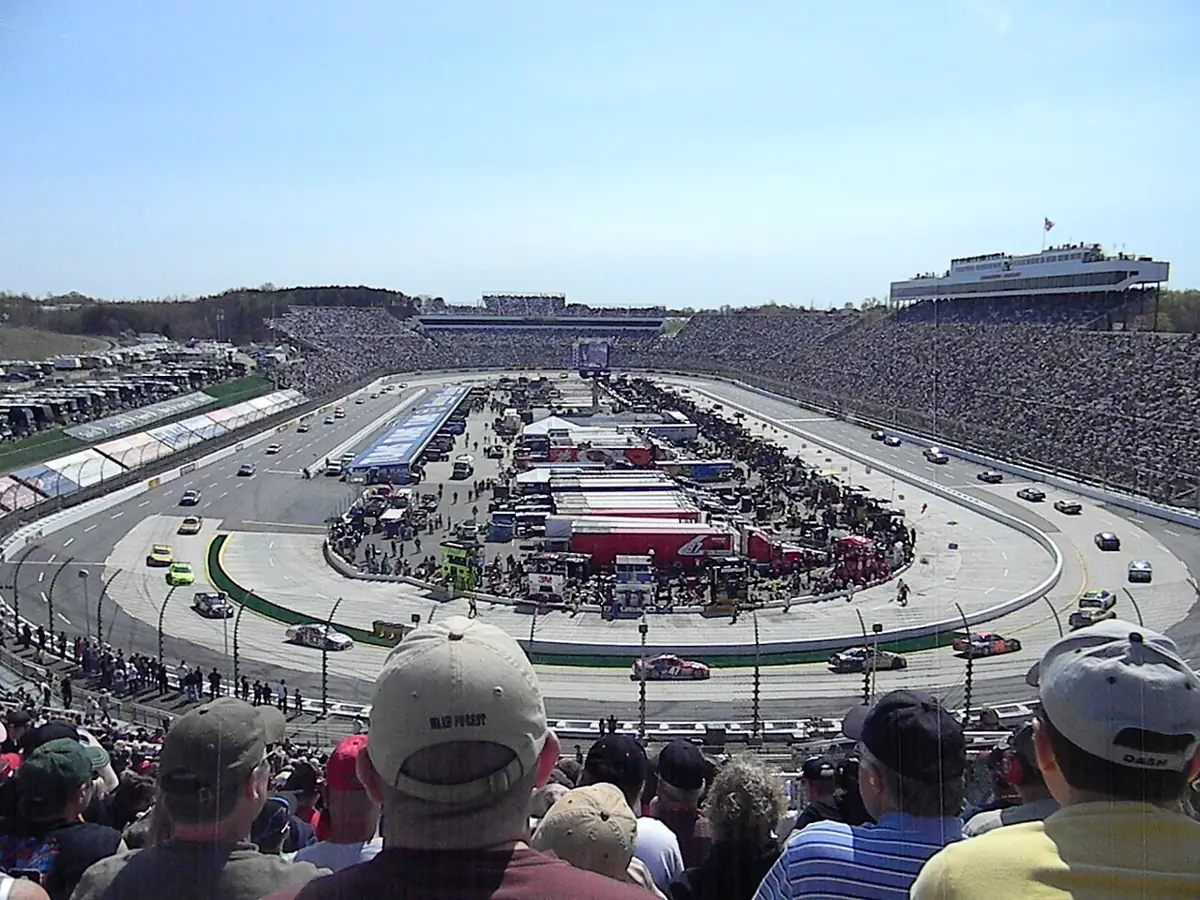
Photograph · source and license
The image, credit, reuse license, editorial context and delivered file are recorded in the exact Sites editorial review. This review is separate from the article’s canonical CIE assessment.
Image and publication standards →In this story
A victory with two dates and a missing ceremony
Wendell Scott's most famous race belongs to two different calendars. It took place in Jacksonville, Florida, on December 1, 1963, but NASCAR counts it in the 1964 season.
There is a third date in the story, too: August 2021, when the organization arranged a trophy presentation for his family. The result, the championship season and the later act of recognition describe different things.
Keep them together and the race becomes more than a trivia answer. It becomes a way of understanding how sporting history is recorded, contested and eventually presented to the public.
Scott was from Danville. That local connection does not reduce the scale of his achievement, and his national achievement should not erase the place that shaped his work.
A regional archive can connect a driver's biography with the mechanical skill, travel, accounting and family effort needed to make competition possible. It can also explain the racial barriers that affected those activities.
A racing career is made between events as well as during them; the finish line is only the most visible point in a much longer working week.
This is a historical reading of published institutional records, not an eyewitness reconstruction or a new interview with the Scott family. Its argument is that Scott deserves to be read as a competitor, a worker and a member of a family whose role continued after his death.
The sport's delayed recognition belongs in that account. So do the ordinary decisions about equipment and evidence that a heroic headline can crowd out.
Before the national ledger, there was a local working life
The Library of Virginia's Virginia Changemakers profile places Scott's work as a taxi driver, Army mechanic and moonshine runner before his professional racing career. It identifies a 1952 invitation from promoters at the Danville raceway, who hoped a Black driver would draw Black spectators.
That account gives his entry into the sport a more complicated setting than a simple discovery of talent. A promoter could recognize the commercial value of racial difference while the driver still encountered racism in competition.
The difference matters when a community describes opportunity. An invitation to compete is a concrete opening, but the conditions attached to the opening help determine what the participant can make of it.
Who can obtain equipment? Who can enter the event, stay nearby or purchase the next set of parts?
Who is being invited as an athlete, and who is being used as an attraction? Those are questions suggested by the historical circumstances, rather than claims that every promoter had the same motives or behaved alike.
Scott's mechanical background also changes the way the word talent should be used. Driving is a performance skill.
Preparing a machine, diagnosing a fault and keeping it usable are different forms of expertise. A biography that celebrates only speed can hide the intelligence in the workshop.
For a young Southside reader who enjoys repairing things, the technical side of racing offers a point of connection that a list of winners does not. It puts skilled labor inside the sporting story instead of treating it as background scenery.
This reading does not romanticize illegal whiskey transport or recommend dangerous driving. It separates an historical activity from an endorsement.
A complete local history can acknowledge how someone earned a living, and how those experiences are described by later institutions, without converting risk into a lesson for children to imitate.
The first race is not the same as the first season
Scott's movement into NASCAR's major division in 1961 is identified by the Library of Virginia. NASCAR's January 27, 2015 induction profile gives his premier-series debut as March 4, 1961, in Spartanburg, South Carolina.
These records allow a reader to distinguish regional competition, licensing or early racing activity from participation in the sport's leading series. A person can have years of driving experience before appearing in a particular championship's statistical table.
That distinction is especially important when the word first appears. NASCAR's induction profile explicitly says Scott was not the first African American to compete in its premier division.
It describes him as the first to compete there full time and the first to win at that level. Those are substantial achievements without enlargement.
Dropping the words full time or premier division would change the historical claim. Repeating a larger, simpler claim would make the story less reliable, even if the intention were to honor him.
There is a useful lesson here for every local hall, team website or family scrapbook. Begin with the actual institution and competition, then attach the achievement.
A first in a school, district, state association or professional division has a different boundary. The boundary is part of the accomplishment.
It tells readers what field the athlete entered and what had previously been possible there. Removing it makes the achievement sound grander for a moment and harder to verify afterward.
It also helps explain why a hometown biography and a national database can appear to start in different years. They may be answering different questions.
Before declaring that one is wrong, ask whether one records a first local race and the other a first championship start. The best local sporting history preserves both milestones and describes the connection between them.
What 495 starts can tell us
Several institutional accounts agree on the principal career totals: 495 premier-series starts, one victory and 147 top-ten finishes. NASCAR's 2013 marker account also records 20 top-five finishes.
These numbers measure participation and results in that series. They do not count every race Scott drove, every engine he prepared or every journey his team made.
They belong to a defined competition, which makes them useful rather than incomplete by accident.
The totals can be read in more than one way. One victory identifies the Jacksonville breakthrough.
Hundreds of starts show the scale of continued participation around that breakthrough. Repeated top-ten finishes show that the career cannot be adequately described as one extraordinary afternoon surrounded by irrelevance.
A reader does not need an invented modern ranking to see that the record contains both a singular milestone and an extended competitive life.
Arithmetic offers another way in. Dividing 147 by 495 produces approximately 29.7 percent.
That is our calculation from the published totals, not a new statistic supplied by NASCAR. It means roughly three top-ten finishes for every ten recorded starts across the career.
It does not mean a three-in-ten probability of a future result, and it does not account for differences among tracks, field sizes or equipment. Descriptive arithmetic summarizes what happened; a prediction would require a different argument.
For a family reading together, this is a better exercise than asking whether Scott would beat a present-day champion. Put starts, wins, top fives and top tens in separate columns.
Then ask what each column reveals. A win is a finishing position in one event.
A career total is a sequence accumulated over time. Both can be accurate while leading to very different impressions of the same driver.
The season underneath the milestone
NASCAR's January 19, 2015 Hall of Fame preview records four top-ten championship standings finishes, including sixth in 1966. That season result is a different kind of achievement from winning a race.
It describes performance across a championship's scoring system. The same preview identifies top-ten results at larger venues including Atlanta, Charlotte, Daytona, Dover and Darlington.
That prevents a convenient but incomplete portrait of Scott as relevant only at a small local oval.
The distinction between a race finish and a season standing is one of the foundations of sports literacy. A driver can win an event and finish behind a more consistent competitor in the final standings.
Another can have no victories and still accumulate a strong season position. The scoring rules determine the relationship.
A historical feature should therefore resist adding race positions together as if they were championship points or comparing standings produced under different systems without explanation.
Scott's record invites a second distinction: performance and opportunity. A result tells us where a competitor finished under the conditions of that event.
It does not reveal how many alternatives were available before the event started. Equipment, preparation and access can affect what a competitor is able to attempt.
The evidence does not let us calculate a hypothetical career with different resources. It does let us refuse the assumption that the finishing table explains every cause of the finish.
That approach honors competition rather than making excuses for it. It permits close attention to actual results while recognizing that the sport is also an organization of labor and resources.
For local coverage, the corresponding questions are concrete: what was entered, what was finished, what changed during the season, and what evidence explains the change? The answer should come from records and consented testimony, not from a reporter assigning motives to silence.
Jacksonville: the result and the recognition
NASCAR's August 28, 2021 account describes the Jacksonville race with unusual clarity. Buck Baker was initially flagged as the winner.
A scoring review determined that Scott had won by two laps, with Baker second. Scott did not receive the ordinary trophy presentation at the event.
The 2021 recognition was intended to commemorate that victory before a public audience many years later.
These details establish two separate injuries to the sporting record. The initial result was wrong.
The winner also missed the ceremony that should have accompanied the corrected result at the time. A correction of the ledger could address the first issue without recreating the second experience.
That is why later recognition is significant without being a complete replacement for what was lost. The family could receive a trophy; the original moment could not be replayed.
This is an interpretation of the documented sequence, not a reconstruction of what every official thought. A historical article can name the unequal treatment described by the records and examine its consequences without writing invented dialogue.
It can distinguish an organization's explanation from the wider context in which readers evaluate that explanation. The Library of Virginia says Scott did not accept the scoring-error explanation and places the event within repeated discrimination.
Those are attributed parts of the institutional account.
For local readers accustomed to disputed scoreboards or delayed corrections, Scott's case also explains why a ceremonial photograph is not the whole result. The person shown receiving a trophy may not be the person ultimately recorded as winner.
An archive should preserve the image's original caption, identify the corrected outcome and explain the difference. That practice makes a photograph more informative rather than asking it to prove something it cannot.
Why December 1963 belongs to 1964
The official NASCAR retrospective identifies Jacksonville as the third race of the 1964 season despite its December 1963 date. A chronology can record the event under its calendar date while a statistical table groups it under the championship season.
Both arrangements are legitimate if they are labeled. Confusion enters when a writer assumes that the year printed beside a season is necessarily the year of every event within it.
The distinction is familiar outside racing. A school year, fiscal year or college sporting season can cross the boundary between December and January.
A championship's organizing calendar is a system for grouping activity, not a replacement for the date on which the activity occurred. A local archive that stores only one year field forces an unnecessary choice.
A better record has a date field and a season field, allowing readers to search either way.
For Scott, the practical version is short: the victory occurred on December 1, 1963, and counts in the 1964 NASCAR season. That sentence prevents a reader from mistaking a 1964 season table for evidence that the well-known December date is false.
It also prevents an anniversary feature from using the season year to calculate how much time has elapsed since the race.
The lesson becomes valuable when regional sports coverage expands across schools and generations. An athlete's graduation year, an award's announcement date, a championship season and a hall induction can all differ.
A timeline that keeps them separate makes a local legend easier to study. It lets families follow a career without having to resolve apparent contradictions created by a publisher's own shorthand.
The family enterprise inside the driver's biography
Encyclopedia Virginia's institutional biography supplies an important family dimension: Mary Scott handled bookkeeping, Deborah kept score, and family members helped prepare the cars. These are distinct responsibilities.
An accurate account should name the roles rather than allowing the phrase family support to absorb everything into an emotional gesture. Accounting and scoring are work.
They help a team understand what it spent and what occurred in competition.
A motorsports operation needs that information whether it is famous or obscure. Someone must keep track of expenditure, parts, travel and results.
A driver may be the public face, but a functioning operation depends on tasks with less visibility. When an archive preserves only the winner's portrait, it risks losing the people who made repeated participation possible.
The omission is especially consequential when a family team's labor did not leave the same paper trail as a well-funded organization.
This does not authorize us to assign family members additional jobs, recreate household conversations or speculate about their private feelings. It suggests a better research direction: look for the actual bookkeeping, scoring sheets, correspondence and carefully documented recollections that can explain how the operation worked.
A historical account grows stronger when each person's contribution is supported separately, rather than inferred from a relationship to the driver.
The idea reaches well beyond racing. A church concert, youth tournament, small recording session or neighborhood exhibition can also depend on unpaid or lightly visible organizing labor.
Local reporting can ask who scheduled, transported, repaired, documented and paid. The question is valuable because it turns community participation into something specific.
It avoids placing every achievement on one exceptional individual while still allowing that individual's competitive skill to remain central.
The garage as a place of thinking
The Hall of Fame's indexed career material identifies Scott as a skilled mechanic, and the Library of Virginia connects that work with his Army service and civilian life. We should not invent a list of engine modifications or a workshop routine from those broad statements.
We can, however, recognize mechanical skill as an intellectual part of the story. Diagnosis involves observation, comparison, judgment and the consequences of being wrong.
Think about the difference between saying a car will not run and identifying why it will not run. The first describes a problem.
The second requires distinguishing among possible causes and deciding what to test. The same habits appear in good historical research.
A conflicting date is the problem; finding the record that created each date is the diagnosis. A mechanic and a researcher work with different objects, but both benefit from making the next test specific.
For a school or library discussion, a safe paper exercise can make that connection without putting students near a vehicle. Give them a fictional equipment log containing a symptom, a repair and a later observation.
Ask what the log establishes and what it leaves uncertain. Then compare that with an event record containing an initial result and a correction.
In both cases, the important move is to follow the sequence rather than jumping from a visible outcome to an imagined cause.
Scott's career makes technical learning part of regional cultural history. That does not turn a biography into a vocational guarantee.
It offers a way to discuss repair, measurement and documentation through someone whose work belongs to Danville's memory. The garage need not be treated as the place where history waits for a race to begin.
It is one of the places where the history was made.
Persistence has a budget
NASCAR's 2015 Hall preview explicitly connects Scott's repeated competition with limited financial resources and a segregated society. That pairing deserves careful treatment.
The economic and racial barriers were related to the conditions in which he worked, but they are not interchangeable concepts. Calling him underfunded describes resources.
Naming segregation describes restrictions and unequal treatment. Combining them into a vague statement that he faced adversity loses the explanation.
Racing also helps a reader see why income and capacity differ. An event's prize is a receipt.
The ability to prepare for the next event depends on what remains after costs, what must be replaced and what other obligations exist. A historical total of winnings cannot, by itself, tell us a household's disposable income.
Nor can it establish the value of donated labor. A record of money received is one part of an economic history.
Without the team's actual accounts, we should not estimate Scott's profit, apply today's prices to old parts or claim a particular payment funded a particular trip. A useful analytical exercise instead uses a clearly fictional small team: separate entry costs, transport, consumable materials, maintenance and money reserved for failure.
Then ask how a modest increase in one cost might change what the team can attempt. The exercise explains a business structure while avoiding invented claims about this family.
That structure makes persistence more substantial than a motivational slogan. Showing up repeatedly requires decisions, resources and work.
Celebrating determination is reasonable; implying that determination alone removes unequal conditions is not. Scott's history allows a regional publication to hold both thoughts together: the competitor exercised agency, and the conditions under which he exercised it deserve examination.
Read official sources with your eyes open
Official recognition does not make every later sentence about an athlete error-free. NASCAR's January 27, 2015 induction profile describes five top-five finishes in Scott's debut season, while the Library of Virginia and Encyclopedia Virginia describe five top-ten finishes.
A responsible reader should not silently choose the stronger-sounding claim. For this article, we do not rely on that disputed debut-season detail.
The broader career totals are repeated consistently in the cited sources.
There is another useful example in the historical NASCAR news archive. A March 2, 2018 tribute notice calls Jacksonville a one-mile dirt track; the organization's 2021 retrospective calls Speedway Park a half-mile track.
This article uses the later retrospective for its description of the event and flags the disagreement here. The point is not to score an institution for a mistake.
It is to show how easily a short heritage notice can introduce an error that later summaries repeat.
An editorial desk should record the conflict alongside the claim it affects. Date, publisher, exact statement and chosen controlling evidence form a compact correction file.
The file can be updated if a stronger race record becomes available. That method is more useful than announcing that every source is unreliable or treating an official logo as permission to stop checking.
Scott's story deserves this care because embellishment is unnecessary. The established accomplishments already carry historical weight.
Unsupported details can weaken the reader's trust in the verified ones. A publication that wants to honor a local figure should be willing to leave a tempting number out, explain a disagreement and distinguish a corrected record from an unexamined repetition.
Recognition has its own chronology
The Library of Virginia dates Scott's International Motorsports Hall of Fame recognition to 1999, Virginia Sports Hall of Fame recognition to 2000 and NASCAR Hall of Fame induction to 2015. These are separate institutions and separate dates.
A person can belong to more than one hall without having one universal induction year. An article should identify the awarding institution every time the honor is used to make a claim.
NASCAR's January 30, 2015 ceremony report confirms his inclusion in that year's class. Its April 5, 2013 report documents a historical highway marker ceremony in Danville and the city's declaration of Wendell Scott Day.
The marker and the hall perform different public functions. One places a condensed account in a landscape.
The other includes a career within an institution's selected history of a sport.
Neither form of recognition is a race result. They tell us how a community or organization later chose to remember the career.
Their timing also permits an important question: what happened between achievement and recognition? The question need not become speculation about every intervening year.
It can guide a specific research program into nominations, advocacy, institutional decisions and the family work visible in dated ceremony records.
For a reader building a Southside sports archive, three parallel timelines are useful: competition, working life and recognition. They can intersect without collapsing.
A landmark result may come early, a career continue afterward, and a public honor arrive much later. Preserving the distance between those events makes delayed recognition visible instead of converting the entire life into a single tidy ascent.
What the 2021 trophy can and cannot repair
The 2021 NASCAR announcement planned a presentation to the Scott family at Daytona before the Coke Zero Sugar 400. It framed the trophy as a commemoration of the Jacksonville victory, nearly 58 years earlier.
That event belongs to the history of recognition. It should not be described as a new race win, a reversal of an uncorrected finishing position or evidence that Scott himself finally experienced the ceremony he missed.
The difference gives the trophy emotional and historical meaning without requiring invented reactions. Recognition can tell later generations that an institution acknowledges an omission.
It can offer an object around which a family and a public audience remember. It cannot restore the original audience, the driver's experience or every consequence of the delay.
Those limits do not make the ceremony meaningless; they explain why it matters in a different way.
For local institutions, there is a practical lesson in the sequence. Correct a result as soon as the evidence supports correction.
Also consider the public record created by the original announcement: captions, programs, displays and webpages may still carry the wrong account. A replacement trophy or new feature can help, but an archive should explain what was corrected.
Otherwise the repair remains visible only to people who already know the story.
That is a general editorial recommendation, not a finding about any current Southside school or organization. Scott's case demonstrates why recordkeeping and ceremony should be considered together.
The result belongs in a table. The history of how the result was recognized belongs in the narrative around it.
A regional hall should welcome more than one kind of greatness
Scott belongs in a discussion of Southside sports heritage beside school champions, coaches, women athletes, officials and other regional competitors. That placement should widen the conversation rather than force unlike careers into one ranking.
Racing results, a state title, a collegiate record and service to a community describe different kinds of achievement. A regional publication can preserve them in separate records while letting readers move among the stories.
The category legend is an editorial judgment. Membership in a named hall is a documented institutional honor.
Keeping that distinction visible prevents a publisher's own selection from becoming a claim that a governing body has certified it. A local reading room can say why it chose a subject, name the evidence and invite supported additions without pretending its first list is exhaustive.
It should also examine who is easiest to find. A famous athlete may have dozens of searchable biographies, while an assistant coach, scorekeeper or woman competitor may survive mainly in a program or a family's album.
Search visibility is not a measure of importance. The sensible response is to identify those gaps and commission careful work, with permission where needed, rather than filling the gaps with plausible names or achievements.
Scott's record shows why this matters. The driver is indispensable to the story, but family labor and the process of public recognition are also part of it.
The most useful hall of local memory is not only a cabinet of winners. It is an account of the people, institutions and working conditions through which regional sporting life became possible.
The photograph is a source with its own owner
The Library of Virginia credits its Scott photograph to the Wendell Scott Foundation. That credit identifies the image's origin; it does not make the photograph free for a publication to copy.
A biography can be publicly readable while the images embedded in it have separate rights. The same distinction applies to broadcast frames, a restored vehicle photograph and a museum exhibit image.
This article therefore uses an original diagram rather than presenting an unlicensed image as decoration. The diagram is not a portrait, a race photograph or an authentic scoring sheet.
Its caption explains its purpose. For a reader, that is a useful visual boundary: it summarizes the structure of a record without pretending to document the appearance of a specific historical moment.
When a local archive receives a family photograph, useful questions begin before publication. Who made it?
Who owns the physical copy? Who controls reproduction, if that is known?
What do the family and the pictured people understand will happen to the image? The answers may differ.
Permission for an educational article should not automatically be treated as permission for merchandise, advertising or every later collection.
Rights-aware publication also improves historical interpretation. An image with a date, creator and place can be read as evidence.
An attractive but undated image can mislead even when copying is permitted. The goal is to make the picture's relationship to the story clear, so the visual adds information instead of borrowing credibility from a moment the article has not established.
An archive exercise worth doing with a young reader
A good family exercise begins with a small question: what happened at Jacksonville, and when was it recognized? Give each reader three cards labeled event date, championship season and later recognition.
Ask them to place the relevant dates from the linked institutional accounts. The task is simple, but it introduces a durable habit: a date needs a description of what it dates.
Next, separate a result from an interpretation. The corrected finishing order is a result.
The argument that a delayed ceremony cannot replace the original experience is our interpretation. A reader can assess that argument while accepting the documented chronology.
Showing the difference helps children understand that historical writing combines evidence with explanations; the explanations should remain open to discussion rather than masquerade as another row in a table.
A third exercise is to draw the work around the car. Place driving at the center, then add only documented supporting roles from the sources.
Do not invent a crew roster. Let empty spaces remain where more research would be needed.
Ask which roles are visible in a race photograph and which might survive in an account book or scoring sheet. The exercise turns an archive into a conversation about whose work gets remembered.
Finally, compare the two conflicting official statements discussed above. Ask what additional record would resolve each discrepancy.
This gives young readers something better than a command to trust or distrust the internet. It gives them a next step: identify a claim, locate its source, compare it with another record and explain the choice.
What Southside can preserve next
The next useful chapter of this regional history would be grounded in specific material: a dated event program, a properly described photograph, a scoring sheet, an account of mechanical work or a consented recollection with a clear narrator and recording date. Each item could answer a different question.
None should be recruited merely to repeat a familiar claim about perseverance.
An oral-history interview, for example, could ask someone to describe a task they personally performed and identify the evidence that survives from it. The interviewer should distinguish a firsthand recollection from a story heard later.
The archive should preserve the terms of the interview and the speaker's permission. That process takes more time than posting a memory, but it also produces a record that future readers can understand and evaluate.
A sporting publication should apply the same discipline to current teams. Save the season designation, governing association, event, result and source date before building a feature around them.
Describe a record as standing only when current governing evidence supports it. Keep historical achievements available when new records arrive.
The point of an archive is accumulation with context, not erasing yesterday whenever a newer headline attracts attention.
Scott's achievement does not need a larger invented number or a more dramatic imagined scene. Danville already has a nationally consequential story in the documented career and the long effort to recognize it.
Reading that story carefully gives the region more than a celebrated name. It gives families a vocabulary for skill, labor, unequal opportunity and the responsibility to correct a public record.
That is how sporting memory becomes useful local history.
Sources & verification
Published August 28, 2021; event date, championship-season distinction, corrected finishing order, absent original trophy ceremony and planned family recognition. Checked October 9, 2026.
Read the sourceState-library institutional biography: early work, 1952 Danville invitation, major-division entry, career totals, discrimination and distinct hall dates. Photograph credited to the Foundation; no image copied. Checked October 9, 2026.
Read the sourcePublished January 27, 2015; distinction between first participant and first full-time participant/winner. Debut-season top-five statement conflicts with state institutional top-ten statements; this article declines to adopt that disputed statistic. Checked October 9, 2026.
Read the sourcePublished January 19, 2015; historical championship standings, 1966 sixth place, venues and the resource/segregation context. Historic ranking and first-and-only wording are not treated as current 2026 claims. Checked October 9, 2026.
Read the sourcePublished April 5, 2013; Danville marker ceremony, Wendell Scott Day, career totals. Old next-race and program descriptions are excluded as current recommendations. Checked October 9, 2026.
Read the sourceVirginia Humanities institutional historical biography used narrowly for documented family work roles and the contrasting debut-season top-ten statement; no invented family dialogue or interview. Checked October 9, 2026.
Read the sourcePublished January 30, 2015; actual Scott induction within the named class and institution, separate from later honors. Checked October 9, 2026.
Read the sourcePublished March 2, 2018; track-size statement conflicts with the 2021 retrospective and is discussed as a source discrepancy, not adopted. No claim that this past tribute remains scheduled. Checked October 9, 2026.
Read the sourceThis article was written with AI assistance from the linked sources. No firsthand interview or visit is implied. Source dates and limits are identified in the reporting. Advertising does not determine editorial coverage. Request a correction or read our standards.
EVERY NEIGHBOR HAS A VOICE
Keep the conversation going.
Share experiences, ask questions and link evidence for factual claims. Automated publication checks apply to each submitted version. Comments are independent community discussion, not submissions to a government body.
Sign in to join · freeCommunity standards