
Explainer Public services · Virginia
Martinsville’s electric service connects a Smith River dam to a much larger power system
The city’s municipal utility combines local generation, purchased power, distribution work and customer service. Understanding those separate jobs makes public questions more precise.
Checking whether this browser can read the story aloud.
Explore related topics
Sources & editorial review
Sites editorial review recorded for this exact revision. This AI-assisted article or learning resource includes source links and credited contextual imagery.
This is a local editorial review, not a canonical Cultural Imprint Engine assessment. No CIE score is claimed. Source review does not verify third-party playback, provider availability or image pixels.
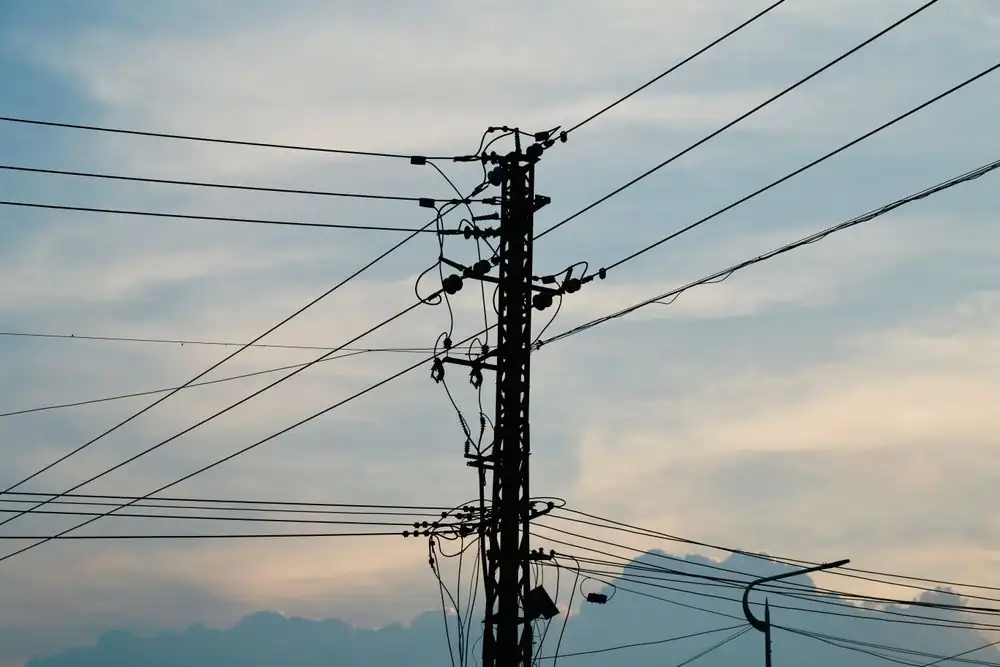
Photograph · source and license
The image, credit, reuse license, editorial context and delivered file are recorded in the exact Sites editorial review. This review is separate from the article’s canonical CIE assessment.
Image and publication standards →In this story
A city department with several different jobs
Martinsville’s official Electric Department page traces the department to 1904. It describes a municipal service for residents, businesses and industry, wholesale power purchases from American Municipal Power and a historic hydroelectric facility on the Smith River.
Those facts establish a local institution and a connection to a wider electricity system. They do not mean that all the power used in the city originates at the river or that every nearby Henry County address has the same provider.
For a reader, the productive starting point is to separate the jobs hidden inside the word utility. Electricity must be obtained, carried through equipment, delivered to a customer and accounted for on a bill.
Maintaining local poles and transformers is a different operation from negotiating a power purchase. Producing electricity at a dam is different from resolving a customer’s payment question.
One department may connect these activities, but evidence about one activity cannot settle all the others.
This article uses public institutional descriptions to explain those relationships. It is not a current engineering assessment, a rate quotation or an inspection of a private account.
That boundary leaves room for useful analysis: understanding how a local service works makes it easier to identify which information would answer a specific public question.
Public ownership does not create an isolated grid
The U.S. Energy Information Administration explains that local electricity systems connect producers and consumers through substations, transformers and power lines.
A utility can generate electricity itself, purchase it from others or combine those approaches. Municipal ownership describes the ownership of the service institution; it does not imply that the city is electrically self-sufficient or physically separate from other networks.
Martinsville’s published combination of purchased power and river generation illustrates the distinction. A familiar local facility can supply part of a service while the service depends on wider arrangements.
The same reasoning applies to other public infrastructure. A locally owned building or machine may be one component in a chain of suppliers, maintenance work and regional coordination.
Knowing who owns an asset is necessary, but it is only the beginning of understanding how the service reaches a household.
A hypothetical claim that a city could disconnect from all external electricity sources therefore needs more than evidence of a local generator. It would require documented capacity, demand, operating constraints and a plan for reliability.
Nothing in this article establishes that claim. The observable institutional record supports a connected system, and public discussion should keep its scale intact.
The Smith River station supplies a local connection
The city describes the hydroelectric dam as supplying a portion of its needs and says staff maintain the dam and surrounding environment, monitor flooding, remove debris and keep required records. The station is consequently more than a historic object visible beside a river.
It is an asset with operating and maintenance responsibilities. A picturesque appearance cannot show whether a machine is operating at a particular moment or how much electricity it produced during a given period.
The Department of Energy explains that hydropower facilities use moving water and identifies different plant arrangements, including impoundment, diversion and pumped storage. That general explanation helps a reader understand the technology.
It does not by itself identify the exact design, operating limits or current condition of Martinsville’s station. Local technical conclusions still require local documents.
A sensible public question would ask for generation during a specified reporting period and the maintenance context relevant to that period. An answer about a wet season may not describe a dry season.
An annual number may hide substantial variation among months. This is not an allegation of a local problem; it is an explanation of why a river-powered asset must be discussed with a time frame rather than an undated promotional phrase.
A watt and a watt-hour answer different questions
EIA’s measuring-electricity explanation distinguishes power, expressed in watts and related units, from energy used over time, expressed in watt-hours and related units. That distinction becomes important when a reader encounters capacity, demand and consumption in the same public description.
A machine’s rated power and its annual production are not quantities that can be compared without accounting for time.
Here is an illustrative calculation, not a Martinsville operating measurement. A device drawing one kilowatt for three hours uses three kilowatt-hours.
A second device drawing three kilowatts for one hour uses the same amount of energy while imposing a different instantaneous load. The total energy matches; the pattern of demand does not.
That simple example explains why a utility can care about both a month’s consumption and the highest load it must serve.
The city page contains a peak-demand phrase expressed in watt-hours. This article does not turn that wording into a verified capacity figure.
A clarified utility record would be needed before drawing a numerical comparison. When dimensions are unclear, retaining the distinction is more informative than repeating a number with greater apparent precision than its source supports.
An older supplier profile belongs on its own date
American Municipal Power’s Martinsville member spotlight is explicitly published April 2013. It describes the city utility, hydroelectric generation, maintenance and power-supply participation as they were presented at that time.
Its meter count and project descriptions are historical observations. They should not be republished as October 2026 inventory or present participation without a current record.
The dated profile is still useful. It shows that the relationship between a municipal service and shared supply arrangements has a documented history.
It also illustrates why an institutional page can contain both durable context and information that ages quickly. The utility’s founding year remains a historical fact; a count of meters describes a population of accounts at a particular time.
A project then under construction occupies yet another stage.
A reader examining a current capital proposal can use the old profile as a question generator: which assets continue, which agreements changed and which facilities have since entered or left service? The profile cannot answer those questions by itself.
Its value lies in preserving a dated starting point rather than supplying a convenient collection of numbers to fill gaps in a present-day story.
The local network is where many service tasks happen
EIA distinguishes long-distance transmission from the lower-voltage distribution that reaches customers. Substations and transformers change voltage along the route.
Martinsville’s department description also identifies local metering and substation responsibilities. Together, these accounts show why securing power and delivering it reliably are related but separate tasks.
A supply agreement does not maintain a local transformer by itself.
That distinction can improve a household’s account of a service interruption. The fact that one house has no power while a nearby building does does not identify the failed component.
It supplies useful observations about the extent of the interruption. A repair crew needs a more complete operational picture before it can determine cause.
Public speculation about a generator, line or account should therefore remain speculation until the responsible institution establishes the connection.
The same principle applies to infrastructure reporting. A new supply contract, replacement meter and line-clearance program address different parts of the system.
An article can explain what a proposal is intended to do, but a claimed reliability improvement requires performance evidence. This piece does not issue a grade or imply that a visible maintenance activity proves a completed upgrade across the city.
Virginia’s municipal systems have a shared institutional history
The Municipal Electric Power Association of Virginia dates its founding to 1954. Its own history describes conversations involving officials from Franklin, Danville and Martinsville and a subsequent meeting in Bedford.
The account connects local utilities through an organization formed to improve communication among municipal systems. It provides a specific regional relationship rather than an invented claim that every locality uses the same equipment or rate structure.
The relationship matters because smaller public institutions can face technical questions that exceed the experience of any one office. Sharing information can help a community understand approaches used elsewhere.
It does not automatically make an arrangement suitable for every member. Each service has its own assets, customers, financial obligations and decisions.
Association membership should be understood as a connection, not an interchangeable operating model.
For readers in Bedford or Danville, this history places familiar names inside a statewide public-power conversation. For Martinsville, it shows that local ownership and institutional cooperation have long coexisted.
A community can retain responsibility for its own service while learning through wider networks. Evaluating that cooperation fairly requires naming the actual organization and the activity involved rather than treating every external relationship as loss of local control.
Billing questions and equipment questions need different routes
Martinsville publishes a separate Utility Billing page for starting service, payment arrangements and customer assistance. It directs people to official city processes and identifies the office at the Municipal Building.
The Electric Department page provides a different route for operational questions. That division helps explain why a caller can need the right office even when both matters concern electricity.
Before seeking a bill explanation, identify the service period, meter information, consumption units and the disputed line. Keep those details in a private conversation through the official city channel.
Posting an account number or identity document in a public forum makes the discussion less safe without making the calculation clearer. This article does not collect customer documents or promise a credit, payment plan or account adjustment.
A hypothetical bill increase could reflect a change in consumption, a different billing period or a charge requiring explanation. The correct next step is to ask for the relevant calculation rather than decide the cause from the total alone.
The city’s current rates and customer documents should control any actual comparison. Public explanatory journalism can teach the questions to ask while leaving a particular account outcome unclaimed.
An outage report is an observation, not a diagnosis
The city’s What to Do During a Blackout page publishes an official reporting route, with different contact arrangements for regular working hours and after hours. It is a service instruction that residents should consult directly when needed.
This article has not tested those lines, reported an outage or obtained a repair estimate. A web description does not establish that a crew has been dispatched for a particular incident.
A useful report describes what was observed and when: the affected location, whether surrounding service appears interrupted and any visible hazard from a safe position. Those observations can help the responsible service understand the problem.
They should not be embellished into a diagnosis of a damaged transformer or a failed power supply. A report of darkness and a confirmed equipment failure occupy different stages of knowledge.
Public posts also need time labels. A message about an interruption yesterday can mislead when shared as if it describes the present.
Once the situation changes, an update should say what is confirmed and who confirmed it. No one should approach or handle electrical equipment to improve a social-media report.
A clear official route and restrained description are more useful than a dramatic but unsupported explanation.
The control room and the street are connected
The city also describes supervisory control and data acquisition, usually shortened to SCADA, in its substation work. The published explanation identifies monitoring of voltage, current and circuit-breaker operations.
This is a different kind of visibility from a person noticing a streetlight is out. Operational measurements can help trained staff understand system conditions while a resident’s observation identifies the experience at a particular place.
Neither view makes the other unnecessary. A public report may point to a location requiring attention; measurements can help distinguish possible causes.
The city description does not disclose sensitive system access or establish a live public dashboard. This article provides no operational instructions and makes no claim that it has inspected the controls.
The useful point is the relationship between observation, measurement and responsible service action.
What an accountable public comparison would require
A fair comparison of utilities needs a defined measure and a common period. An annual energy total, monthly household bill and count of service interruptions describe different aspects of a service.
Population, weather, customer mix and geography can affect the meaning of a comparison. Simply placing two numbers beside each other does not show that one institution is performing better.
A hypothetical reliability study would first identify the measure, the reporting period, the definition of an interruption and whether planned work is included. A cost comparison would specify the rate category and usage assumption.
A generation comparison would separate capacity from actual production and identify whether purchased electricity is included. These are proposed analytical requirements, not a claim that this article has obtained or audited those datasets.
Martinsville’s public description establishes a historical municipal utility, local hydroelectric generation and wider supply relationships. Those are meaningful facts to build on.
They make the next questions more precise: what did a given asset produce, what maintenance was completed, how was a charge calculated and what period does the answer cover? Public understanding improves when each question follows the part of the system that can actually answer it.
Sources & verification
Primary source checked October 10, 2026. Source dates, documented facts and limitations are identified in the article; interpretation and hypothetical examples are separate.
Read the sourcePrimary source checked October 10, 2026. Source dates, documented facts and limitations are identified in the article; interpretation and hypothetical examples are separate.
Read the sourcePrimary source checked October 10, 2026. Source dates, documented facts and limitations are identified in the article; interpretation and hypothetical examples are separate.
Read the sourcePrimary source checked October 10, 2026. Source dates, documented facts and limitations are identified in the article; interpretation and hypothetical examples are separate.
Read the sourcePrimary source checked October 10, 2026. Source dates, documented facts and limitations are identified in the article; interpretation and hypothetical examples are separate.
Read the sourcePrimary source checked October 10, 2026. Source dates, documented facts and limitations are identified in the article; interpretation and hypothetical examples are separate.
Read the sourcePrimary source checked October 10, 2026. Source dates, documented facts and limitations are identified in the article; interpretation and hypothetical examples are separate.
Read the sourcePrimary source checked October 10, 2026. Source dates, documented facts and limitations are identified in the article; interpretation and hypothetical examples are separate.
Read the sourcePrimary source checked October 10, 2026. Source dates, documented facts and limitations are identified in the article; interpretation and hypothetical examples are separate.
Read the sourceThis article was written with AI assistance from the linked sources. No firsthand interview or visit is implied. Source dates and limits are identified in the reporting. Advertising does not determine editorial coverage. Request a correction or read our standards.
EVERY NEIGHBOR HAS A VOICE
Keep the conversation going.
Share experiences, ask questions and link evidence for factual claims. Automated publication checks apply to each submitted version. Comments are independent community discussion, not submissions to a government body.
Sign in to join · freeCommunity standards