
Public record Public services · County
A Brookneal drinking-water question needs the annual report, event notice and closure record separated
A consumer confidence report looks backward across a calendar year; an operating notice addresses a particular condition. Readers need the system identity and dates before comparing them.
Checking whether this browser can read the story aloud.
Explore related topics
Sources & editorial review
Sites editorial review recorded for this exact revision. This AI-assisted article or learning resource includes source links and credited contextual imagery.
This is a local editorial review, not a canonical Cultural Imprint Engine assessment. No CIE score is claimed. Source review does not verify third-party playback, provider availability or image pixels.
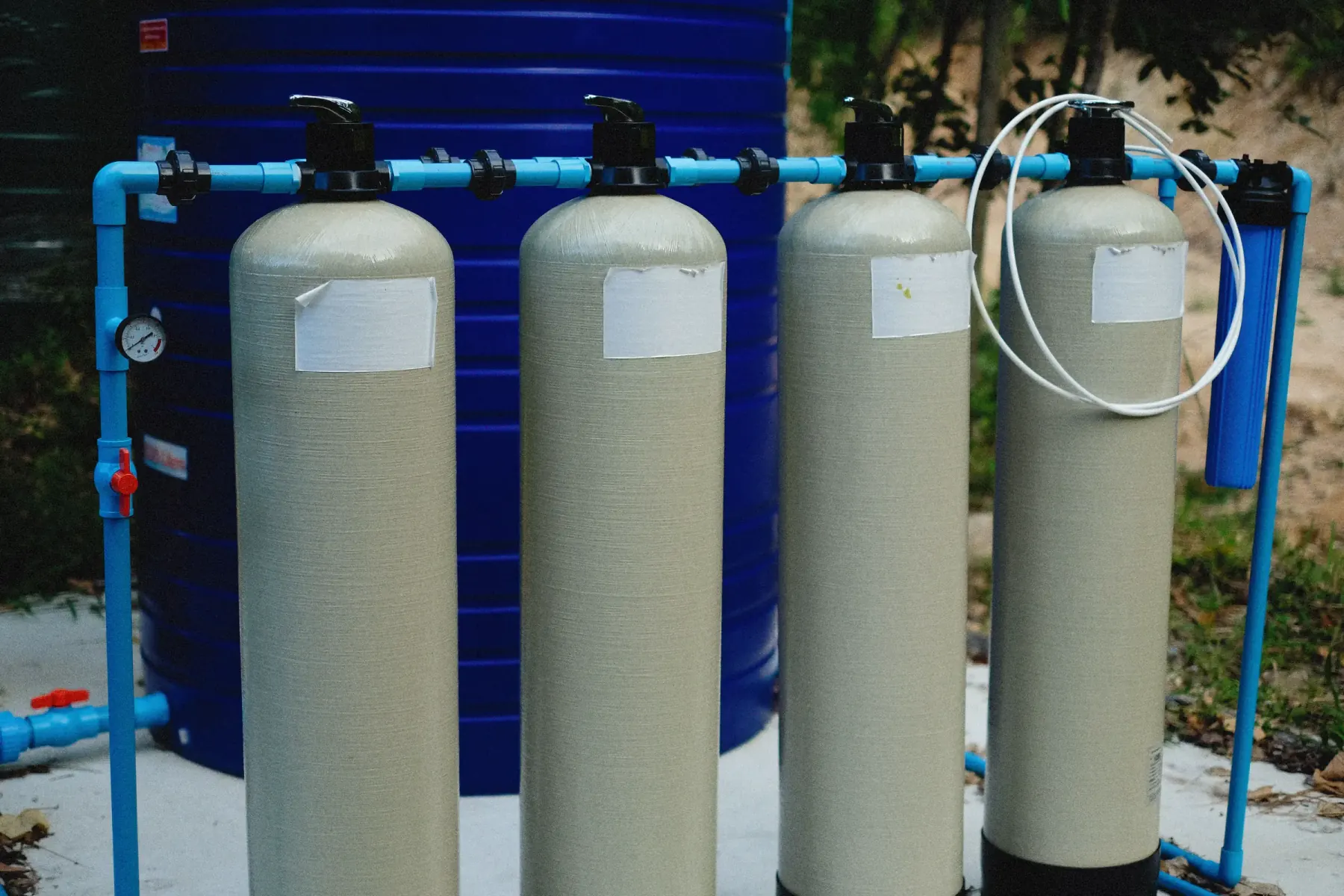
Image · source and license record
Sites editorial review records the image metadata, reuse license, file and article context for this revision. It is separate from a canonical CIE assessment. The caption and linked source explain the image and its limits.
Image & publication standards →In this story
Define the question before opening a dashboard
Which official records identify Brookneal's water system, annual reported results, any event-specific notice and the documented return to normal? For Brookneal, that question needs a place, a period, a responsible institution and a definition of what would count as evidence.
This guide treats a community drinking-water record as a chain of records rather than a single number or search result. The aim for this a community drinking-water record inquiry is not to manufacture a verdict.
It is to make the Brookneal question reproducible, fair and correctable.
For Brookneal, geography is part of the method: A Brookneal mailing address, waterworks service area, town boundary and Campbell County health district are not identical. A postal label, service territory, county aggregate or regional program can be useful context for a community drinking-water record, but it cannot silently become proof about the locality named in a headline.
Record the geographic unit used by every a community drinking-water record source before comparing values or describing access in Brookneal.
Sampled, detected, compliant, notified, corrected, lifted and annually reported are separate statuses. Dates in the Brookneal record should identify when a record was created, the period it describes and when it was checked.
A current webpage about a community drinking-water record can host an older report; a newly posted document can describe a completed fiscal year; and an application portal can remain online after a particular opportunity closes. Those a community drinking-water record clocks must remain visible.
Build the evidence chain one record at a time
1. waterworks identity and owner record is maintained by Virginia Department of Health Office of Drinking Water. The waterworks identity and owner record record's useful role is to confirm the regulated system and responsible public contact.
The waterworks identity and owner record limit is equally important: a system listing does not describe a particular day's water condition. For waterworks identity and owner record, capture the official title, issuing body, covered dates, retrieval date and direct URL.
If the waterworks identity and owner record custodian later replaces or corrects the record, preserve its earlier citation and add a dated revision note instead of silently rewriting history.
2. annual consumer confidence report is maintained by the waterworks owner. The annual consumer confidence report record's useful role is to summarize required information about water delivered during the prior calendar year.
The annual consumer confidence report limit is equally important: the annual report is retrospective and does not replace an event-specific notice. For annual consumer confidence report, capture the official title, issuing body, covered dates, retrieval date and direct URL.
If the annual consumer confidence report custodian later replaces or corrects the record, preserve its earlier citation and add a dated revision note instead of silently rewriting history.
3. sample, incident and public notice record is maintained by the waterworks and VDH. The sample, incident and public notice record record's useful role is to document the method, date, parameter, requirement and instructions for a particular event.
The sample, incident and public notice record limit is equally important: one result or preliminary report must not be generalized beyond its stated scope. For sample, incident and public notice record, capture the official title, issuing body, covered dates, retrieval date and direct URL.
If the sample, incident and public notice record custodian later replaces or corrects the record, preserve its earlier citation and add a dated revision note instead of silently rewriting history.
4. corrective action and notice closure is maintained by the waterworks and responsible regulator. The corrective action and notice closure record's useful role is to show the responsible response, follow-up evidence and authorized update.
The corrective action and notice closure limit is equally important: service restoration or a single satisfactory result may not by itself close every condition. For corrective action and notice closure, capture the official title, issuing body, covered dates, retrieval date and direct URL.
If the corrective action and notice closure custodian later replaces or corrects the record, preserve its earlier citation and add a dated revision note instead of silently rewriting history.
Keep identity, authority and outcome separate
For a community drinking-water record, an identity record answers who or what is registered. An authority record in Brookneal answers which office may approve, regulate, fund or enforce.
An activity record for a community drinking-water record shows that something was filed, discussed, inspected, advertised or measured. An outcome record for Brookneal documents what actually happened. a community drinking-water record becomes misleading when those stages are collapsed into one label such as approved, verified, funded, safe, successful or available.
For Brookneal, create a four-column worksheet for identity, authority, activity and outcome. Place each a community drinking-water record source in only the column it actually supports, then note unresolved links.
In this Brookneal inquiry, a registration does not prove performance; an appropriation does not prove expenditure; a posting does not prove a hire; a sample does not describe every day; and a meeting statement is not an adopted action. That a community drinking-water record discipline prevents official-looking documents from lending certainty they do not contain.
The a community drinking-water record worksheet should also preserve negative space. If no Brookneal source publishes a deadline, salary, service boundary, sample method or implementation date, write “not supplied” rather than inventing a likely answer.
If a a community drinking-water record source is temporarily inaccessible, mark verification pending and retain the last valid checked date. A timeout in the Brookneal review is not evidence that the underlying program, position or condition ended.
Read the records together without forcing agreement
Identify the system before interpreting data. A private well, neighboring utility and Brookneal community waterworks follow different records, and a postal address does not settle which source applies.
Read the CCR for its covered year, detected values, ranges, standards and required explanations. The report distributed by July 1 describes the previous calendar year, so its publication date should not be mistaken for a new sample date.
For a current concern, use the exact official notice and its timestamp. Keep precautionary instructions, affected area and responsible issuer intact instead of rewriting a social-media summary into a broader warning.
Close the loop only with an authorized update. A customer observation, pressure return or unofficial repost can be useful context but does not replace the utility or regulator's documented status.
Work a documented local example
A Brookneal customer uses the waterworks listing and utility bill to confirm the responsible system, then retrieves the latest annual consumer confidence report.
The reader records the report's covered year and separates annual results from a newer service or operating notice issued for a particular date and area.
Questions about a sample are tied to the parameter, method, location category and regulator context without publishing a household account or diagnosing symptoms.
When the responsible issuer posts a closure or revised instruction, the article updates the current status while preserving the original notice date and correction trail.
Avoid the errors that make a polished page unreliable
Pitfall 1 for Brookneal: treating the CCR publication date as the sample date. The repair for pitfall 1 is to return to the underlying a community drinking-water record record, name its creator and purpose, and show the smallest claim it can support.
If the Brookneal comparison changes after repairing pitfall 1, preserve both the earlier statement and the correction date so readers can see why the interpretation moved.
Pitfall 2 for Brookneal: using a rejected or preliminary sample as a current system finding. The repair for pitfall 2 is to return to the underlying a community drinking-water record record, name its creator and purpose, and show the smallest claim it can support.
If the Brookneal comparison changes after repairing pitfall 2, preserve both the earlier statement and the correction date so readers can see why the interpretation moved.
Pitfall 3 for Brookneal: expanding a bounded notice to customers outside the named system. The repair for pitfall 3 is to return to the underlying a community drinking-water record record, name its creator and purpose, and show the smallest claim it can support.
If the Brookneal comparison changes after repairing pitfall 3, preserve both the earlier statement and the correction date so readers can see why the interpretation moved.
Pitfall 4 for Brookneal: lifting a notice from social observation instead of the responsible issuer. The repair for pitfall 4 is to return to the underlying a community drinking-water record record, name its creator and purpose, and show the smallest claim it can support.
If the Brookneal comparison changes after repairing pitfall 4, preserve both the earlier statement and the correction date so readers can see why the interpretation moved.
Ask for missing records narrowly and safely
A productive a community drinking-water record request names an existing record rather than asking an office to answer a broad research question. For Brookneal, useful targets include the active waterworks identity; the current CCR and covered year; the event-specific notice and sample record; the authorized corrective-action and closure record.
Give the a community drinking-water record request a bounded date range, preferred electronic format and a request to discuss cost before expensive work begins. The responsible Brookneal agency generally does not have to create a new record merely because a requester would prefer a custom analysis.
Request the least sensitive a community drinking-water record version that can answer the question. Exclude customer account numbers, household medical details, security-sensitive treatment information and the identity of a private complainant.
Aggregate Brookneal data may still expose people when the group is very small or the variables are unusually specific. Remove names, exact home addresses, student or patient identifiers, private contact information and narrative details from the a community drinking-water record request unless disclosure is both lawful and genuinely necessary for the public-interest question.
For the Brookneal inquiry, keep the request, acknowledgment, estimate, clarification, production and appeal or correction steps together. A a community drinking-water record fee estimate is not a completed production.
A Brookneal redaction is not automatically concealment; ask for the cited legal basis and a segregable nonexempt portion. When another office owns the a community drinking-water record record, document the referral and continue with the proper custodian rather than treating the first office as nonresponsive.
Compare numbers only after aligning their denominators
Before calculating a a community drinking-water record rate for Brookneal, write the numerator in plain language, the denominator in plain language, the covered period and the geography. Check whether the Brookneal records are preliminary, amended, audited, seasonally adjusted, suppressed or rounded.
Two a community drinking-water record percentages can share a label while measuring different populations. Counts in Brookneal can rise because reporting improved, eligibility widened or a boundary changed, not because the underlying condition necessarily worsened.
Use totals beside rates and show missingness in the Brookneal record. A small Brookneal population can experience a large percentage swing from a few cases, filings, samples or participants.
A statewide or regional a community drinking-water record benchmark can provide context, but it should not erase the local scale. When a community drinking-water record source definitions change, break the series or restate it under one documented method rather than drawing a smooth trend through incompatible years.
If an official a community drinking-water record source amends its table, retain the amendment date and rerun the calculation once. Do not count copies of the same a community drinking-water record release as independent corroboration.
A Brookneal press release, dashboard and meeting slide may all descend from one dataset. True a community drinking-water record corroboration comes from a separately created record or a transparent reconciliation of the common source.
Give affected institutions a fair response opportunity
Before publishing a material criticism about a community drinking-water record in Brookneal, send the responsible office the exact source, period, calculation and proposed wording. Ask focused a community drinking-water record questions about definitions, known errors, amendments and relevant context.
Provide the Brookneal office a meaningful deadline and record whether it answered, declined, disputed the method or requested more time. Silence in the a community drinking-water record review does not prove the criticism, and a response does not erase the underlying record.
Social posts and neighborhood conversations about Brookneal can identify a community drinking-water record leads, but they remain attributed and unverified until supported. Do not republish a private person’s a community drinking-water record records, accusation or location merely because it appeared publicly.
The Brookneal article should explain which claims were independently checked, which remain unresolved and what evidence would change the conclusion.
A a community drinking-water record correction is required when the system identity, annual report, sample status, public instruction or authorized closure changes. Preserve the Brookneal publication date, identify the changed claim, link the stronger evidence and update affected summaries, structured metadata and discovery shelves.
A a community drinking-water record correction trail is part of the product, not an embarrassment to hide.
Use a source-specific verification workbook
Verification step 1 for Brookneal: Match the waterworks name and identifier to the customer's actual provider before using any report or notice. Confirm that a document names the same regulated system, because similarly named facilities, wholesale suppliers and neighboring service areas can appear in one search result without serving the same customer.
For a community drinking-water record, record the responsible source, exact document or action, covered date, retrieval time and the smallest conclusion it supports. Mark anything beyond that conclusion as unresolved, and name the next official record that could resolve it.
This step belongs in the working file even when the public article uses a shorter explanation.
Verification step 2 for Brookneal: Record the CCR publication date and the calendar year it covers as separate fields. For a community drinking-water record, record the responsible source, exact document or action, covered date, retrieval time and the smallest conclusion it supports.
Mark anything beyond that conclusion as unresolved, and name the next official record that could resolve it. This step belongs in the working file even when the public article uses a shorter explanation.
Verification step 3 for Brookneal: Retain units, methods, reporting ranges and applicable standard names when summarizing a detected value. For a community drinking-water record, record the responsible source, exact document or action, covered date, retrieval time and the smallest conclusion it supports.
Mark anything beyond that conclusion as unresolved, and name the next official record that could resolve it. This step belongs in the working file even when the public article uses a shorter explanation.
Verification step 4 for Brookneal: Do not treat a rejected sample, data-entry artifact or unvalidated field observation as a confirmed system result. For a community drinking-water record, record the responsible source, exact document or action, covered date, retrieval time and the smallest conclusion it supports.
Mark anything beyond that conclusion as unresolved, and name the next official record that could resolve it. This step belongs in the working file even when the public article uses a shorter explanation.
Verification step 5 for Brookneal: For event notices, preserve the issuer, issue time, affected area, instructions and stated reason verbatim where necessary. For a community drinking-water record, record the responsible source, exact document or action, covered date, retrieval time and the smallest conclusion it supports.
Mark anything beyond that conclusion as unresolved, and name the next official record that could resolve it. This step belongs in the working file even when the public article uses a shorter explanation.
Verification step 6 for Brookneal: Use a qualified health route for individual exposure concerns without asking a customer to publish medical information. For a community drinking-water record, record the responsible source, exact document or action, covered date, retrieval time and the smallest conclusion it supports.
Mark anything beyond that conclusion as unresolved, and name the next official record that could resolve it. This step belongs in the working file even when the public article uses a shorter explanation.
Verification step 7 for Brookneal: Ask the utility or regulator a focused question when the annual report and later notice appear to describe different periods. For a community drinking-water record, record the responsible source, exact document or action, covered date, retrieval time and the smallest conclusion it supports.
Mark anything beyond that conclusion as unresolved, and name the next official record that could resolve it. This step belongs in the working file even when the public article uses a shorter explanation.
Verification step 8 for Brookneal: Archive the original notice before replacing homepage copy with the authorized update or closure. For a community drinking-water record, record the responsible source, exact document or action, covered date, retrieval time and the smallest conclusion it supports.
Mark anything beyond that conclusion as unresolved, and name the next official record that could resolve it. This step belongs in the working file even when the public article uses a shorter explanation.
Verification step 9 for Brookneal: Keep a current service-status statement out of evergreen metadata once the event closes. For a community drinking-water record, record the responsible source, exact document or action, covered date, retrieval time and the smallest conclusion it supports.
Mark anything beyond that conclusion as unresolved, and name the next official record that could resolve it. This step belongs in the working file even when the public article uses a shorter explanation.
Verification step 10 for Brookneal: Correct any system-wide wording if later evidence shows the issue was limited to one facility, sample or service zone. For a community drinking-water record, record the responsible source, exact document or action, covered date, retrieval time and the smallest conclusion it supports.
Mark anything beyond that conclusion as unresolved, and name the next official record that could resolve it. This step belongs in the working file even when the public article uses a shorter explanation.
Turn the research into a useful reader action
End the Brookneal guide with a direct official destination and a specific next step. Readers of the a community drinking-water record guide should know whether they are checking a record, requesting assistance, commenting on a proposal, applying through an official portal or monitoring a future decision.
Do not imply that Gretna Junction receives a Brookneal application, schedules a service, grants a license, resolves a bill or speaks for the responsible agency.
The public a community drinking-water record page should retain its checked date, locality, source geography, free-access label, reading estimate and image credit. Its Brookneal illustration may explain the evidence path, but it must not masquerade as an official map, current condition, regulated notice or firsthand photograph.
Accessibility for this a community drinking-water record guide requires readable text, keyboard-reachable actions, descriptive links and a full article that remains usable even when optional audio is unsupported.
The durable a community drinking-water record result is a record readers can repeat: the question, the source chain, the aligned dates and geography, the calculation, the response, the limits and the next evidence event. That structure lets Brookneal residents use a community drinking-water record without being pushed toward false certainty, private disclosure or a generic checklist detached from local institutions.
Sources & verification
Official Virginia requirements and report resources for community waterworks.
Read the sourceOfficial state regulatory and consumer-information gateway.
Read the sourceOfficial system identity and owner listing route.
Read the sourceOfficial town destination for current utility contacts and notices.
Read the sourceThis article was written with AI assistance from the linked sources. No firsthand interview or visit is implied. Source dates and limits are identified in the reporting. Advertising does not determine editorial coverage. Request a correction or read our standards.
EVERY NEIGHBOR HAS A VOICE
Keep the conversation going.
Share experiences, ask questions and link evidence for factual claims. Automated publication checks apply to each submitted version. Comments are independent community discussion, not submissions to a government body.
Sign in to join · freeCommunity standards