
Explainer Practical living · Virginia
A useful Virginia public-records request begins with the record, custodian and workable scope
A detailed route from a public question to a specific request, cost estimate, usable production and evidence-based follow-up, using current official Virginia guidance.
Checking whether this browser can read the story aloud.
Explore related topics
Sources & editorial review
Sites editorial review recorded for this exact revision. This AI-assisted article or learning resource includes source links and credited contextual imagery.
This is a local editorial review, not a canonical Cultural Imprint Engine assessment. No CIE score is claimed. Source review does not verify third-party playback, provider availability or image pixels.
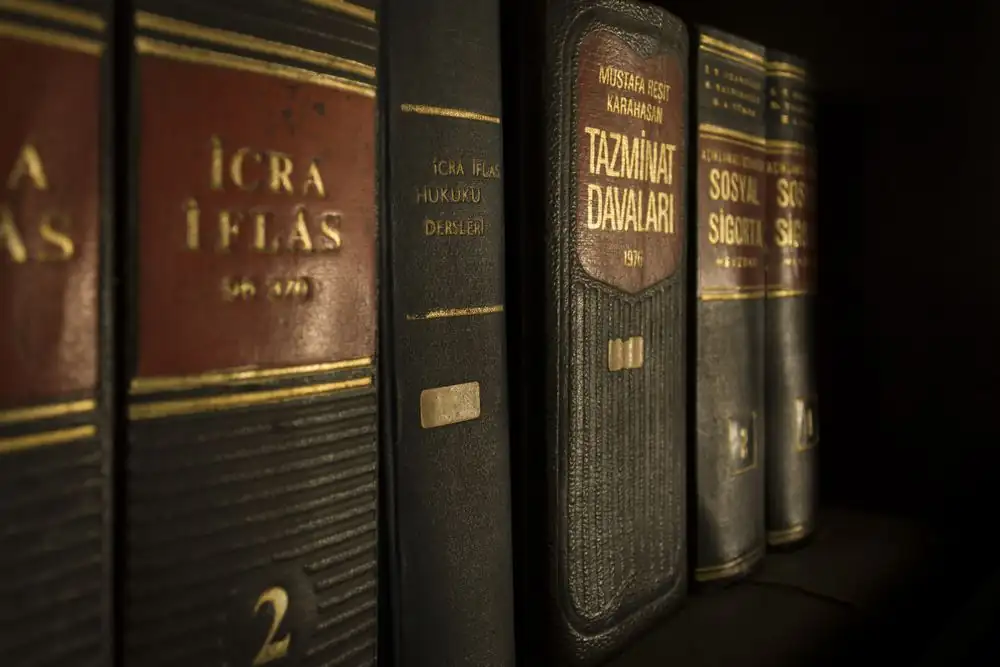
Photograph · source and license
The image, credit, reuse license, editorial context and delivered file are recorded in the exact Sites editorial review. This review is separate from the article’s canonical CIE assessment.
Image and publication standards →In this story
Turn a public question into a request someone can search
A resident can have an important question about government and still write a request that is difficult to answer. Why did a project cost more?
Who decided which neighborhood received work first? What happened between a complaint and a public announcement?
Those are good reporting questions. A useful Virginia public-records request translates them into existing records: an invoice, a decision memorandum, a work order or a dated email exchange.
That translation is a practical skill. It helps an office locate material, gives the requester a defined result to assess and creates a clearer record if a disagreement follows.
It also keeps a document request separate from a demand that an employee explain or defend a decision. An explanation may be worth seeking through an interview or ordinary correspondence, but a public-records process has a different job.
This guide uses the Virginia FOIA Council's 2026 materials and the Code of Virginia checked October 9, 2026. It is general education, not an evaluation of any specific Gretna, county or city dispute.
Its sample requests are fictional planning examples. They do not assert that the described records exist or that a named public body has violated the law.
Identify the institution that did the work
Start with a map of responsibility rather than an email list. A town, county, school division, state agency and public authority can be involved in the same subject while holding different records.
A town's purchase order is not necessarily in a county file. A state award notice is different from a local application.
A contractor's report may be held by the public body that commissioned it.
Make a short table for yourself with three columns: action, likely record and likely custodian. For a hypothetical equipment purchase, the actions might be approval, ordering, delivery and payment.
The corresponding records could be meeting materials, a purchase order, a receiving record and an invoice. This is a research plan, not a claim that every institution uses those document names.
The Council's best-practices guide recommends preliminary research and contacting the likely public body. Its FOIA-officer directory is a starting point, and an institution's own public information can help confirm the contact.
Section 2.2-3704.2 requires covered public bodies to designate and identify FOIA officers; the publication methods differ between state bodies and local or regional bodies. Not finding a name on one webpage is a reason to investigate, not by itself a complete legal finding.
Specify the record, time period and subject
An effective request usually names a document type, a subject and a bounded period. For example: please provide the final invoice and purchase order for the fictional pump purchase approved at the council's June meeting.
If you know an actual meeting date, agenda item or contract number, use it. A precise identifier can be more valuable than a paragraph explaining how strongly you feel about the issue.
Avoid replacing uncertainty with an enormous scope. If you do not know which purchase was made, begin with the relevant register or list, if it exists, rather than asking for every communication about all equipment for several years.
The first production may reveal the transaction number that supports a narrower second request. Staging the work can make a complicated investigation easier to manage.
For email, consider the people, period and search terms that connect to the question. A request for messages exchanged by two specified offices over one month is easier to describe than everything related to a subject forever.
Explain whether you want attachments and whether copies within long email chains are important to your research. Those choices affect usability as well as volume; do not assume the office's software can perform every proposed search operation.
Keep the request and the interview separate
Consider a fictional change order that increased the price of a public project. A request asking why officials wasted money assumes both a conclusion and an explanation.
A records request can instead seek the approved change order, the contractor's price proposal and the document authorizing it. An interview can then ask the responsible official to explain the recorded decision.
The two steps complement each other. Documents may establish the amount, approval date and stated reason.
An interview may clarify an ambiguous term or identify the constraints under which a decision was made. Neither should be used to invent the other.
A memo's silence about an issue does not establish that nobody considered it, and a later explanation does not silently rewrite the document.
Keep your public reporting equally clear. Say that a particular record states a reason, that an official supplied an explanation or that a question remains unanswered.
This lets readers distinguish contemporaneous evidence from a retrospective account. It also gives the public body a specific claim to correct if the article has misunderstood the file.
The strongest accountability work makes a disputed point inspectable.
Use a written request you can later recognize
The Council explains that Virginia FOIA does not require a written request or a particular form, and a public body cannot insist on its online portal as the only route. Writing is nevertheless useful because both sides can refer to the same scope.
The request also need not use the word FOIA to invoke the law's requirements. A clear description matters more than a ceremonial opening.
A practical draft can say: I request copies of the final invoice and purchase order for the identified project during the stated period. Please provide electronic copies in a format you regularly use.
Please tell me if another public body is the custodian. Please provide a cost estimate before incurring charges beyond my stated limit.
Include a reliable reply address and the identifying information the public body lawfully requests.
Save the exact sent version, attachments and transmission date. A revised draft on your computer is not the same thing as the request the office received.
If you later narrow the scope, preserve the revision and the agreement. Give the request a simple reference in your own notes so that an acknowledgement, estimate and production can be connected without guessing which conversation they belong to.
Understand the response clock before counting it
For an ordinary request, section 2.2-3704 sets a five-working-day response requirement. The Council's 2026 access guide says to count the day after receipt as Day 1.
Working days are not simply five dates on a calendar; weekends, holidays and the circumstances of receipt matter. Preserve evidence of receipt and consult the current guidance when a deadline is material.
The response is not necessarily the complete file. The law permits specified written responses, including withholding, partial production, records not found or not existing, and a statement that the ordinary period is impractical under the statutory conditions.
The ordinary extension described in the statute is seven additional working days; particular criminal investigative requests have a different provision. A further court extension is also addressed in the law.
Cost-estimate and deposit notices can affect the clock. Do not compare a final production date with the first request date while ignoring those exchanges or an agreed revised scope.
Build a chronology: receipt, response, estimate, requester reply, any stated extension and production. That chronology does not decide a legal dispute by itself, but it gives an adviser the actual sequence rather than a headline that says only how long the requester waited.
Digital records can cost something without costing anything imaginable
Electronic delivery removes some paper and postage costs, but it does not necessarily eliminate search, access or preparation work. Conversely, the fact that an office owns computers does not authorize an arbitrary flat charge.
Section 2.2-3704 limits ordinary FOIA charges to reasonable actual costs and requires reasonable efforts to supply records at the lowest possible cost. The Council's charges guide explains why paper duplication rates should not simply be applied to emailed files.
Ask what an estimate covers. Are staff searching several custodians?
Are they accessing an archive, separating exempt material or making copies? Requesting an explanation of the proposed work can help you identify a smaller scope that still answers your question.
For example, a final signed agreement may be more useful than every draft and message if your immediate question is what the public body committed to do.
Do not assume an estimate is the final invoice, a penalty or proof of misconduct. Preserve its date, amount, description and assumptions.
If you believe it includes an improper charge, identify the particular line and the legal or factual issue. A specific question about estimated hours or a duplication method is more reviewable than a broad accusation that a large total must be unlawful.
Set a spending instruction before the search expands
Before conducting the search, the statute requires a notice that charges may apply and an inquiry about whether the requester wants an estimate. A requester can ask for one.
The law also addresses the pause between an estimate and the requester's response, and says that no response within 30 days makes the request withdrawn. An estimate therefore deserves attention even when the amount is being challenged.
For likely charges exceeding $200, the public body may require a deposit up to the advance determination, credited to the final charge. Two hundred dollars is the threshold in this provision, not a universal maximum price for a request.
A large deposit request should be examined through the estimate and actual-cost rules rather than dismissed or accepted solely because it exceeds that number.
A useful personal instruction is to ask the office to stop and contact you before exceeding an amount you are willing to authorize. The office may need to discuss what scope is possible within that amount; the instruction is not a magic guarantee that the full request costs less.
Keep that conversation in writing. If you agree to staged production or a different timetable, identify the records and terms that changed so the agreement remains understandable afterward.
Choose a usable format and inspect the result
Section 2.2-3704 addresses records held in databases and other electronic systems. It requires nonexempt electronic records in a requested medium used in the body's regular business, subject to its stated capabilities and the statute's terms.
It does not generally require a completely unfamiliar format. Ask for the native or regularly used electronic format when it would help, and explain the practical purpose of the request.
An image-only PDF, a searchable PDF and a spreadsheet serve different tasks. If you need to compare payments, a regularly used spreadsheet may be more useful than a stack of scans.
If you need the signed version of an agreement, a scan may preserve something a plain-text transcription loses. Format is therefore part of the research question, rather than a competition to obtain the most technical file.
When a production arrives, save its original filenames and cover message before reorganizing copies. Count the files, check whether they open and note the stated period.
A file that opens successfully may still omit an attachment or cover the wrong dates. Search within the material, but remember that scanned pages may not have reliable text recognition.
A careful receipt check catches practical problems before they become claims in an article.
Redaction should produce an intelligible remaining record
Section 2.2-3704.01 separates exempt portions from the rest of a record. An exemption affecting one portion does not automatically justify withholding the entire document.
Under the response provisions, withholding must identify the relevant subject matter and cite the specific legal authority by category. That gives the requester something more concrete to assess than a page that is simply absent.
Make a production log with the file, missing or redacted portion, cited provision and question you want clarified. A repeated exemption label may apply to several records; a different label may raise a different issue.
Do not remove the redaction marks in a copy you later publish. Readers should be able to see that the institution withheld something rather than mistake your edited version for the complete original.
Public access also does not mean every personal detail should be amplified in a local article. Review addresses, private contact information, medical material and information about children before publication.
Preserve the evidence in appropriate custody and prepare a public version suited to the reporting purpose. Responsible reporting can explain a government decision without exposing an unrelated person's life merely because a file was released.
A missing email is a research question with several possible answers
The Council's email guidance explains that content, rather than the email medium, determines whether a communication is a public record. Public-business messages can be records, and retention depends on the type of content under the Virginia Public Records Act.
Access and retention are related but separate subjects. Not every message has the same required retention period.
If a production seems incomplete, ask a precise follow-up: was the attachment included, which date range was searched, or does another office hold the referenced record? A missing item could reflect scope, custody, retention, exemption or an error.
Identifying the reference that led you to expect the record is a productive starting point. It does not require you to pretend that every possible explanation is equally likely; it requires you to establish which explanation the evidence supports.
Preserve that inquiry with the rest of the request file. If an email mentions a numbered report that was not produced, the number becomes a useful search term.
If a response identifies another public body, record the referral and begin a separate, clearly scoped request there. The investigation grows through evidence, rather than through an ever-expanding demand for everything.
Resolve a dispute around the exact point that matters
The Virginia FOIA Council provides guidance, while courts have the enforcement role described in section 2.2-3713. Those roles should not be confused.
An educational guide or advisory discussion is not a court order requiring a particular production. A fact-specific dispute can also involve exemptions or other laws beyond the procedural rules summarized here.
Before seeking help, prepare a short packet: the exact request, proof of receipt, responses, cost exchanges, the relevant production and a chronology. State the issue in one sentence, such as a disputed charge category or the withholding of an identified record.
An adviser can then examine the actual problem without reconstructing it from scattered screenshots. Obtain qualified legal advice when a deadline, court filing or case-specific legal decision matters.
For a newsroom, the final habit is equally important. Publish what the documents establish, identify what remains uncertain and give the responsible institution a clear opportunity to address a specific discrepancy.
A FOIA request is the beginning of a reporting process. The useful result is a record that residents can understand, inspect and use in the next public conversation.
Sources & verification
Official current text displayed October 9, 2026; reasonable specificity, responses and time, actual-cost rules, estimate/deposit pauses, 30-day no-response withdrawal, electronic formats and $200 advance-deposit threshold. Checked October 9, 2026.
Read the sourceOfficial 2026 practical guide: preliminary custody research, specific records, bounded searches and scope discussions. Checked October 9, 2026.
Read the sourceOfficial 2026 procedure guidance: written request recommended but not mandatory, no mandatory form/portal, requests need not name FOIA, Day 1 after receipt and statutory response categories. Checked October 9, 2026.
Read the sourceOfficial charges guide: actual cost, electronic versus paper delivery, deposits credited against final cost, negotiated narrower production. Interpreted alongside the current statute. Checked October 9, 2026.
Read the sourceOfficial statute: mixed exempt/nonexempt records require disclosure of nonexcluded portions rather than automatic total withholding. Checked October 9, 2026.
Read the sourceOfficial statute: FOIA-officer designation, distinct state/local publication methods and Council directory. No finding about any specific locality made. Checked October 9, 2026.
Read the sourceOfficial guide: content rather than medium determines public-record status; FOIA access and Public Records Act retention serve different roles. Checked October 9, 2026.
Read the sourceOfficial statutory court-enforcement path; article does not provide case-specific petition, venue or outcome advice. Checked October 9, 2026.
Read the sourceCurrent official index verified to locate the 2026 guidance and identify the institutional source rather than copied third-party summaries. Checked October 9, 2026.
Read the sourceThis article was written with AI assistance from the linked sources. No firsthand interview or visit is implied. Source dates and limits are identified in the reporting. Advertising does not determine editorial coverage. Request a correction or read our standards.
EVERY NEIGHBOR HAS A VOICE
Keep the conversation going.
Share experiences, ask questions and link evidence for factual claims. Automated publication checks apply to each submitted version. Comments are independent community discussion, not submissions to a government body.
Sign in to join · freeCommunity standards