
Sourced practical explainer Practical living · Regional
A darker place is only the beginning: planning an October skywatching night around Staunton River
Halifax County’s dark-sky park offers a local starting point, while NASA’s October 2026 forecast shows why access, moonlight, equipment and the observing goal must fit together.
Checking whether this browser can read the story aloud.
Explore related topics
Sources & editorial review
Sites editorial review recorded for this exact revision. This AI-assisted article or learning resource includes source links and credited contextual imagery.
This is a local editorial review, not a canonical Cultural Imprint Engine assessment. No CIE score is claimed. Source review does not verify third-party playback, provider availability or image pixels.
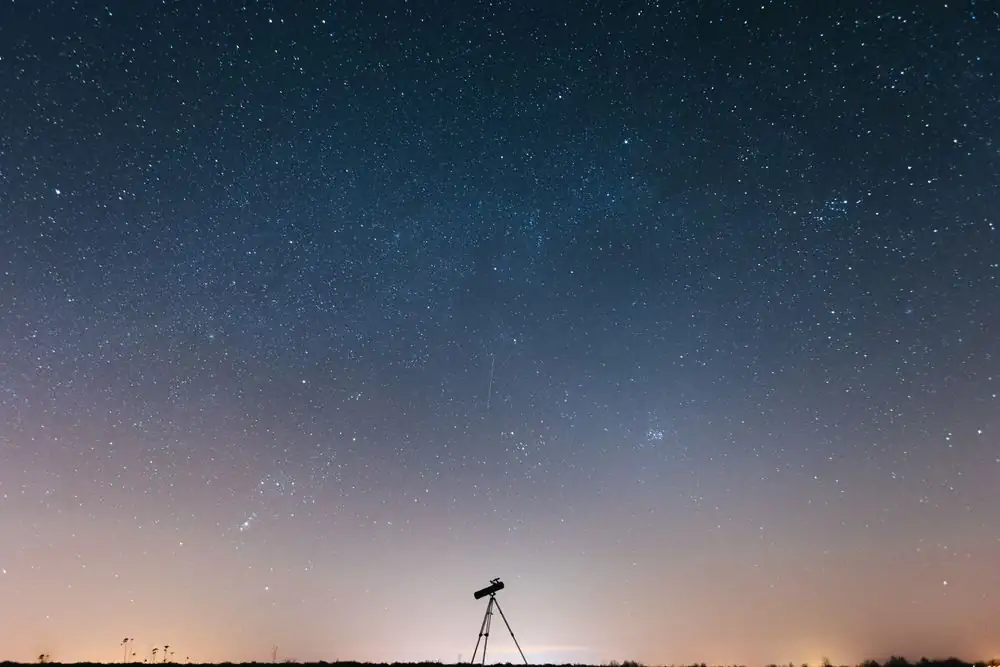
Photograph · source and license
The image, credit, reuse license, editorial context and delivered file are recorded in the exact Sites editorial review. This review is separate from the article’s canonical CIE assessment.
Image and publication standards →In this story
Choose the sky you want before choosing the trip
A night under the stars can fail as a plan even when the destination has an excellent dark-sky reputation. A family may arrive expecting meteors when the brightest object is the Moon.
A visitor may carry a telescope that narrows the view of a target better suited to binoculars. Someone may discover after a long drive that nighttime access required a different arrangement.
These are planning mismatches, not evidence that astronomy is inaccessible or that a dark location has no value.
Staunton River State Park gives Halifax County residents a specific place around which to think through those choices. Virginia’s conservation agency identifies it as the state’s first International Dark Sky Park.
The designation recognizes a managed resource, not a guarantee that every evening will be clear or every visitor can enter every area at any hour. The park’s historical application documents an observing field, lighting work and public education; current access still needs confirmation through the park’s official channel.
NASA’s October 2026 skywatching guidance supplies the timely part of this explainer. The practical method is to connect an astronomical target to a viewing window, an allowed location and realistic equipment.
This article does not announce a park event or reserve access. It explains how to build a plan that remains useful when moonlight, weather or a participant’s needs change.
What the local dark-sky record actually establishes
The park’s application to the International Dark-Sky Association includes a lightscape management plan. It describes a project to improve outdoor lighting, educational outreach and measurement of sky quality.
It also records collaboration with the Chapel Hill Astronomical Observation Society. Those details show that the designation rested on work to manage and explain the nighttime environment, rather than merely giving a scenic landscape a new promotional name.
The same application describes historical examples of public engagement, including a planet walk and astronomy-related library stories in Halifax during the 2015 spring gathering. These are dated examples of education moving beyond the park boundary.
They are not listings for October 2026. A reader should not arrive in downtown Halifax expecting a program simply because it appears in an old application.
The distinction offers a useful local lesson. Astronomy infrastructure includes a field and controlled lights, but also people who interpret what visitors see.
A library program can prepare a child to ask a question later at an observing session. A documented lighting policy can explain why a convenient floodlight affects another person’s view.
We interpret that combination as a practical educational system; the source does not establish that every historical program continues today.
October has several targets with different demands
NASA’s October guide, updated October 2, 2026, says Saturn reached opposition on October 4. It identifies the Orionid meteor-shower peak on the night of October 21 into the morning of October 22, warning that a bright waxing gibbous Moon will obscure fainter meteors.
Its suggested opportunity is before dawn after moonset. The guide also places the Moon near the Pleiades on October 27–28.
These dates concern the sky, not a confirmed local gathering or a forecast of clear conditions.
As of this article’s October 10 source check, the opposition date is past while the meteor and cluster windows remain ahead. That distinction should survive whenever the story is shared.
A reader encountering it later needs the year and exact dates, not an undated command to go outside tonight.
The different targets also create different kinds of outing. A meteor watch rewards a broad view and patience.
A planet offers a more concentrated object to examine. The Moon near a cluster can make a recognizable pairing, even while lunar brightness changes the visibility of fainter stars.
The most useful decision is therefore the object or experience someone wants, followed by an appropriate plan, rather than treating all October astronomy as one interchangeable event.
Moonlight is part of the scene, not simply a problem
NASA’s phase explanation states that sunlight illuminates half the Moon while its orbit changes how much of that illuminated half we see. The familiar sequence repeats in about 29.5 days.
A first-quarter Moon is generally an evening object; a full Moon rises around sunset and remains available through the night. Those broad patterns explain why phase and timing both matter, but an outing needs local rise and set information rather than a phase name alone.
A useful planning exercise is to write two different goals: examine lunar detail, or look for faint objects against a darker sky. A date that works well for one may be disappointing for the other.
Treating the Moon only as interference would miss a readily accessible observing subject. Treating its presence as irrelevant would ignore why a meteor watch can yield fewer visible streaks than expected.
This is also a way to avoid turning a changed plan into a failed evening. If the intended faint-sky target becomes difficult, an allowed and safe location may still support a shorter lunar observation.
The fallback should be chosen before the trip, not improvised through driving around unknown roads after midnight. A flexible goal makes room for the actual sky without promising that conditions will cooperate.
Lunar shadows can make a modest view informative
NASA’s Moon-viewing guidance explains that craters and mountains can be easier to distinguish away from full Moon because shadows help reveal surface relief. Binoculars can show texture along the boundary between illuminated and dark areas, often called the terminator.
The unaided view also separates darker lunar seas from lighter highland terrain. These are accessible observing ideas, not a requirement to buy a sophisticated instrument.
For a first session, a focused comparison can be more productive than an attempt to name everything visible. Look at the bright-dark boundary, then at a broad gray patch, and describe the difference.
A child or adult does not need an accurate sketch to make an observation. A simple drawing records what caught the observer’s attention, and a later view supplies a basis for comparison rather than a test of artistic skill.
That approach gives a local outing an educational purpose beyond collecting a photograph. It turns the participant from a consumer of an impressive image into someone asking what the image contains.
A phone picture can accompany the notes, but it does not replace the experience of noticing a boundary, changing contrast or a feature that becomes easier to see. The goal is careful looking, not a guaranteed publishable lunar portrait.
Match the instrument to the width of the subject
NASA’s binocular guide explains the two numbers on an instrument: the first gives magnification, and the second gives lens diameter in millimeters. Its introductory advice cautions that higher-powered, heavier binoculars can be harder to hold steady and may have a narrower field.
It also notes that binoculars can show a wider view than many telescope eyepieces, useful for extended objects such as the Pleiades.
That changes the shopping question. More magnification is not automatically more useful.
If a participant wants to follow a grouping across the sky, a steadier and wider view may serve the purpose better than a narrow, shaking image. An existing pair borrowed with permission can be enough to explore that difference before anyone commits money to equipment.
There is also a group-use issue. A device must fit the person who is looking through it, and several people sharing one instrument will have different comfort and focus needs.
A plan that allows time for adjustments is more inclusive than one built around rapidly moving through a list of objects. This is our practical interpretation of the equipment tradeoff, not an endorsement of a product or a promise about what a particular device will reveal.
A meteor watch uses the whole viewing session
NASA Space Place explains that meteors are atmospheric streaks produced as incoming material heats the surrounding air. During a shower, the apparent paths trace back toward a common region because of perspective, though streaks can appear across the sky.
Its advice emphasizes patience and the influence of observing time, sky conditions and moonlight. A telescope is not necessary for watching the broad field where meteors appear.
For an outing near Staunton River, the practical consequence is that the plan should protect uninterrupted looking time. A group that spends most of the session rearranging equipment or checking bright screens has organized a different activity from a meteor watch.
Comfortable seating, conversation kept compatible with observing and an agreed stopping point can make a simple session more useful than a crowded equipment setup.
The record should also distinguish a count from an impression. If someone notes six streaks during an interval, the note should include the interval and the conditions rather than becoming a claim about a peak rate.
A short personal observation cannot establish what every observer in Halifax County saw. It can preserve a meaningful individual session while retaining the limits that make the observation honest and comparable later.
Access and conditions are separate decisions
NASA’s guide to finding a viewing place advises checking moonrise and moonset, weather, open sightlines and permission to be present at night. It encourages a daylight look at an unfamiliar site and time for eyes to adjust, which can take half an hour or more.
These general principles matter locally, but they do not certify a specific road, parking area, field or shoreline as safe or currently open.
For the park, the source hierarchy is straightforward: the current park instructions govern visitor access, and an astronomical forecast governs the target’s timing. One cannot substitute for the other.
A historical application can explain how the park developed its observing program; it should not be used as a current permission slip. If a current access instruction cannot be confirmed, the park portion of the plan remains unsettled even when the sky event itself is well documented.
A family example makes the difference clear. A before-dawn meteor window may be scientifically sensible but incompatible with a child’s schedule or a driver’s rest.
Choosing a shorter evening observation on another date can be the better practical plan. That choice does not deny the forecast.
It recognizes that an activity works only when its timing, access and participants fit together.
The lighting lesson can come home
DarkSky International and the Illuminating Engineering Society organize responsible outdoor lighting around five principles: a clear purpose, targeted direction, an appropriately low level, control over operating time and warmer color where possible. The framework asks how light is used rather than assuming that a brighter fixture solves every need.
Staunton River’s historical lighting work makes the subject a local example rather than an abstract concern confined to remote observatories.
Consider a hypothetical porch where the real task is seeing a step and locating a key. The question is whether the light reaches that task, whether it operates when needed and whether it spills into surrounding space.
That example applies the principles; it is not an electrical installation instruction or an assessment of a neighbor’s property. Changing a fixture can require qualified help and compliance with applicable requirements.
Renters and visitors have a different scope of action from owners. Someone who does not control a fixture can still choose how to use a portable lamp during an outing or ask a property manager a specific question.
The point is to match the action to actual authority. A dark-sky lesson remains practical when it respects the difference between observing a problem, discussing it and being authorized to alter the installation.
An observation notebook makes the second visit better
A brief notebook can connect the outing’s pieces without turning recreation into a chore. Record the date, approximate location, target, time spent looking and whether moonlight or cloud interfered.
Describe what was actually visible. If the session ends early, retain that fact rather than rewriting it as a complete observing window.
A note about an instrument’s steadiness or a blocked sightline can be more useful for the next visit than an ambitious object list.
A pair of entries illustrates the value. An evening Moon session might record a visible bright-dark boundary and difficulty holding binoculars still.
A later meteor session might record fewer visible streaks than expected and intermittent clouds. Neither requires a performance score.
Together, they help the participants separate equipment, target choice and conditions, instead of assigning every disappointment to the destination.
For Halifax, South Boston and the wider county, Staunton River provides a nearby reference point for a larger habit: ask what the source establishes, choose a realistic experience and let observations remain observations. The October forecast offers useful dates, the park’s record explains a protected resource, and the equipment guidance makes a first attempt less intimidating.
The success of a night is not a guaranteed number of meteors. It is an allowed, manageable session that leaves people understanding more about the sky they actually encountered.
Sources & verification
Primary source checked October 10, 2026. Source dates, documented facts and limitations are identified in the article; interpretation and hypothetical examples are separate.
Read the sourcePrimary source checked October 10, 2026. Source dates, documented facts and limitations are identified in the article; interpretation and hypothetical examples are separate.
Read the sourcePrimary source checked October 10, 2026. Source dates, documented facts and limitations are identified in the article; interpretation and hypothetical examples are separate.
Read the sourcePrimary source checked October 10, 2026. Source dates, documented facts and limitations are identified in the article; interpretation and hypothetical examples are separate.
Read the sourcePrimary source checked October 10, 2026. Source dates, documented facts and limitations are identified in the article; interpretation and hypothetical examples are separate.
Read the sourcePrimary source checked October 10, 2026. Source dates, documented facts and limitations are identified in the article; interpretation and hypothetical examples are separate.
Read the sourcePrimary source checked October 10, 2026. Source dates, documented facts and limitations are identified in the article; interpretation and hypothetical examples are separate.
Read the sourcePrimary source checked October 10, 2026. Source dates, documented facts and limitations are identified in the article; interpretation and hypothetical examples are separate.
Read the sourcePrimary source checked October 10, 2026. Source dates, documented facts and limitations are identified in the article; interpretation and hypothetical examples are separate.
Read the sourcePrimary source checked October 10, 2026. Source dates, documented facts and limitations are identified in the article; interpretation and hypothetical examples are separate.
Read the sourceThis article was written with AI assistance from the linked sources. No firsthand interview or visit is implied. Source dates and limits are identified in the reporting. Advertising does not determine editorial coverage. Request a correction or read our standards.
EVERY NEIGHBOR HAS A VOICE
Keep the conversation going.
Share experiences, ask questions and link evidence for factual claims. Automated publication checks apply to each submitted version. Comments are independent community discussion, not submissions to a government body.
Sign in to join · freeCommunity standards