
History People · Virginia
Puckett’s names, houses and conflicting records
Uncertainty in a regional life.
Checking whether this browser can read the story aloud.
Explore related topics
Sources & editorial review
Sites editorial review recorded for this exact revision. This AI-assisted article or learning resource includes source links and credited contextual imagery.
This is a local editorial review, not a canonical Cultural Imprint Engine assessment. No CIE score is claimed. Source review does not verify third-party playback, provider availability or image pixels.
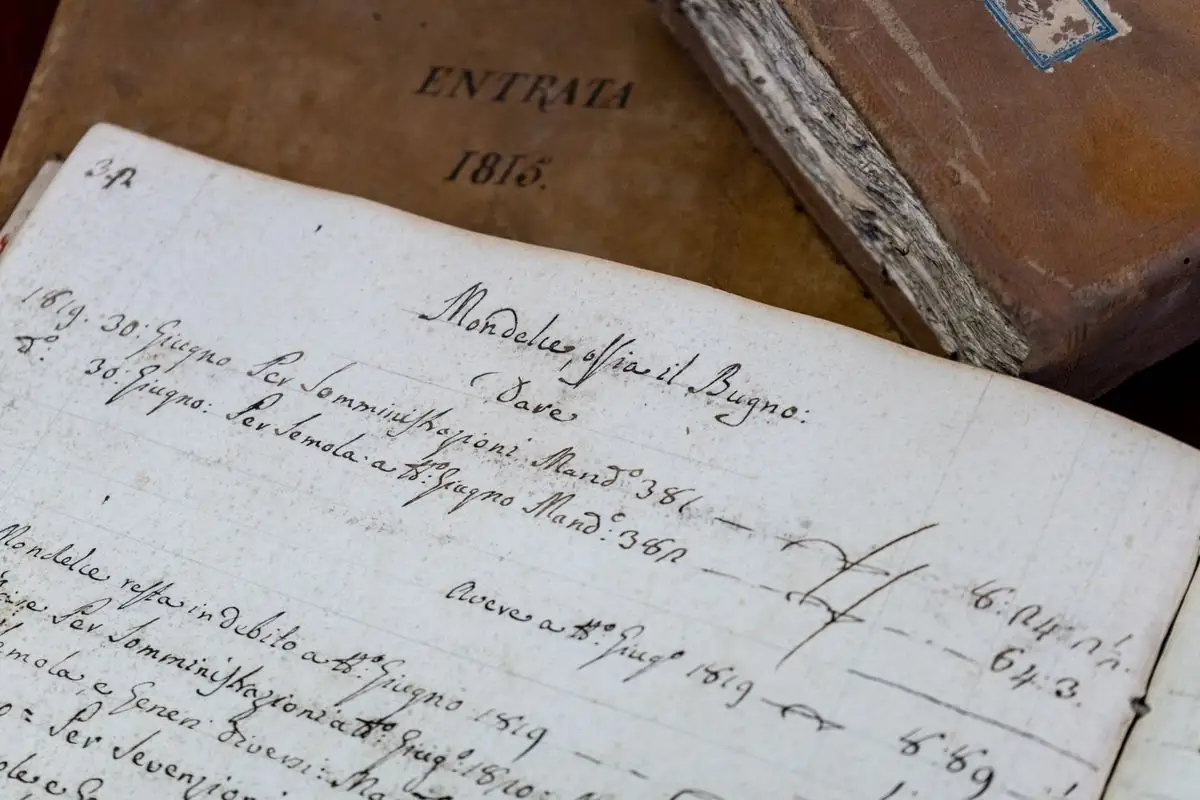
Photograph · source and license
The image, credit, reuse license, editorial context and delivered file are recorded in the exact Sites editorial review. This review is separate from the article’s canonical CIE assessment.
Image and publication standards →In this story
A regional life, not a single label
The Library of Virginia places Orleana Hawks Puckett’s early married life near Groundhog Mountain in Patrick County and a later farm in Carroll County. Its biography dates the move to 1875.
That sequence matters to a local account: a connection to one county does not make every later place part of it. This article’s Patrick County tag identifies a documented stage of her life, not the present location of every memorial associated with her.
Following a person across a county boundary is more accurate than pulling the whole biography into whichever locality a reader searches first.
Names written by other people
The library compares census spellings including Olinah in 1850 and Orlene in 1930 with Orleana on a 1913 pension application. It says she could not write; her own preferred spelling is unknown.
A name in an official document is evidence of what its recorder entered. It is not automatically the subject’s chosen form.
Here, the range of spellings makes that distinction visible. Selecting one consistent heading helps a reader find the article, but consistency should not erase the reason other spellings appear in the source.
The pension application and census entries also belong to different administrative tasks. One recorded a household; another supported a claim.
Those purposes are relevant when comparing the names, even though this article has not inspected the original forms. The comparison is the library’s research, not a new transcription or an independent archival discovery by Gretna Junction.
Two accounts of age
The library estimates her birth around 1844. The National Park Service page begins around 1837 and explicitly acknowledges uncertainty about her age.
These are not interchangeable dates. Printing only the earlier estimate would make the life appear more precisely measured than the two institutional accounts support.
Printing an average would invent a third date without solving anything. The useful editorial choice is to preserve the disagreement and avoid building an argument about an exact age on top of it.
The building is not the whole biography
NPS says the displayed cabin was moved onto the property for one of her husband’s sisters. Puckett and her husband occupied a larger house at the garden plot.
The library also warns against identifying the preserved cabin as her house.
This is a consequential correction, not a minor architectural footnote. A building can preserve a person’s memory without being the building in which that person lived.
The association and the physical identification answer different questions. A caption that collapses them would turn a commemorative object into misleading evidence.
A reader looking at a cabin photograph might reasonably assume the image documents its named resident’s home. That is exactly why a source note needs to do more than supply a credit.
The written account distinguishes the remembered person, the larger house and the preserved cabin without inventing rooms, furnishings or a household moment.
Service, payment and what is not established
The library says she never charged for midwifery. The NPS page reproduces a wayside describing fees and payment in goods.
Both accounts associate her with more than 1,000 deliveries.
The payment statements conflict. They should not be silently combined into a polished account of how her work was financed.
They might reflect different practices or different recollections, but the retrieved evidence does not establish that explanation. Treating the difference as unresolved is more honest than supplying a reconciliation.
Nor is a remembered delivery total a clinical record available for auditing here. This article does not endorse claims of perfect medical outcomes, reproduce speculative diagnoses about her family, or offer present-day maternity advice.
Those omissions leave the historical subject visible without presenting a commemorative account as evidence for a modern health decision.
What a careful memorial can retain
Read together, the two institutional accounts offer a useful form of local remembrance: a regional connection can be specific while other details remain uncertain. The uncertainty concerns particular questions, not a blanket invitation to discard the subject.
The practical distinction is between honoring work and overstating documentation. A memorial can acknowledge service without claiming to recover a voice the sources do not preserve.
A local publication can explain an error in a building’s identification without pretending to have completed a new archaeological investigation. Keeping those boundaries visible makes room for future research to add evidence rather than merely repeat a confident story.
Sources & verification
Complete biography.
Read the sourceUpdated November 2, 2024.
Read the sourceThis article was written with AI assistance from the linked sources. No firsthand interview or visit is implied. Source dates and limits are identified in the reporting. Advertising does not determine editorial coverage. Request a correction or read our standards.
EVERY NEIGHBOR HAS A VOICE
Keep the conversation going.
Share experiences, ask questions and link evidence for factual claims. Automated publication checks apply to each submitted version. Comments are independent community discussion, not submissions to a government body.
Sign in to join · freeCommunity standards