
History People · Virginia
A name in one archive is not yet a life story: build a careful local biography
Census pages, newspapers, directories and public records can reconnect a historical person with place—but each source carries gaps, spelling changes and privacy responsibilities.
Checking whether this browser can read the story aloud.
Explore related topics
Sources & editorial review
Sites editorial review recorded for this exact revision. This AI-assisted article or learning resource includes source links and credited contextual imagery.
This is a local editorial review, not a canonical Cultural Imprint Engine assessment. No CIE score is claimed. Source review does not verify third-party playback, provider availability or image pixels.
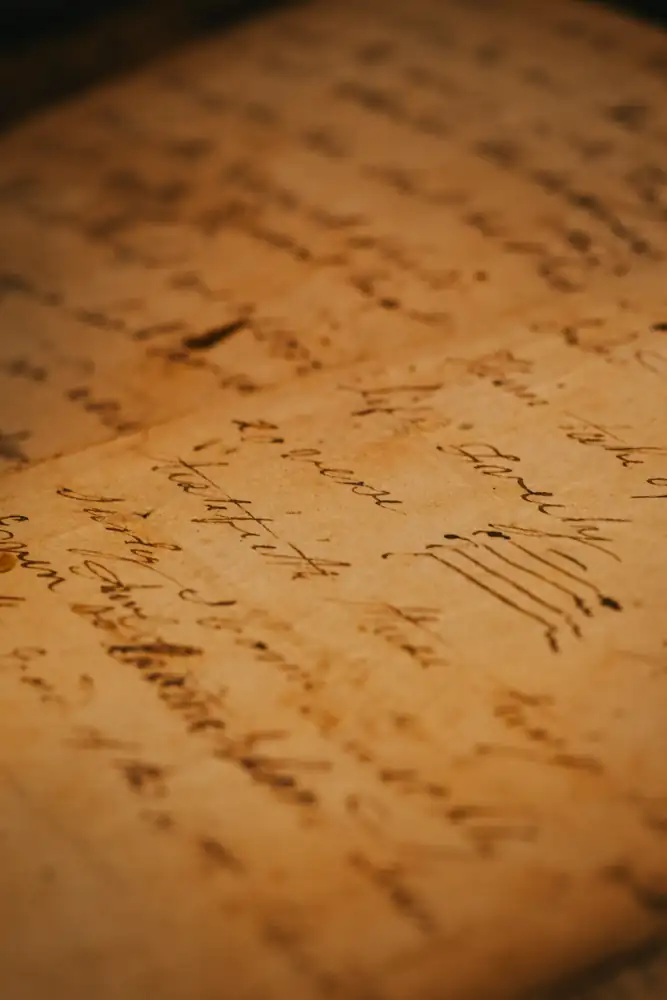
Photograph · source and license
The image, credit, reuse license, editorial context and delivered file are recorded in the exact Sites editorial review. This review is separate from the article’s canonical CIE assessment.
Image and publication standards →In this story
Begin with a bounded identity
A useful biography starts with a name variant, approximate dates, a place and one citable record. It does not begin by merging every matching search result.
Common names, initials, married names, nicknames and clerical spelling changes can connect different people. Write the starting evidence and the uncertainty beside it.
For a historical Southside subject, locality can shift among town, county, district and postal labels. Boundary changes and rural routes complicate the record.
Preserve the place exactly as the source gives it, then map it to the modern locality in a note rather than silently rewriting the past.
Create a research identity card before drafting: known name forms, date range, associates, occupations, locations and sources already checked. A new record should match several fields before it is merged.
When only the name matches, keep it as a candidate instead of forcing continuity.
Negative searches are not proof that an event did not happen. Collections have gaps, names may be mistranscribed and some records were never created or preserved.
Record which repository, date span and name forms were searched so another researcher can repeat the work without overstating absence.
Census records describe a household snapshot
The National Archives explains access to federal population census records after the statutory closure period. A census can supply age, birthplace, occupation, relationship labels and residence for the enumeration date.
It is not a continuous biography, and the information may have been provided by one household member or a neighbor.
Transcribe the page, year, location, line and name as written. Treat ages and spellings as evidence to compare, not perfect facts.
Racial classifications and household terms reflect historical practices and can be harmful or inconsistent. Quote them only when necessary to explain the record and add context.
Newspapers mix report, advertisement and opinion
Historic newspapers can locate public events, work, travel, organizations and death notices. They also carried rumor, partisan argument, racial prejudice, paid notices and reused copy.
A clipping’s presence does not make every sentence true. Identify the publication, date, page, item type and whether another source supports the claim.
A quotation should come from the actual article or a verified transcript, not a search snippet. If optical character recognition is uncertain, inspect the page image.
Do not modernize a person’s words without marking the change, and never invent dialogue to make an archive feel vivid.
Directories and vital records have different strengths
City and business directories can place a person at an address or occupation in a publication year. Vital records can document births, marriages and deaths under access rules.
Neither proves the full relationship story. A shared address may reflect family, lodging, employment or a directory error.
Record the document type and custodian. Index entries are leads to underlying records, not substitutes when the full record is available.
If access is restricted, say so. Do not pressure living relatives to disclose certificates or family details to fill an editorial gap.
Property records connect people and place carefully
Deeds, plats and tax records can show ownership or transactions, but ownership does not always equal residence and a household member may not appear on title. Enslaved people and tenants were often excluded or distorted in official property records.
A biography must acknowledge what the archive was designed to count.
Use instrument identifiers, dates and grantor-grantee relationships exactly. Do not publish a modern private address when a parcel’s historical location can be described more safely.
If a structure no longer stands, label that condition from a dated source rather than assuming from an old map.
Institutions can reveal a public life
Churches, schools, mutual-aid organizations, clubs, military units and workplaces may hold rosters or minutes. Those records can show documented participation, but an institutional label should not be used to infer beliefs, politics or private conduct.
State what the record says and who created it.
Institutional archives may impose donor or privacy restrictions. Follow them.
A public catalog description does not automatically license reproduction of the underlying photograph or letter. Record copyright and permission separately from factual source citation.
Living people require a stronger privacy boundary
Historical work often reaches living descendants. Genealogical connection does not authorize publication of their contact details, medical history or family conflict.
Seek consent for interviews and explain intended use. A relative’s memory should be attributed as memory, not converted into the deceased person’s words.
If a family disputes an identification, preserve the evidence and uncertainty. Do not turn disagreement into entertainment.
Publish a correction when a record was misread and keep the prior version’s date. Respectful revision strengthens the public archive.
Write from the evidence outward
Create a timeline with a source beside each event. Mark inference and conflict.
Organize the narrative around documented transitions—home, school, work, service, community role—rather than filling quiet years with generic background. Context should explain the world around the person without pretending they personally experienced every regional event.
Use cautious language where records diverge: “the 1940 census recorded,” “a 1952 directory listed,” or “the newspaper reported.” This phrasing is not weak; it tells the reader how knowledge was produced.
A biography becomes trustworthy when its seams remain visible.
What the archives establish
The checked sources establish official access routes for census, Virginia collections, historic newspapers and research guides. They do not establish a biography for any unnamed person or grant rights to reproduce every item.
Each subject needs source matching, rights review and, for living people, proportionate privacy care.
The method protects both history and people. It resists merging identities, invented quotations and ancestry claims unsupported by records.
The result may be shorter than a fictionalized profile, but it gives communities a biography they can inspect, correct and build upon.
Sources & verification
Official access and research guidance for federal census records.
Read the sourceOfficial Virginia archival research routes and record guides.
Read the sourceOfficial historic newspaper collection and search route.
Read the sourceLibrary of Virginia digital collections and contextual exhibits.
Read the sourceThis article was written with AI assistance from the linked sources. No firsthand interview or visit is implied. Source dates and limits are identified in the reporting. Advertising does not determine editorial coverage. Request a correction or read our standards.
EVERY NEIGHBOR HAS A VOICE
Keep the conversation going.
Share experiences, ask questions and link evidence for factual claims. Automated publication checks apply to each submitted version. Comments are independent community discussion, not submissions to a government body.
Sign in to join · freeCommunity standards