
Feature Home & place · Virginia
Gainsboro’s housing record shows why preservation must include people, parcels and displacement
A historic district can protect visible fabric while still requiring honest study of ownership, urban renewal and present access.
Checking whether this browser can read the story aloud.
Explore related topics
Sources & editorial review
Sites editorial review recorded for this exact revision. This AI-assisted article or learning resource includes source links and credited contextual imagery.
This is a local editorial review, not a canonical Cultural Imprint Engine assessment. No CIE score is claimed. Source review does not verify third-party playback, provider availability or image pixels.
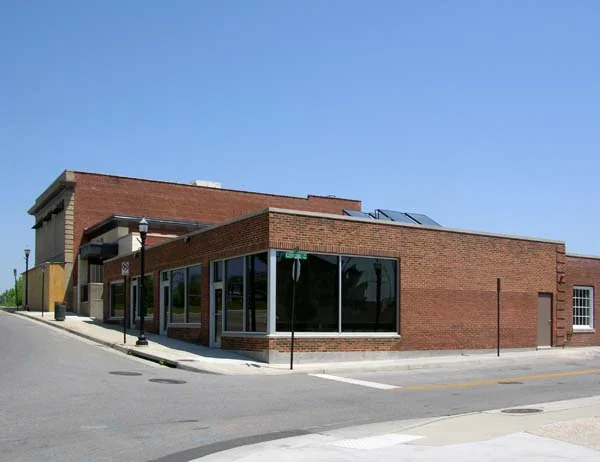
Photograph · source and license
The image, credit, reuse license, editorial context and delivered file are recorded in the exact Sites editorial review. This review is separate from the article’s canonical CIE assessment.
Image and publication standards →In this story
A house is more than the parcel beneath it
Gainsboro's housing history begins with an absence that a streetscape alone cannot explain. A surviving house is visible.
The household that left a demolished one may be visible only in a deed, directory, photograph, church record or family memory. This difference matters whenever a neighborhood is presented as a historic destination.
Visitors naturally gravitate toward buildings they can see. A fuller history must also ask what is missing, how it was removed and whether the people connected to it retained a place in the public story.
Preservation can protect a façade while the neighborhood's social history remains partly erased.
Gainsboro makes that problem concrete because its historical record includes both a developed Black community and extensive urban renewal. The surviving fabric and the losses should be studied together.
Neither a picturesque house nor a demolition total can describe the whole neighborhood. This article follows official preservation records, Roanoke's municipal account, its 2003 neighborhood plan and institutional histories.
It treats the evidence as a historical record rather than a contemporary property listing. There is no claim here about a particular home's occupancy, price, habitability or availability.
The subject is how a neighborhood's meaning changes when people, buildings and institutions are separated.
The neighborhood was a system of institutions
Virginia's Department of Historic Resources traces Gainsboro's earliest settlement to 1834 and identifies it as Roanoke's oldest neighborhood. Its district summary describes the emergence of an African American residential community around the railway headquarters and the growth of businesses, cultural venues and services under segregation.
The agency's January 2024 account also records the destruction of much of the historic core through urban renewal and road building from the mid-1950s into the 1980s. That summary supplies a sequence, not a complete census of the lives within it.
The key analytical point is that housing did not function alone. A home connected residents to a school, congregation, workplace, shop, physician, library and other households.
Those connections could make daily life possible even when the city beyond the neighborhood imposed barriers. Describing Gainsboro as self-sustaining should therefore never suggest that segregation was beneficial or freely chosen.
Institutions could be achievements of determined residents and responses to exclusion at the same time. Their existence demonstrates capacity and leadership.
The restrictions that made separate institutions necessary remain part of the story, rather than an inconvenience to a celebratory account.
Urban renewal had a geography and a duration
Roanoke's municipal Gainsboro page dates the beginning of urban renewal to the 1955 Commonwealth Project in the predominantly African American Northeast area, now associated with the civic-center site. It describes the widening of Williamson Road and the removal of homes, schools, businesses and churches.
The same city account gives totals for Roanoke's urban-renewal projects: 395 acres acquired, 1,600 homes demolished, several schools, two dozen churches and more than 200 small businesses. These are citywide project totals in the municipal account.
They must not be relabeled as a count for the present historic district alone.
The scope distinction is essential. Gainsboro and Northeast were connected by the experience of removal, but the names do not define interchangeable boundaries.
A report can make demolition sound even larger by applying a broad total to a small area, yet exaggeration weakens the very accountability it seeks. The more consequential question follows the decisions street by street.
Which project affected a parcel? When did acquisition occur?
What institution operated there? Keeping those questions geographically precise allows the record to remain persuasive without relying on inflated numbers or presenting several decades of decisions as one afternoon of change.
Demolition totals do not count every form of loss
A house count describes structures. It does not automatically describe the number of households, the value of a business, the distance a family had to move or the support it lost.
The same applies to an acreage figure. Land is measured in area; a neighborhood's usefulness is also measured in relationships.
Removing a house can break a route to a relative, a familiar shop or a congregation. Those effects need evidence in individual cases, but they explain why a financial transaction and a social outcome should never be treated as identical.
This is original analysis of the historical problem, not an assertion that every displaced resident had the same experience. Some households may have reached different arrangements from others.
Owners, tenants and people staying with relatives occupy different positions in property records. A demolition ledger is therefore necessary but insufficient.
It tells a reader where to look, while relocation files, directories and consented accounts can explain what happened to people. A responsible public history should preserve that distinction.
Otherwise an impressive total becomes a way of avoiding the very residents whose lives gave the lost streets their significance.
An ownership record is not a full roster of residents
A deed identifies interests in property, not everyone who made a life at an address. A tenant, boarder, relative or employee living in a household may be absent from the transfer document.
That absence becomes consequential when a demolition history follows owners alone. The acquisition transaction can be documented precisely while the residential history remains incomplete.
An address may have connected several generations or several households to Gainsboro even when only one name appears on the title. This is a methodological distinction, not a claim about an unnamed parcel.
It tells the researcher why a property ledger should be compared with directories, census records and other lawful historical sources.
The distinction also guards against a narrow definition of belonging. Owning a house can create a particular legal and financial relationship, but tenancy does not make a person's attachment to a neighborhood unreal.
A renter may have depended on the same school, library, church and shops as a homeowner. A careful relocation account would therefore ask which residents appear in each file, what the file was designed to record and whose movement it cannot explain.
The public story becomes more accurate when it recognizes those limits before counting outcomes. Housing preservation should preserve the evidence of residence as well as the evidence of ownership.
Gilmer and Patton were not saved by inevitability
The city attributes a decisive preservation effort in March 1992 to Evelyn Bethel and Helen Davis, who fought to protect remaining residential streets on Gilmer and Patton Avenues Northeast. Its account connects that work to the formation of Historic Gainsboro Preservation District, Inc., local H-2 designation and efforts to restore housing.
The importance of naming them is not ornamental. It identifies community action as a cause of preservation.
Remaining homes were not simply the buildings the city happened to leave standing; residents and organizers contested what should happen next.
That changes the usual narrative arc. A neighborhood can be described as rising, declining and then being rescued by redevelopment.
Such a story leaves little space for people who resisted destructive decisions or maintained the place before outside attention returned. Bethel and Davis belong near the center because their work challenges the idea that demolition was a natural stage in a city's progress.
The official account is not a complete biography or a transcript of the campaign. It nevertheless supplies a clear historical proposition: preservation resulted from decisions and organized effort.
The surviving neighborhood should be interpreted through that agency, not merely through the attractiveness of its buildings.
Historical recognition and local control answer different questions
The Gainsboro historic-district nomination was prepared in 2005, and its lengthy inventory documents residential, commercial and institutional resources. A nomination explains why a place meets historical criteria; it is not an inspection of every building's condition at the present date.
The public record gives researchers a structured starting point, including architectural description and historical context. Its value lies in showing how the surviving resources were understood when the district was documented.
Later changes, ownership and living conditions require their own records.
Roanoke's Architectural Review Board describes a separate local role. It administers H-1 and H-2 historic-district regulations and reviews construction, alterations and demolition under zoning rules and adopted design guidelines.
Its page identifies H-2 guidance for Gainsboro and Old Southwest. This is a framework for decisions about physical change, not a guarantee of a resident's housing security.
The distinction matters because a property can have historical significance while a household still faces repair costs or other pressures. Protecting architectural character and sustaining residents can support each other, but neither outcome should be inferred solely from the other's existence.
Henry Street reveals the neighborhood's economic density
DHR describes Henry Street, also known as First Street, as Gainsboro's African American commercial and entertainment center during the first half of the twentieth century. Its November 2025 account identifies the Hotel Dumas, Strand Theatre, Dr. Lylburn Downing's office and small specialty stores.
The agency also connects Oscar Micheaux to a Strand Theatre office opened in 1924 and to filmmaking in the neighborhood. These specifics show why a housing story cannot stop at residential architecture.
The neighborhood held spaces where people earned, spent, created, traveled and received professional services.
Their relationship to nearby homes is the analytical point. A commercial street can supply daily necessities and a platform for cultural life.
It can also give residents routes into paid work and entrepreneurship. The exact experience of one household cannot be reconstructed from a district description, but the density of different functions is visible in the institutional record.
Removing buildings from such a street therefore changes more than its appearance. A theater, medical office and store are not interchangeable units of floor space.
Each organizes a different kind of relationship, and their combined loss can alter what a neighborhood enables residents to do.
A hotel can be neighborhood infrastructure
The University of Virginia's Green Books project documents the Dumas as a hotel constructed in 1916–1917 and later associated with Black travelers and entertainers during segregation. Its account describes a building with lodging, food, services and gathering spaces.
The entry also supplies a sequence of names and ownership. It is a historical institutional record, not a reservation page.
No present guest room, performance or public opening is promised by this article.
The hotel's role is important because a neighborhood was not bounded by the people sleeping there permanently. Relatives, workers, performers and other travelers could connect local institutions to a larger network.
Under segregation, a lodging place could make an otherwise difficult journey possible. A resident's cultural life might therefore depend partly on a building serving visitors.
This interpretation connects housing and hospitality without treating them as the same function. A hotel was not a substitute for a family's home, but it helped a community receive people and sustain exchange.
Preserving its story reveals how Gainsboro reached beyond its street grid while remaining rooted in the needs of Black residents.
The library joined housing to learning
DHR dates Gainsboro's first public-library accommodation in an Odd Fellows Hall to 1921 and its later branch building to 1942. The agency describes the second building as a response to the need for more space and records the work of librarian Virginia Young Lee over more than forty years.
Her development of African American materials is part of that institutional history. The building is important, but the account also identifies professional labor: books did not turn a room into a meaningful library without a person organizing access and encouraging use.
A library makes the connection between a home and a neighborhood especially clear. A household's access to learning need not end at the number of books it can buy or the space it can dedicate to study.
A public institution can extend those possibilities. That is an interpretation of the library's civic role, not a claim about a named patron's experience.
It explains why the survival of a neighborhood institution matters beyond architectural scale. A modest building can carry opportunities larger than its footprint.
Its history belongs within housing preservation because a usable home is surrounded by services and relationships that help residents build a life.
Burrell's story locates exclusion in a person's journey
The Library of Virginia's biography of Isaac David Burrell identifies a physician who moved to Roanoke after earning his medical degree in 1893, established a practice and operated a pharmacy. It also records a home on Patton Avenue and Lucy Addison's residence with the family.
Most starkly, the biography describes Burrell's journey to Freedman's Hospital in Washington in 1914 after Black patients were denied access to Roanoke's white hospitals. He died following surgery.
These are attributed biographical facts, not a newly conducted interview or a medical analysis by this newsroom.
The sequence gives institutional exclusion a local shape. Education, professional success and homeownership did not remove the barrier to hospital treatment.
The home, pharmacy and journey belong in the same account because they show different kinds of access. A person could establish an important place within a community and still be denied a service elsewhere in the city.
That tension is central to Gainsboro's history. The neighborhood's achievements cannot be used to argue that segregation caused no harm.
Nor should the harm erase the ambition and capability of people who built professional, domestic and civic lives within it.
Hospital buildings connect care, employment and continuity
DHR's Burrell Memorial Hospital entry identifies the four-story building constructed from 1953 to 1955 and places it within a succession of hospitals named for Burrell. Its historical account notes later changes in health-care use after civil-rights legislation.
This is a preservation description with a January 2024 update date, not evidence of a present appointment or service. The earlier hospital and the later building should not be collapsed into one unchanging institution at one address.
Their connection to a housing story is broader than patients' journeys. Health care brings professional, support and maintenance work into a neighborhood.
Its premises require utilities, transportation and a relationship with residents. Institutional change can therefore affect both access and employment.
The sources used here do not establish current job numbers or the fate of a specific household. They do establish why a neighborhood's history includes more than houses.
The hospital belongs in the record as part of an infrastructure residents helped create when equal access was denied. Preserving the account requires following continuity and change together, instead of assigning every period to the newest surviving building.
Harrison School represents a contest over educational possibility
DHR dates Harrison School to 1917 and describes Lucy Addison's effort to secure academic secondary instruction for Black students in a period when public authorities often favored limited vocational education. Its account identifies the first class to complete four years of high school under her leadership in 1924.
Those details turn the school from an attractive institutional façade into evidence of a struggle over what young people were entitled to learn. The issue was not simply whether a building existed.
It was the educational horizon the building could support.
A school also binds a housing district to the future of its residents. Families organize journeys, care and expectations around education.
A curriculum can expand possibilities even while other institutions restrict them. This is an interpretation of the relationship, not a claim that every Gainsboro household responded identically.
Addison's work nevertheless makes one point unavoidable: community institutions were built through argument and persistence, not delivered as neutral amenities. A history that names only an architect while leaving out that struggle would describe construction and miss the institution's public significance.
A school name can survive several buildings and uses
The DHR record for the 1929 Lucy Addison High School identifies a later purpose-built institution named for the educator. It distinguishes that building from the new Addison school constructed in 1952 and records the earlier building's later role as Booker T.
Washington Junior High. The sequence matters because a name can move while a building stays.
A reader following family history, yearbooks or addresses needs both pieces of information. One school name does not automatically refer to the same site through every decade.
Roanoke City Public Schools now describes a legacy wall and a Legacy Voices series intended to preserve educators' and students' perspectives. Its institutional page also records a state marker honoring Addison, dedicated in December 2025.
These are described as the school system's history work, not as interviews commissioned by Gretna Junction or a claim that every advertised video has been independently played. The relevance to Gainsboro is continuity of memory.
Buildings and school names change; former pupils' perspectives can explain what official architectural descriptions leave out. The public record becomes stronger when those perspectives retain their source, date and consent rather than being absorbed into an anonymous institutional voice.
The 2003 plan is a historical commitment to read closely
Roanoke's Gainsboro Neighborhood Plan was adopted on March 17, 2003. Its opening sets out housing, Henry Street revitalization, conservation, capacity building and infrastructure as strategic initiatives.
It calls for rehabilitation, maintenance, well-designed infill and increased resident ownership within a community-endorsed housing strategy. Those are planning recommendations from a named document and period.
They are not evidence that all actions were completed, remain funded or produced an identical outcome for every resident.
The plan is useful because it shows the city and community putting housing inside a larger civic system. Residential development, economic activity, design, utilities, services and quality of life were treated as connected questions.
A later reader can use that structure to examine continuity: which recommendations entered budgets, regulations or projects, and which remained aspirations? The distinction protects both the plan and residents from an easy form of misrepresentation.
Praising a document is not the same as demonstrating its implementation. A twenty-three-year-old planning record can guide a historical comparison without being presented as a live guarantee.
Care for a neighborhood includes the cost of keeping a home
Roanoke's urban-design page points residents toward a residential pattern book, street guidance and design resources. Its Architectural Review Board page separately describes application paths for work in H-2 areas.
These official resources provide a way to understand the physical expectations attached to a historic neighborhood. They do not determine the cost of a repair on a specific home.
Nor do they prove that a grant, contractor or financing arrangement is available to a particular owner.
The practical tension deserves honest interpretation. Architectural continuity often depends on ordinary maintenance, while a household budget must also cover daily life.
Residents can value history and still need clear, workable guidance about repair. An account of preservation that ignores this relationship risks treating the homeowner as the custodian of a public image rather than a person trying to sustain a home.
The productive question is how technical expectations, administrative decisions and resources fit together. Evidence should show those arrangements in an individual case before a report claims that protection helped, burdened or displaced a resident.
Keeping the neighborhood's people within its history
A Gainsboro housing archive should make addresses and relationships searchable without exposing private living arrangements. Historical records can identify a former resident or institution when the evidence supports it.
They should not be used to advertise a present resident's personal circumstances. The distinction is especially important when oral histories involve removal, family conflict or health.
A person's willingness to remember one period does not authorize publication of every intimate detail. Meaningful participation requires a clear account of what will be recorded, shared and retained.
That principle is not a reason to leave people out. It is a reason to include them responsibly.
The city's preservation history names organizers; institutional records name educators and physicians; housing records can locate families within changing streets. These strands are more valuable together than a simple before-and-after photograph.
They let the neighborhood appear as a place people shaped, rather than a stage on which officials and developers alone acted. The public story should retain disagreement as well as achievement.
A person may celebrate a surviving institution and still question what happened to the homes around it.
Preservation as an unfinished relationship
Gainsboro's surviving buildings carry a history of residence, exclusion, enterprise, education, care and organized defense. Its lost buildings carry related histories that require a different kind of attention.
Preserving both means refusing to let a historic designation become the final sentence. The public question remains whether the record explains the neighborhood's changes in ways that respect the people who lived through them and those who make a home there now.
This article offers a historical interpretation supported by named institutional sources. It does not report an inspection, present housing offer, settlement payment or completed remedy for urban renewal.
The accompanying original diagram explains relationships among records; it is not a current parcel map. The strongest next step is a more precise account of particular decisions and lives, built from records and consented testimony.
Gainsboro should be remembered through its remaining houses and through the people whose evidence helps explain the spaces between them. A neighborhood's history is not complete when its bricks have been cataloged.
Its human connections must remain visible too.
Sources & verification
Updated January 30, 2024; checked October 9, 2026. Historical settlement, institutions and demolition context; no present condition claim.
Read the sourceMunicipal account of 1955 Commonwealth Project, citywide urban-renewal totals and 1992 preservation work by Evelyn Bethel and Helen Davis. Citywide totals are not district-only counts.
Read the sourceHistorical nomination and inventory; distinct from a present inspection or listing.
Read the sourceActual H-1/H-2 review role and Gainsboro design-guideline paths; no guarantee of application approval or housing security.
Read the sourceUpdated November 3, 2025. Commercial, entertainment, medical-office and Oscar Micheaux context.
Read the sourceInstitutional historical entry for lodging and gathering functions under segregation; no present room or performance claim.
Read the sourceUpdated October 21, 2025. 1921 and 1942 library history and Virginia Young Lee; not a current program calendar.
Read the sourceAnn Field Alexander biography, published 2001; physician, home, pharmacy, Lucy Addison and 1914 hospital journey. No new interview claimed.
Read the sourceUpdated January 30, 2024. 1953–55 building and succession of care institutions; no current service claim.
Read the sourceUpdated October 21, 2025. Lucy Addison, academic instruction, 1917 building and 1924 graduates; no invented pupil experience.
Read the sourceUpdated August 18, 2025. 1929 school and later building/name transitions.
Read the sourceInstitutional legacy-wall, video-series and December 2025 marker account. Metadata does not certify video playback.
Read the sourcePlan adopted March 17, 2003. Historical housing, conservation, capacity and infrastructure recommendations; no completion or current grant claim.
Read the sourcePattern-book and design resources; no property appraisal, repair price or funding availability claim.
Read the sourceThis article was written with AI assistance from the linked sources. No firsthand interview or visit is implied. Source dates and limits are identified in the reporting. Advertising does not determine editorial coverage. Request a correction or read our standards.
EVERY NEIGHBOR HAS A VOICE
Keep the conversation going.
Share experiences, ask questions and link evidence for factual claims. Automated publication checks apply to each submitted version. Comments are independent community discussion, not submissions to a government body.
Sign in to join · freeCommunity standards