
Service guide History · Virginia
A Halifax archaeological collection needs site, catalog, custody and access records kept together
An artifact, photograph or museum label is only one part of the record. Responsible local history connects provenance, field context, accession, stewardship and any allowed loan or research use.
Checking whether this browser can read the story aloud.
Explore related topics
Sources & editorial review
Sites editorial review recorded for this exact revision. This AI-assisted article or learning resource includes source links and credited contextual imagery.
This is a local editorial review, not a canonical Cultural Imprint Engine assessment. No CIE score is claimed. Source review does not verify third-party playback, provider availability or image pixels.
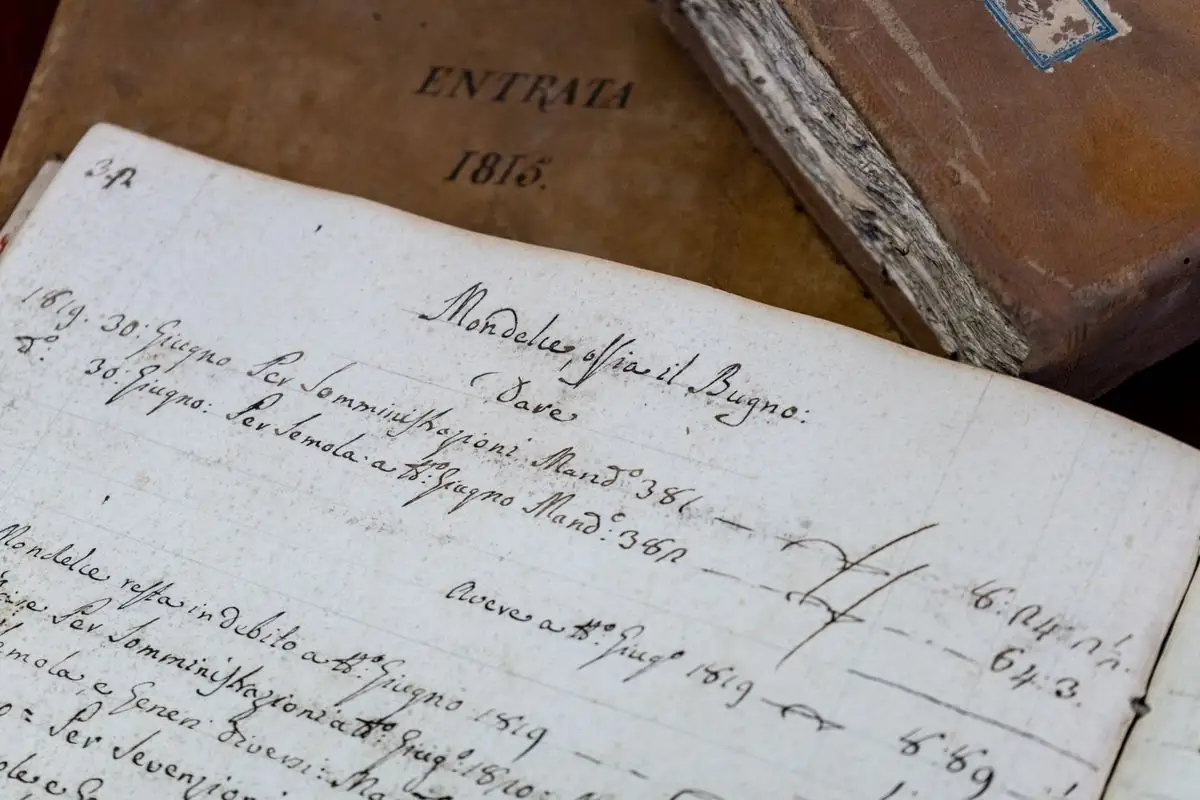
Photograph · source and license
The image, credit, reuse license, editorial context and delivered file are recorded in the exact Sites editorial review. This review is separate from the article’s canonical CIE assessment.
Image and publication standards →In this story
Start with the local question
Which records let a Halifax museum, family or researcher describe an archaeological collection without separating objects from provenance and custody? For Halifax and Halifax County, the answer should identify the responsible custodian, the record date and the next document that could change the conclusion.
It should not turn archaeological collection into an approval, entitlement, safety finding or guarantee.
An object found near Halifax may have a Halifax story while the legal owner, repository, site record and collecting authority belong to different people or institutions. A familiar place name can help discovery, but the controlling jurisdiction, program identity and exact record remain decisive.
Do not publish precise site coordinates, burial information, restricted cultural material, private donor terms or records controlled by consultation and repatriation law. This public guide explains a record chain; it does not ask a reader to publish protected evidence or surrender it to Gretna Junction.
Preserve the record chain
Record 1 is the site and field record, maintained by the authorized investigator and responsible land or agency custodian. For Halifax and Halifax County record 1, it can connect objects to a documented place, layer, feature and collecting event.
Record 1 cannot grant permission to excavate, keep or disclose restricted locations. Preserve the official title, covered date, direct address and retrieval date for archaeological collection record 1, and keep a prior version when the custodian posts a correction or successor.
Record 2 is the catalog and condition record, maintained by the repository or collection steward. For Halifax and Halifax County record 2, it can identify objects, labels, containers, conservation needs and changes over time.
Record 2 cannot replace provenance or establish legal title. Preserve the official title, covered date, direct address and retrieval date for archaeological collection record 2, and keep a prior version when the custodian posts a correction or successor.
Record 3 is the accession or custody agreement, maintained by the owner, donor and receiving repository. For Halifax and Halifax County record 3, it can state transfer, deposit, restrictions and continuing responsibilities.
Record 3 cannot convey rights or cultural authority beyond its actual terms. Preserve the official title, covered date, direct address and retrieval date for archaeological collection record 3, and keep a prior version when the custodian posts a correction or successor.
Record 4 is the research, loan or consultation record, maintained by the repository and applicable rights holders. For Halifax and Halifax County record 4, it can document approved access, handling, reproduction and return conditions.
Record 4 cannot make sensitive material public or waive separate community consultation. Preserve the official title, covered date, direct address and retrieval date for archaeological collection record 4, and keep a prior version when the custodian posts a correction or successor.
What the official sources establish
Virginia DHR operates the Commonwealth's archaeological collections program. This is finding 1 for Halifax and Halifax County.
Keep Halifax and Halifax County finding 1 attached to the named source and the October 15, 2026 check date instead of repeating it as an undated promise about archaeological collection.
DHR describes curation as preservation, conservation, cataloging, long-term custody, museum loans and technical assistance. This is finding 2 for Halifax and Halifax County.
Keep Halifax and Halifax County finding 2 attached to the named source and the October 15, 2026 check date instead of repeating it as an undated promise about archaeological collection.
DHR archives and VCRIS contain historic-resource records, while sensitive archaeological access is restricted. This is finding 3 for Halifax and Halifax County.
Keep Halifax and Halifax County finding 3 attached to the named source and the October 15, 2026 check date instead of repeating it as an undated promise about archaeological collection.
DHR's NAGPRA page separates ordinary collection access from consultation and repatriation duties. This is finding 4 for Halifax and Halifax County.
Keep Halifax and Halifax County finding 4 attached to the named source and the October 15, 2026 check date instead of repeating it as an undated promise about archaeological collection.
A practical sequence
Match every object group to its field and catalog identifiers before writing an exhibit label. Treat this as Halifax and Halifax County step 1: preserve the original identity and status, then obtain the separate record or qualified decision required for the next stage.
At archaeological collection step 1, an acknowledgment, search result or referral is not the final outcome.
Keep the receiving agreement, inventory and condition report with the same collection identity. Treat this as Halifax and Halifax County step 2: preserve the original identity and status, then obtain the separate record or qualified decision required for the next stage.
At archaeological collection step 2, an acknowledgment, search result or referral is not the final outcome.
Request research or loan access through the repository rather than moving material informally. Treat this as Halifax and Halifax County step 3: preserve the original identity and status, then obtain the separate record or qualified decision required for the next stage.
At archaeological collection step 3, an acknowledgment, search result or referral is not the final outcome.
Use consultation and rights review before displaying culturally sensitive material or human remains information. Treat this as Halifax and Halifax County step 4: preserve the original identity and status, then obtain the separate record or qualified decision required for the next stage.
At archaeological collection step 4, an acknowledgment, search result or referral is not the final outcome.
Alternative explanations to test
An object held for years may still be a loan, deposit or undocumented custody problem. This is alternative 1 to test before publishing a conclusion for Halifax and Halifax County.
Under archaeological collection alternative 1, reposted copies of one notice are provenance, not independent confirmation.
A museum label can simplify or outlive the research that supported it. This is alternative 2 to test before publishing a conclusion for Halifax and Halifax County.
Under archaeological collection alternative 2, reposted copies of one notice are provenance, not independent confirmation.
An official site number records a site; it does not invite public visitation or collecting. This is alternative 3 to test before publishing a conclusion for Halifax and Halifax County.
Under archaeological collection alternative 3, reposted copies of one notice are provenance, not independent confirmation.
Digitizing a catalog does not authorize publication of every image, location or donor document. This is alternative 4 to test before publishing a conclusion for Halifax and Halifax County.
Under archaeological collection alternative 4, reposted copies of one notice are provenance, not independent confirmation.
Common failure modes
Risk 1 for archaeological collection is removing objects from land without authority. Repair Halifax and Halifax County risk 1 by returning to the exact source, authority, date and person, property or application identity, then narrow the public wording to what the record supports.
Risk 2 for archaeological collection is publishing a sensitive site location. Repair Halifax and Halifax County risk 2 by returning to the exact source, authority, date and person, property or application identity, then narrow the public wording to what the record supports.
Risk 3 for archaeological collection is discarding field labels during rehousing. Repair Halifax and Halifax County risk 3 by returning to the exact source, authority, date and person, property or application identity, then narrow the public wording to what the record supports.
Risk 4 for archaeological collection is assuming physical possession equals ownership. Repair Halifax and Halifax County risk 4 by returning to the exact source, authority, date and person, property or application identity, then narrow the public wording to what the record supports.
Risk 5 for archaeological collection is using consultation-controlled material as ordinary exhibit content. Repair Halifax and Halifax County risk 5 by returning to the exact source, authority, date and person, property or application identity, then narrow the public wording to what the record supports.
Who owns each part
Source 1, Virginia DHR — State Archaeology, supplies this part of the archaeological collection record: Official program overview, site registration and collections stewardship context. The direct address for Virginia DHR — State Archaeology is https://www.dhr.virginia.gov/programs/state-archaeology/.
Recheck Virginia DHR — State Archaeology for Halifax and Halifax County before a time-sensitive filing, payment, health, account, property or participation decision.
Source 2, Virginia DHR — Archaeological Collections, supplies this part of the archaeological collection record: Official curation, repository access and collection-management route. The direct address for Virginia DHR — Archaeological Collections is https://www.dhr.virginia.gov/programs/archaeological-curation/.
Recheck Virginia DHR — Archaeological Collections for Halifax and Halifax County before a time-sensitive filing, payment, health, account, property or participation decision.
Source 3, Virginia DHR — Archives, supplies this part of the archaeological collection record: Official archives, VCRIS and sensitive-record access boundaries. The direct address for Virginia DHR — Archives is https://www.dhr.virginia.gov/programs/dhr-archives/.
Recheck Virginia DHR — Archives for Halifax and Halifax County before a time-sensitive filing, payment, health, account, property or participation decision.
Source 4, Virginia DHR — NAGPRA, supplies this part of the archaeological collection record: Official consultation, respect and repatriation boundary for covered cultural items. The direct address for Virginia DHR — NAGPRA is https://www.dhr.virginia.gov/about/nagpra-and-dhr/.
Recheck Virginia DHR — NAGPRA for Halifax and Halifax County before a time-sensitive filing, payment, health, account, property or participation decision.
What happens next
Open “Open Virginia archaeological collections” and confirm the current office, supported action and effective date for Halifax and Halifax County. Gretna Junction does not receive the archaeological collection filing, decide eligibility or safety, issue a credential, approve money, guarantee service or certify the result.
The next archaeological collection evidence events are provenance and site-record match; catalog and condition reconciliation; documented custody or accession; authorized research, consultation or loan decision. A changed Halifax and Halifax County official record or reached review date can support an update; an unchanged search result cannot create a new fact.
If the expected archaeological collection record is absent, ask the likely custodian for the narrowest existing document and any fee estimate before requesting a broad search. Preserve the Halifax and Halifax County request date and response status without treating silence as approval, denial or wrongdoing.
Correction, access and reuse boundaries
A correction should identify the changed archaeological collection claim, stronger source and correction date while preserving the original citation. This Halifax and Halifax County article is free to read and its estimate is calculated from readable body words at 220 words per minute.
This publisher-owned archaeological collection revision uses the Sites exact-revision source and rights review. The Halifax and Halifax County review is separate from canonical Cultural Imprint Engine intake and issues no CIE score, protected-feature authorization, payment, entitlement, provider acceptance, delivery receipt or government outcome.
Sources & verification
Official program overview, site registration and collections stewardship context.
Read the sourceOfficial curation, repository access and collection-management route.
Read the sourceOfficial archives, VCRIS and sensitive-record access boundaries.
Read the sourceOfficial consultation, respect and repatriation boundary for covered cultural items.
Read the sourceThis article was written with AI assistance from the linked sources. No firsthand interview or visit is implied. Source dates and limits are identified in the reporting. Advertising does not determine editorial coverage. Request a correction or read our standards.
EVERY NEIGHBOR HAS A VOICE
Keep the conversation going.
Share experiences, ask questions and link evidence for factual claims. Automated publication checks apply to each submitted version. Comments are independent community discussion, not submissions to a government body.
Sign in to join · freeCommunity standards