
Feature History · Virginia
Appomattox was a surrender, a village and the beginning of harder questions
The April 1865 agreement stopped one army’s fighting, but the preserved village also asks readers to follow emancipation, citizenship and memory beyond the McLean House.
Checking whether this browser can read the story aloud.
Explore related topics
Sources & editorial review
Sites editorial review recorded for this exact revision. This AI-assisted article or learning resource includes source links and credited contextual imagery.
This is a local editorial review, not a canonical Cultural Imprint Engine assessment. No CIE score is claimed. Source review does not verify third-party playback, provider availability or image pixels.
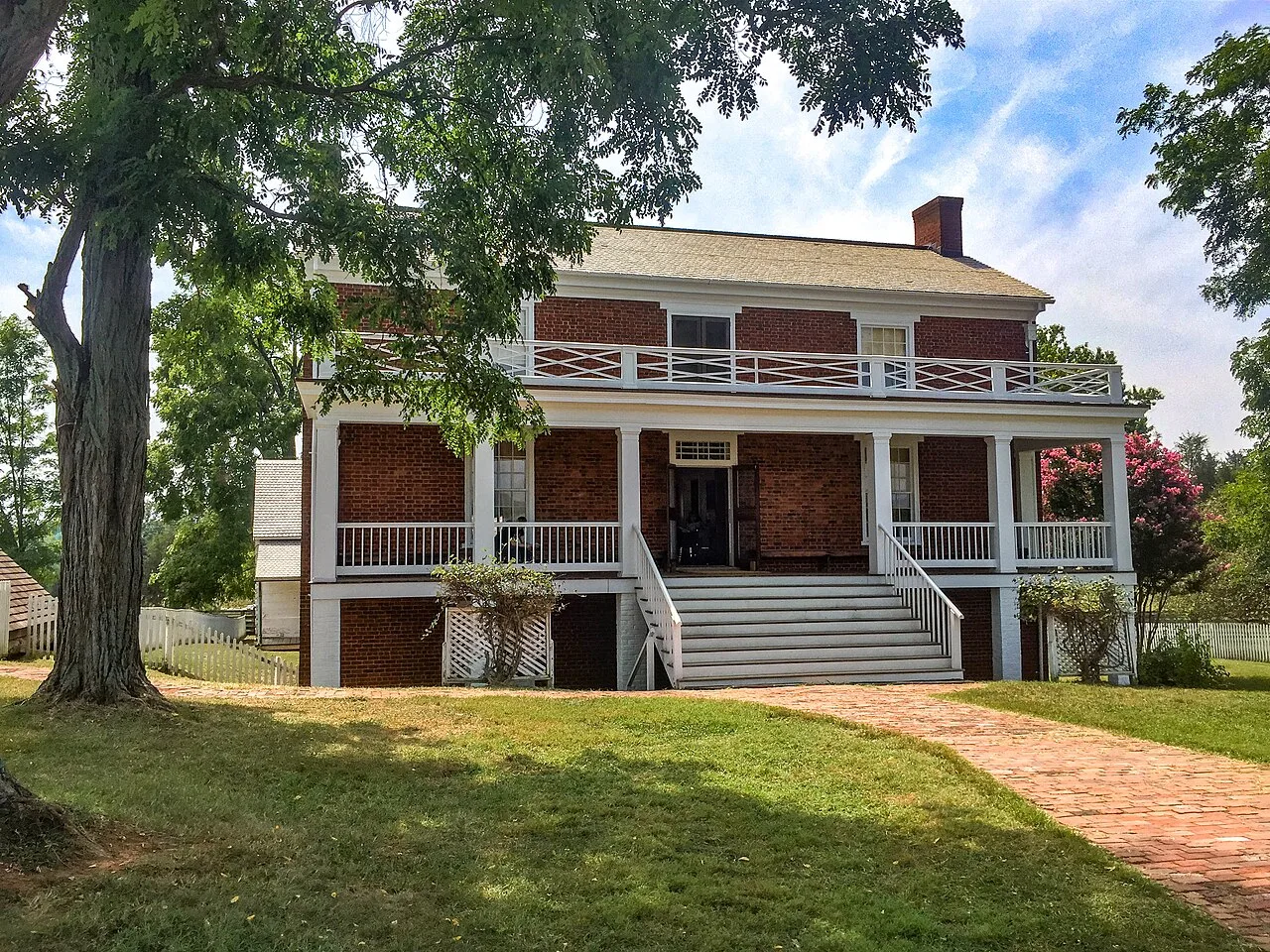
Photograph · source and license
The image, credit, reuse license, editorial context and delivered file are recorded in the exact Sites editorial review. This review is separate from the article’s canonical CIE assessment.
Image and publication standards →In this story
A famous room inside a working village
On April 9, 1865, Ulysses S. Grant and Robert E.
Lee met in Wilmer McLean’s parlor at Appomattox Court House. The National Park Service describes the surrender of the Army of Northern Virginia there as a signal that the nation’s largest war was ending.
The National Archives preserves the written agreement. Those facts matter, but the place was not built to become a national symbol.
It was a county-seat village with homes, businesses, a courthouse and roads used by civilians. Starting with the village changes the frame: military leaders entered somebody else’s community, concluded terms, and left residents to live through the political and economic aftermath.
The courthouse in the place name referred to the settlement, not the room where the documents were signed. That distinction corrects a common misunderstanding and reminds readers that preserved landscapes contain daily life as well as decisive events.
What the agreement did
The surrender terms addressed an army. Officers and enlisted men were paroled; arms and public property were to be turned over, with limited exceptions described in the documents.
Grant’s terms did not function as a peace treaty for every Confederate force, and they did not by themselves settle the constitutional future of the former Confederate states. Other armies surrendered later.
The written record is therefore most useful when read precisely: it shows how one major field army ceased organized resistance and how the parties handled paroles, weapons, horses and return home. The restraint in the document helped reduce the chance of immediate renewed fighting among those forces.
It did not erase wartime destruction or decide how freedom would be protected. Treating the agreement as both consequential and bounded keeps commemoration from turning a specific act into a magical conclusion to every conflict the war had exposed.
Freedom was not delivered by one signature
The war had become a struggle over slavery as enslaved people fled, aided Union forces, sustained families and pressed freedom into military and political policy. The Emancipation Proclamation had declared freedom in rebellious areas as Union power advanced, and Black men served in the United States armed forces.
The Thirteenth Amendment’s ratification later in 1865 abolished slavery except as punishment for crime. None of that meant equal citizenship was secure at Appomattox.
Reconstruction, constitutional amendments, violent resistance, restrictive laws and generations of organizing followed. A responsible account therefore resists a comforting shortcut in which two generals reconcile and the nation is healed.
The military surrender created space for a different struggle over law, labor, land, education and political power. That longer view does not diminish the parlor meeting; it explains why stopping the shooting was necessary but insufficient.
Preservation also has a history
Visitors encounter reconstructed and restored buildings, museum choices, trails and interpretation assembled long after 1865. The National Park Service’s administrative history shows that the protected site itself developed through decades of decisions about land, structures, research and public meaning.
The McLean House was sold after Wilmer McLean’s financial difficulties and was dismantled in the 1890s in a failed plan to move it. Its reconstruction in the twentieth century demonstrates why a historic site should not be treated as untouched scenery.
Preservation can recover a setting and make evidence legible, but it also selects what receives attention. Readers should ask when a building was restored, what evidence guided the work, whose stories appear in exhibits, and which communities remain outside the most familiar route.
Those questions are part of historical literacy, not an attack on commemoration.
A useful way to visit the record
Begin with the park’s official orientation and the surrender documents, then separate three layers: what happened in April 1865, what followed during Reconstruction, and how the site was later preserved. Notice the village plan rather than rushing only to the McLean House.
Read the parole and surrender language before repeating a summary. Look for accounts of civilians, United States Colored Troops, enslaved and newly free people, and the soldiers who died in the final fighting.
Confirm current hours, accessibility and closures through the park because this historical article is not a live visitor notice. Most important, carry the story past the ceremonial end point.
Appomattox can stand for an end to organized battle without standing for completed justice. Its strongest public value lies in holding those two truths together.
The documentary record supports careful distinctions
The National Archives presents the surrender articles as a milestone document, but even a preserved text needs contextual reading. The names, dates and obligations can be verified directly; interpretations about generosity, reconciliation or inevitability require comparison with other evidence.
Grant’s memoirs, Lee’s correspondence, soldiers’ accounts and later commemorations were created for different purposes and at different distances from the event. A source written close to April 1865 may capture immediate understanding but still reflect limited knowledge or self-interest.
A later account may use a wider archive while carrying its own political assumptions. Good local history does not choose between document and interpretation.
It shows which claim comes from which layer and leaves room for revision when stronger evidence appears.
Appomattox connects local and national scales
For Appomattox residents, national memory brings visitors, preservation rules and economic opportunities, but it can also crowd out histories unrelated to the surrender. County life before the war, Black community formation after emancipation, agriculture, education and twentieth-century change deserve research that is not forced through a single weekend in 1865.
The park is a powerful anchor, not the county’s entire identity. Linking national attention to local archives can widen the story: visitors who arrive for the McLean House can learn how the area changed afterward, and residents can use the public platform to preserve family and institutional records on their own terms.
That approach makes commemoration generative rather than repetitive.
Sources & verification
Official NPS overview of the village, surrender and park.
Read the sourceOfficial transcript and context for the April 1865 surrender agreement.
Read the sourceOfficial explanation of the proclamation’s scope and limits.
Read the sourceThis article was written with AI assistance from the linked sources. No firsthand interview or visit is implied. Source dates and limits are identified in the reporting. Advertising does not determine editorial coverage. Request a correction or read our standards.
EVERY NEIGHBOR HAS A VOICE
Keep the conversation going.
Share experiences, ask questions and link evidence for factual claims. Automated publication checks apply to each submitted version. Comments are independent community discussion, not submissions to a government body.
Sign in to join · freeCommunity standards