
History Sports · Virginia
Wendell Scott’s Danville legacy includes a victory, a family team and delayed recognition
The December 1963 result, the 2015 Hall of Fame honor and the 2021 trophy presentation tell distinct parts of a Southside racing history.
Checking whether this browser can read the story aloud.
Explore related topics
Sources & editorial review
Sites editorial review recorded for this exact revision. This AI-assisted article or learning resource includes source links and credited contextual imagery.
This is a local editorial review, not a canonical Cultural Imprint Engine assessment. No CIE score is claimed. Source review does not verify third-party playback, provider availability or image pixels.
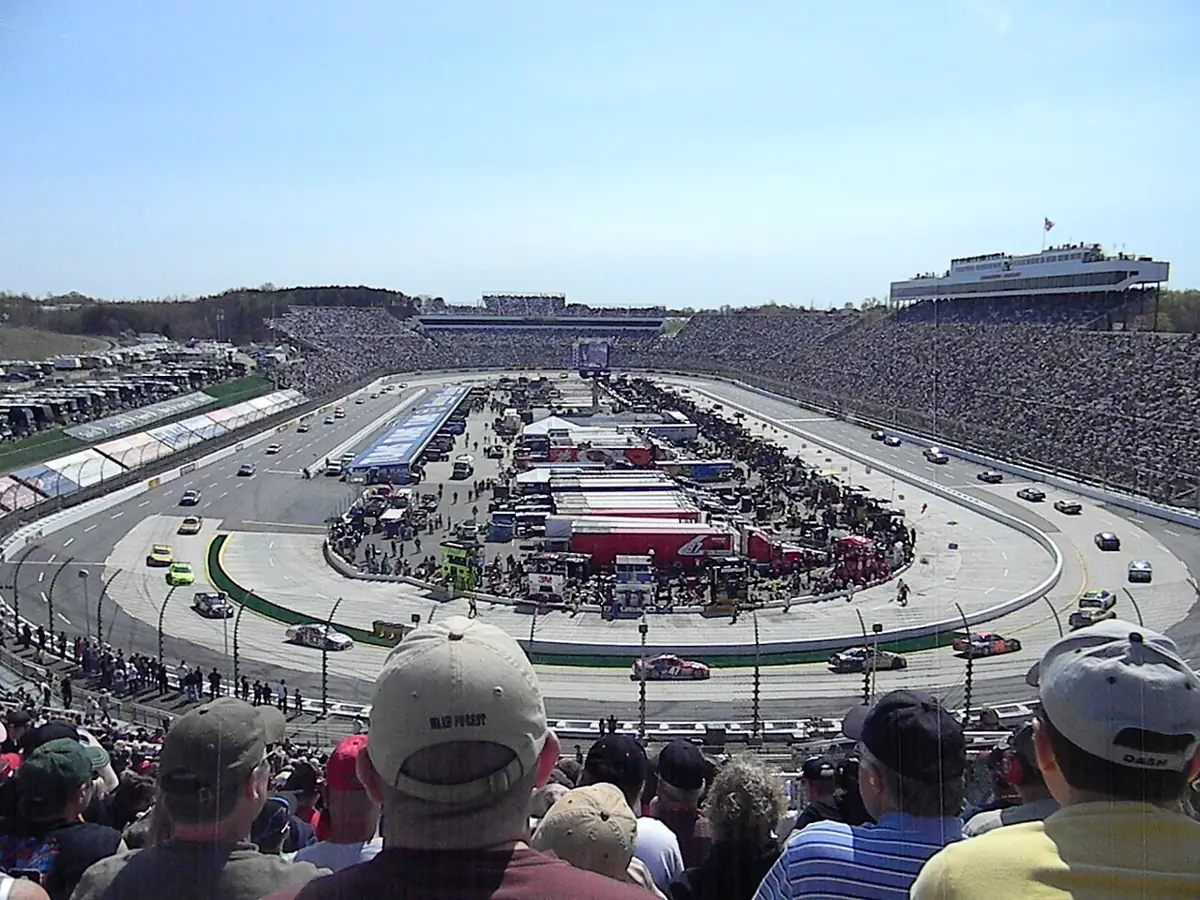
Photograph · source and license
The image, credit, reuse license, editorial context and delivered file are recorded in the exact Sites editorial review. This review is separate from the article’s canonical CIE assessment.
Image and publication standards →At a glance
- Scott won on December 1, 1963, in the 1964 NASCAR season.
- The family-based team’s work belongs in the history.
- NASCAR confirmed a replica trophy presentation in 2021.
In this story
The victory’s calendar date and season
Wendell Scott won NASCAR’s premier-series race at Speedway Park in Jacksonville, Florida, on December 1, 1963. NASCAR’s official record identifies that event as the third race of the 1964 season.
Both dates belong in the story. The calendar establishes when it happened; the season designation explains where the result appears in the competition record.
For Danville and Pittsylvania readers, Scott’s achievement connects a local racing life with a national milestone. He became the first Black driver to win at NASCAR’s highest level.
NASCAR’s 2015 Hall of Fame profile also distinguishes him as the first Black driver to compete full time in its premier division. These claims describe different achievements: sustained participation and a particular race victory.
Scott’s premier-series debut came on March 4, 1961, at Piedmont Interstate Fairgrounds in Spartanburg, South Carolina. NASCAR records 495 starts across his 1961–73 career, with 20 top-five finishes and 147 top-ten finishes.
These totals help restore the scale of his work. The Jacksonville win is the landmark, but his career also involved returning to competition over many years.
A result was recognized before a celebration was restored
NASCAR’s August 28, 2021 account explains that Buck Baker was initially flagged as the Jacksonville winner. An official scoring review determined that Scott had finished two laps ahead, with Baker second.
Scott did not receive the customary post-race celebration or trophy that day. Recording the win and publicly honoring the winner became two different events.
That separation matters when a community tells the story. It would be incomplete to say Scott never received credit for the result, because the official record contains his victory.
It would also be incomplete to present the race as an ordinary win with an ordinary celebration. The denied ceremony belongs beside the competitive achievement, because it shaped how the achievement was experienced.
The 2021 NASCAR account announced a trophy presentation to Scott’s family at Daytona. A subsequent February 11, 2022 NASCAR report confirms that the family had received the replica winner’s trophy there the previous season.
The later report establishes completion, rather than leaving readers with only an announced plan. Nearly 58 years separated the race from that public presentation.
The team included work beyond the driver’s seat
Scott was a driver, mechanic and independent team owner. NASCAR’s reporting on his Danville-area legacy describes that combination of roles and the involvement of his sons as crew members.
The same organization’s 2022 report on Wendell Scott Jr. calls the operation a family-based team and recognizes his work both on the car and, later, in preserving his father’s history.
This gives regional readers a broader picture of competition. A car must be prepared, repaired and transported.
Someone has to diagnose what happened, find a workable part and get ready for the next start. In a small independent operation, those jobs can sit close together.
The person behind the steering wheel may also carry responsibilities that a larger organization spreads among many specialists.
A family team also changes what belongs in the historical record. A race photograph may show one driver, while the work behind it involved several people.
Tools, travel records, correspondence and photographs of repairs could illuminate that work if their ownership and dates are established. Such materials would help a museum tell an athletic story through the labor that made participation possible.
The local track world was part of the path
NASCAR’s Danville Speedway article was originally published March 26, 2015, and later republished in 2019. It contains interviews with Scott’s sons and people associated with the former track near Sutherlin.
Its account places the track’s opening in 1957 and follows a later revival in 1992–94. It is a dated piece of firsthand reporting about a particular place, not a promise that the site is open to visitors.
The article describes memories of Scott as a hands-on mechanic and competitor. Those recollections add a kind of evidence that season totals cannot supply: how people remembered encountering him and how a racing community understood his presence.
Because a memory comes from a named speaker at a later interview, it should retain that context rather than becoming an unqualified description of every race.
The former track’s story also explains why sports heritage can survive after a venue stops operating. Programs, film and family recollections may carry details that the physical site no longer shows clearly.
Their value is greatest when they remain connected to the people who kept them and the event they document. The local racing world is part of Scott’s legacy, even though Jacksonville became its best-known national milestone.
A hall honor and a road dedication
Scott entered the NASCAR Hall of Fame as part of the Class of 2015. He had died in 1990.
A posthumous induction recognizes a career after the person’s lifetime; it cannot recreate the opportunities or treatment he encountered while competing. It can, however, place the career within the institution’s continuing account of its own sport.
Danville added a visible civic commemoration on December 8, 2018. The city’s archived announcement records the dedication of an 8.5-mile section of the Danville Expressway, from U.
S.29 Business at the state line to the northern city limits, as the Wendell O. Scott, Sr. Memorial Highway.
The ceremony connected the racing record with local public memory and the work of the Wendell Scott Foundation.
The city announcement described the foundation’s educational opportunities in science, technology, engineering and mathematics, alongside cultural enrichment. That 2018 description establishes what the city recognized at the dedication.
It does not establish a current class schedule or museum opening. Families interested in present programs need current information directly from the organization.
A Southside history with several anchors
For Gretna-area families, Scott’s story offers several firm points to remember: a Danville beginning, a full-time national racing career, the December 1963 victory, a family operation, the 2015 induction and the 2021 trophy presentation. Each answers a different question.
Together they show achievement, the conditions surrounding it and the long work of public recognition.
A strong community account makes room for all three. The sport’s results establish what Scott accomplished; testimony and institutional acknowledgments establish the unequal treatment surrounding the accomplishment; the later honors show how people chose to remember it.
Keeping those parts connected gives the region a fuller racing history and gives younger readers a clearer understanding of why the delayed trophy mattered.
Sources & verification
Official record of Scott’s premier-series career and 2015 Hall of Fame class.
Read the sourceAugust 28, 2021 account of the 1963 scoring review and denied trophy presentation.
Read the sourceFebruary 11, 2022 report confirming the 2021 trophy presentation and family-team legacy.
Read the sourceFirsthand reporting originally published March 26, 2015, with named memories of the former Danville track.
Read the sourceDecember 8, 2018 municipal announcement of the memorial highway dedication.
Read the sourceThis article was written with AI assistance from the linked sources. No firsthand interview or visit is implied. Source dates and limits are identified in the reporting. Advertising does not determine editorial coverage. Request a correction or read our standards.
EVERY NEIGHBOR HAS A VOICE
Keep the conversation going.
Share experiences, ask questions and link evidence for factual claims. Automated publication checks apply to each submitted version. Comments are independent community discussion, not submissions to a government body.
Sign in to join · freeCommunity standards