
Explainer Science · Virginia
Tobacco country’s red soils carry a mineral story
Official soil profiles explain a familiar color while revealing why Pittsylvania’s ground cannot be reduced to one kind of clay.
Checking whether this browser can read the story aloud.
Explore related topics
Sources & editorial review
Sites editorial review recorded for this exact revision. This AI-assisted article or learning resource includes source links and credited contextual imagery.
This is a local editorial review, not a canonical Cultural Imprint Engine assessment. No CIE score is claimed. Source review does not verify third-party playback, provider availability or image pixels.
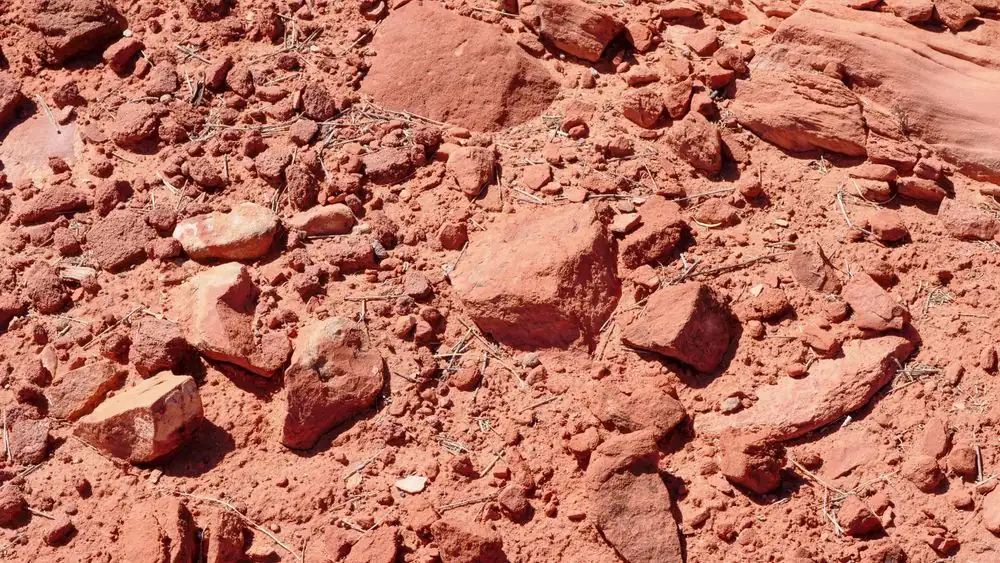
Photograph · source and license
The image, credit, reuse license, editorial context and delivered file are recorded in the exact Sites editorial review. This review is separate from the article’s canonical CIE assessment.
Image and publication standards →At a glance
- Oxidized iron commonly produces rusty red soil colors.
- Cecil and Sheva descriptions show contrasting parent materials and drainage within the Piedmont.
In this story
A color made by weathering
The red ground familiar across tobacco country reflects chemistry as well as farming history. An NRCS soil handbook explains that weathering and oxidation produce mineral colors: iron commonly creates red or rusty tones, while organic matter tends to darken soil.
Color is therefore a clue to a soil’s formation and environment, not a complete test of fertility.
The federal Cecil series description provides a concrete Piedmont example. It identifies very deep, well-drained soils developed from weathered felsic igneous and high-grade metamorphic rocks.
Its example profile starts with a dark yellowish-brown sandy loam and passes into thick red clay layers. The classification identifies kaolinitic clay, and the profile records mica.
A red bank can contain a layered mineral history beneath a less-red surface.
Pittsylvania also has another story
NRCS revised the Cecil description’s format in November 2025 without changing its data. Its representative profile is in North Carolina, and its range includes Virginia; that profile is not a measurement of a particular Gretna or Chatham garden.
The Sheva series, established in Pittsylvania County in 1989, shows why that distinction matters. Its September 2021 description identifies soils formed from Triassic sedimentary bedrock, with moderately well-drained conditions and a shallower transition to soft bedrock.
The example reaches weathered sandstone at 30 inches, rather than continuing through the very deep Cecil sequence.
For the region’s residents, the useful lesson is underneath the familiar color. Nearby soils can differ in rock origin, depth and the movement of water.
Those differences affect how a landscape responds to cultivation or disturbance. Recognizing red soil is a beginning; understanding its layers gives the place a more precise identity.
Sources & verification
Official profile, parent material, drainage, clay classification and November 2025 format-only revision; no parcel identification inferred.
Read the sourceSeptember 2021 series description; Pittsylvania type location, 1989 establishment, Triassic parent material and sandstone depths.
Read the sourceRetrieved handbook pages 12–14 for general iron oxidation/color explanation; New Hampshire examples are not applied as Virginia soil mapping.
Read the sourceThis article was written with AI assistance from the linked sources. No firsthand interview or visit is implied. Source dates and limits are identified in the reporting. Advertising does not determine editorial coverage. Request a correction or read our standards.
EVERY NEIGHBOR HAS A VOICE
Keep the conversation going.
Share experiences, ask questions and link evidence for factual claims. Automated publication checks apply to each submitted version. Comments are independent community discussion, not submissions to a government body.
Sign in to join · freeCommunity standards