
Explainer Science · Virginia
A fallen log can be a neighborhood in the forest
An ordinary woodland observation can connect decay, habitat and the next generation of growth.
Checking whether this browser can read the story aloud.
Explore related topics
Sources & editorial review
Sites editorial review recorded for this exact revision. This AI-assisted article or learning resource includes source links and credited contextual imagery.
This is a local editorial review, not a canonical Cultural Imprint Engine assessment. No CIE score is claimed. Source review does not verify third-party playback, provider availability or image pixels.
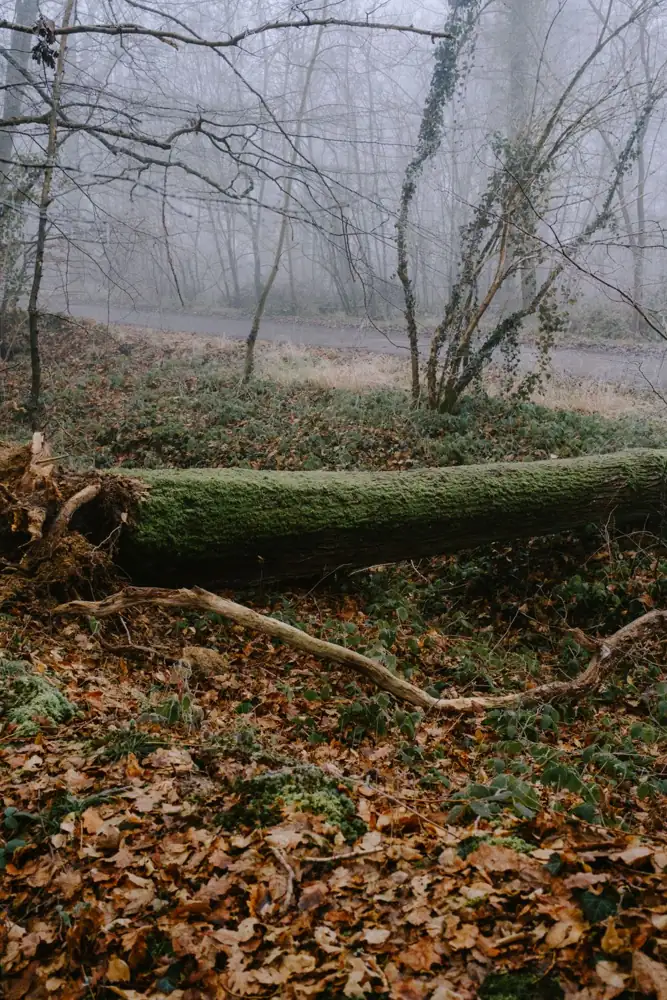
Photograph · source and license
The image, credit, reuse license, editorial context and delivered file are recorded in the exact Sites editorial review. This review is separate from the article’s canonical CIE assessment.
Image and publication standards →At a glance
- Dead wood remains part of a living forest system.
- Fungi and other organisms help recycle material.
- Observe without moving habitat or treating one visit as an inventory.
In this story
Look at the part that stopped standing
A fallen tree can appear to be the end of a forest story. Ecologically, it is also a change in the tree's role.
Wood that once supported a canopy can provide shelter, hold moisture, support organisms and gradually return material to the forest floor. A woodland outing can study that transition without needing a summit, a rare-species sighting or a long species list.
National Park Service interpretation explains decomposition through visible forest features. Forest Service research treats downed dead wood as a component of carbon cycling, regeneration and wildlife habitat.
These sources provide scientific context for woodland observation. This article uses them to frame a learning exercise; it does not report a survey of a Gretna park or establish which species currently occupy a particular log.
Decomposition is work by living things
Fungi can release enzymes that help break down dead organic material, drawing nutrients from it. Other organisms use decaying wood or the spaces around it.
As the structure changes, it can become softer and more fragmented, eventually contributing material to the surrounding soil system.
A mushroom visible on a log is only part of the organism's presence. It can be evidence of a fungus, but a casual glance should not become a precise species identification or an instruction to eat it.
NPS's decomposition pages explain the ecological role rather than treating fungi merely as decorations. Leave them in place and record what can be seen without collecting or disturbing the material.
A nurse log shows a later chapter
NPS describes nurse logs that supply water and nutrients for new growth. In some forests, seedlings and other plants can use the decaying structure as a growing place.
The visible tree remains become part of a setting for later life.
That pattern is not a claim that every local fallen trunk will grow the same plants. Tree species, moisture, climate, soil and time affect the process.
A photograph from a wet western forest can teach the nurse-log idea without serving as a species forecast for Southside Virginia. Keep the principle and the geographic example attached to each other when using a park's educational material.
Wood offers more than food
Downed wood can create cover, resting places and small-scale variation near the ground. Standing dead trees, called snags, offer a different structure, including possible cavities.
Forest Service research examines these structures together with wildlife use and vegetation. A forest's living canopy and its dead-wood features should not be treated as competing categories.
Yet habitat value does not mean every dead tree should be left beside a road, building or heavily used path. Public land managers and property owners must consider hazards and the site's purpose.
This article is an observation guide, not a prescription for managing a dangerous tree. Decisions about tree safety require appropriate expertise and permission from the responsible owner or manager.
Find the setting around the wood
For a Virginia outing, begin with the setting rather than assuming every woodland is interchangeable. A dry slope, a damp low area and an open edge give an observer different questions to pursue.
The exercise proposed here records those visible conditions without deciding which formal forest-community category applies. Earlier land use can also leave clues worth asking a park educator about.
During a visit, note the broad setting before interpreting the log: slope or level ground, nearby water, open light or closed canopy, and visible leaves or branches. These observations can generate a question for a field guide or park educator.
They do not establish a formal natural-community classification. A trained inventory involves methods and evidence beyond a family notebook.
Design an outing around one observation place
Choose a legal visitor area that works for the people coming. A path's short distance does not alone establish accessibility.
Surface, slope, width, parking, seating, toilets and the distance back all matter. Consult the actual park's current access information and staff when needed, rather than assigning access characteristics from a photograph.
The ecological exercise can be adapted to a seated viewpoint, a nearby woodland edge or a photograph supplied by an educator. A person who cannot leave a paved route can still compare textures, shapes and stages of decay visible from it.
Do not create participation by moving a log, carrying habitat onto a path or asking someone to enter unsuitable terrain.
Observe in layers
First describe structure: intact bark, exposed wood, cracks, hollow spaces or broken fragments. Then describe visible growth or activity without claiming more than the observation supports.
A note such as green patches on the upper surface is different from a verified moss identification. An insect seen once is a sighting, not proof of a resident population.
Take a photograph from the permitted route if appropriate and use a recognizable viewpoint for a later comparison. Avoid inserting fingers, turning logs over, peeling bark or collecting material.
Those actions can disturb organisms and may violate site rules. The question can be what changed on the visible surface, leaving the hidden habitat intact.
A fictional observation record
Imagine a family watches two visible fallen logs for five minutes each from an authorized path. It records six observable features on the first and four on the second.
The total is 10 recorded features, but that is not a biodiversity count. Several features may concern the same organism or simply the wood's shape.
Suppose a later visit records seven features on the first log. That does not prove a 17 percent rise in biodiversity.
The viewing angle, season, light and observer attention may have changed. Even the denominator would be a list of observations, not a standardized species sample.
The example teaches why a nature notebook can support curiosity without manufacturing a scientific trend.
Revisit the process, not a promised sighting
On a later visit, compare the same visible area where permitted. Has bark detached?
Is a branch no longer present? Does the surface appear wetter or drier?
Note weather and viewing conditions. Small changes can encourage questions about decomposition rate, moisture and the organisms involved.
Some features may persist for years, while visible fungal growth may appear and disappear over shorter periods. A quiet log is not inactive simply because no animal is visible during a five-minute watch.
Processes continue beyond what an observer can see. NPS and Forest Service explanations help connect visible clues with those less obvious processes without requiring a claim that every mechanism was observed locally.
Leave the neighborhood in place
A good ending for the outing is a drawing, photograph or question. It need not be a collected souvenir.
The family can connect the log's changing roles: former canopy support, current habitat, decomposing material and possible support for new plants. Those roles reveal a forest as a system of exchanges across time.
For Gretna-area readers, this provides a flexible way to learn from an ordinary woodland scene while making room for different mobility and attention needs. The specific site, rules and access conditions should be established before travel.
The ecological lesson is stable: wood can stop being a standing tree while remaining an active part of the place around it.
Sources & verification
New River Gorge interpretation of downed wood and snags; mechanism used without claiming a Virginia site survey. Retrieved and checked against the available primary-source page or indexed official excerpt on October 3, 2026.
Read the sourcePrimary interpretation of nurse logs and fungi; geographic example kept distinct from Southside observations. Retrieved and checked against the available primary-source page or indexed official excerpt on October 3, 2026.
Read the source2019 journal research source on dead-wood inventory and ecological processes; DOI contains 2018, but the Forest Service publication year is 2019. Retrieved October 3, 2026; not a current local inventory.
Read the sourceUpdated March 17, 2025; primary account of fungal decomposition and the limits of casual mushroom identification. Retrieved and checked against the available primary-source page or indexed official excerpt on October 3, 2026.
Read the sourceThis article was written with AI assistance from the linked sources. No firsthand interview or visit is implied. Source dates and limits are identified in the reporting. Advertising does not determine editorial coverage. Request a correction or read our standards.
EVERY NEIGHBOR HAS A VOICE
Keep the conversation going.
Share experiences, ask questions and link evidence for factual claims. Automated publication checks apply to each submitted version. Comments are independent community discussion, not submissions to a government body.
Sign in to join · freeCommunity standards