
Explainer Life · Nation
A credit-card statement has several balances with different jobs
The statement balance, current balance and minimum due should not be read as interchangeable.
Checking whether this browser can read the story aloud.
Explore related topics
Sources & editorial review
Sites editorial review recorded for this exact revision. This AI-assisted article or learning resource includes source links and credited contextual imagery.
This is a local editorial review, not a canonical Cultural Imprint Engine assessment. No CIE score is claimed. Source review does not verify third-party playback, provider availability or image pixels.
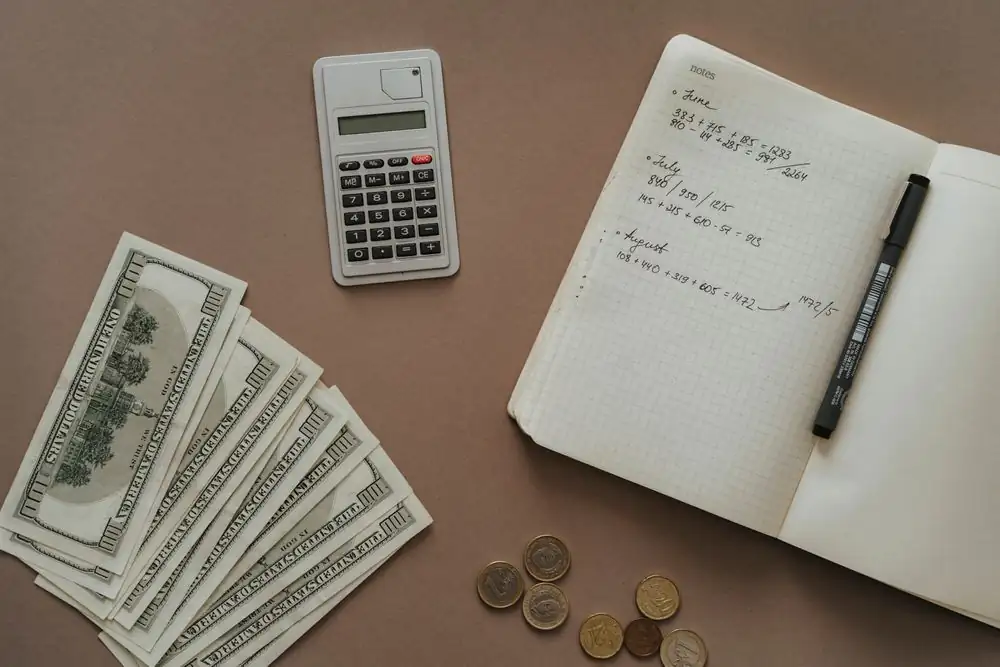
Photograph · source and license
The image, credit, reuse license, editorial context and delivered file are recorded in the exact Sites editorial review. This review is separate from the article’s canonical CIE assessment.
Image and publication standards →At a glance
- A closing date and a due date mark different events.
- The current balance can include later transactions.
- Grace-period conditions depend on the account terms.
In this story
A month ends on paper
A credit-card billing cycle ends on a closing date. The statement records activity through that cycle and gives a payment due date.
Later purchases or payments can change the current balance displayed online without changing what the already-issued statement recorded. That is why two balance figures can both be correct while describing different moments.
CFPB's guidance explains that a grace period is the interval between a billing cycle's end and its payment due date during which qualifying balances can be paid without purchase interest. Credit cards are not required to offer one.
When one exists, its terms matter; cash advances, carried balances and other transactions can have different treatment.
A fictional timeline
Imagine a statement closes with a $400 balance. After closing, the cardholder makes a $60 purchase, so the current balance becomes $460 before other activity.
The statement still shows $400. If the person then makes a $100 payment, the current balance becomes $360 in this simplified example, excluding interest, fees, adjustments or pending transactions.
That payment does not mean the original $400 statement balance has been paid in full. It means $100 was paid.
Whether remaining amounts accrue interest depends on the account's terms and history. These made-up figures explain the timeline; they do not tell a reader which amount to pay on an actual card.
Minimum due answers a narrower question
The minimum payment is the amount the issuer requires for that bill under the account terms. Paying it can still leave a balance subject to interest.
Federal statement rules address disclosures such as due dates, late-payment information and repayment warnings. The warnings can help readers see that making minimum payments may stretch repayment over a much longer period.
Read the actual warning and its assumptions. A printed estimate generally concerns the balance and assumptions specified on that statement, rather than a future pattern of new spending.
Adding purchases while making the estimated payment changes the problem. A household should not interpret a repayment estimate as a prediction that the account will be clear regardless of later use.
A refund creates another timing distinction. If an illustrative $30 return posts after closing, it can reduce the current balance while leaving the earlier statement unchanged.
Ask the issuer how a credit affects the payment requirement for that bill. A household should not assume that a merchant promising a refund means the card issuer has already received or applied it.
Find the timing instruction
The Office of the Comptroller of the Currency explains statement-delivery and payment timing requirements for credit cards. Its overview and CFPB guidance describe the general 21-day protection around delivery and due dates.
Actual receipt and posting instructions still matter, including the issuer's acceptable payment methods and cutoff times.
For an electronic payment, preserve the confirmation and later check that it posted as expected. A scheduled instruction is not the same as a completed transfer.
If something appears wrong, use the issuer's verified contact route and identify the statement, amount, date and reference number involved.
Read without guessing
A useful five-minute review identifies closing date, statement balance, minimum due, due date and the interest information. Then compare the recent activity list with known purchases and payments.
For Gretna-area households, the goal is to understand what each field says before deciding on an account-specific action. This is billing literacy, not a promise that a particular payment will preserve a grace period or eliminate interest.
Sources & verification
Current consumer guidance; account-specific grace terms are not inferred. Retrieved and checked against the available primary-source page or indexed official excerpt on October 3, 2026.
Read the sourcePrimary periodic-statement disclosure rule; used for the existence of warnings and billing fields. Retrieved and checked against the available primary-source page or indexed official excerpt on October 3, 2026.
Read the sourceFederal bank consumer guidance on statement delivery and due dates. Retrieved and checked against the available primary-source page or indexed official excerpt on October 3, 2026.
Read the sourceThis article was written with AI assistance from the linked sources. No firsthand interview or visit is implied. Source dates and limits are identified in the reporting. Advertising does not determine editorial coverage. Request a correction or read our standards.
EVERY NEIGHBOR HAS A VOICE
Keep the conversation going.
Share experiences, ask questions and link evidence for factual claims. Automated publication checks apply to each submitted version. Comments are independent community discussion, not submissions to a government body.
Sign in to join · freeCommunity standards