
Explainer Life · Nation
A used battery needs a disposal route that matches its chemistry
The recycling arrow on a battery does not mean it belongs in the curbside bin.
Checking whether this browser can read the story aloud.
Explore related topics
Sources & editorial review
Sites editorial review recorded for this exact revision. This AI-assisted article or learning resource includes source links and credited contextual imagery.
This is a local editorial review, not a canonical Cultural Imprint Engine assessment. No CIE score is claimed. Source review does not verify third-party playback, provider availability or image pixels.
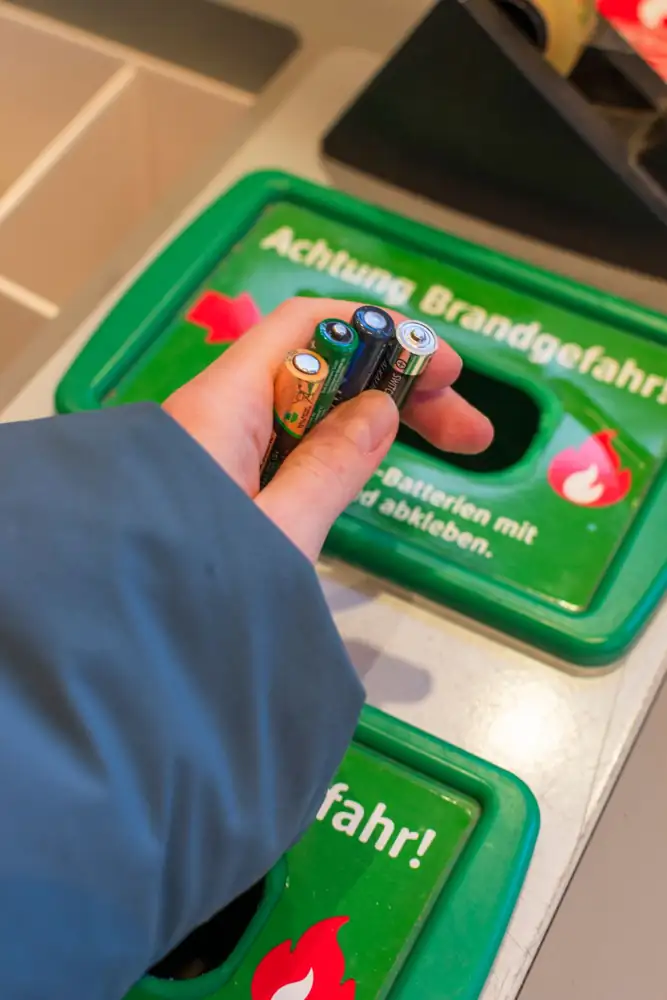
Photograph · source and license
The image, credit, reuse license, editorial context and delivered file are recorded in the exact Sites editorial review. This review is separate from the article’s canonical CIE assessment.
Image and publication standards →At a glance
- Lithium batteries need a specialized collection route.
- Identify battery chemistry before choosing a destination.
- Local acceptance rules must be confirmed separately.
In this story
Sort by what it is
A household battery collection can include alkaline cells, lithium coin cells, rechargeable power-tool packs and a lead-acid vehicle battery. EPA's guidance treats these as different materials with different handling routes.
A container labeled batteries is therefore only the beginning of sorting.
EPA says lithium batteries should not go in household trash or municipal recycling bins. Damage or crushing during collection and processing can start fires.
The agency recommends specialized battery collection or household hazardous-waste facilities and describes protecting terminals against short circuits, including nonconductive tape where appropriate.
A fictional drawer cleanout
Suppose a family finds four loose alkaline cells, one camera battery and a power-tool pack. It reads the printed chemistry and manufacturer's instructions instead of identifying the batteries only by shape.
It keeps items from contacting metal objects and confirms the collection service accepts each type before making a trip.
An unreadable, swollen, damaged or leaking battery changes the question. The family should ask the manufacturer or appropriate collection authority for handling instructions rather than experiment with disassembly.
Large installed batteries need the installer or manufacturer's route; an ordinary household drop box is not automatically appropriate.
Keep local claims separate
EPA's national explanation does not verify a Pittsylvania collection date, fee or accepted-items list. A useful household disposal note records the chemistry, the service contacted, its instructions and the date acceptance was confirmed.
It should not turn a retailer's old advertisement into a standing promise.
The recycling symbol describes a possible material recovery route, not permission to place an item in every recycling container. Keeping that distinction visible can protect the people who collect household waste and help recover materials through the system designed for them.
Sources & verification
Battery-type handling overview; local acceptance not established. Retrieved and checked against the available primary-source page or indexed official excerpt on October 3, 2026.
Read the sourcePrimary explanation of fire risk, terminals and specialized recycling. Retrieved and checked against the available primary-source page or indexed official excerpt on October 3, 2026.
Read the sourceThis article was written with AI assistance from the linked sources. No firsthand interview or visit is implied. Source dates and limits are identified in the reporting. Advertising does not determine editorial coverage. Request a correction or read our standards.
EVERY NEIGHBOR HAS A VOICE
Keep the conversation going.
Share experiences, ask questions and link evidence for factual claims. Automated publication checks apply to each submitted version. Comments are independent community discussion, not submissions to a government body.
Sign in to join · freeCommunity standards