
Service guide Jobs · Virginia
Adult education can begin with the skill you want to use
A regional provider can help distinguish literacy work, English learning and a secondary credential.
Checking whether this browser can read the story aloud.
Explore related topics
Sources & editorial review
Sites editorial review recorded for this exact revision. This AI-assisted article or learning resource includes source links and credited contextual imagery.
This is a local editorial review, not a canonical Cultural Imprint Engine assessment. No CIE score is claimed. Source review does not verify third-party playback, provider availability or image pixels.
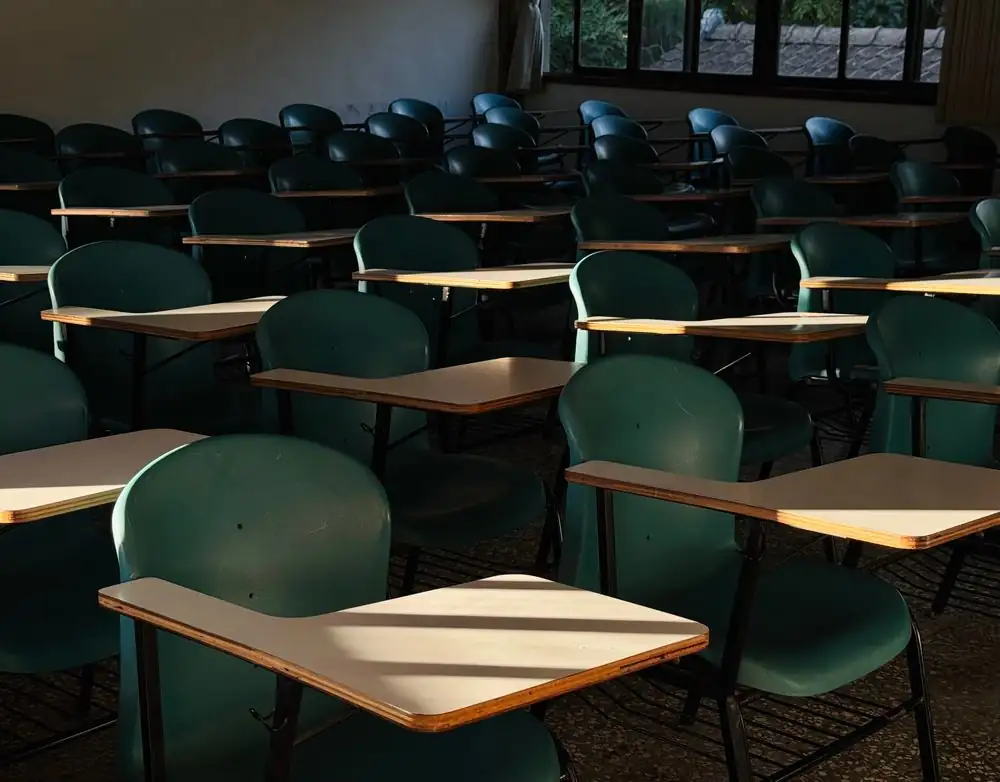
Photograph · source and license
The image, credit, reuse license, editorial context and delivered file are recorded in the exact Sites editorial review. This review is separate from the article’s canonical CIE assessment.
Image and publication standards →At a glance
- Virginia organizes adult education through regional programs.
- A high-school credential and a particular workplace skill are different goals.
- Placement, schedule and current enrollment should be confirmed with the provider.
In this story
Make the goal speak plainly
An adult returning to education may want to complete a secondary credential, strengthen reading or mathematics, improve English, or prepare for later occupational training. These goals can overlap, but they do not require identical programs.
Virginia Department of Education describes adult education through a regional network and provides a directory of programs.
Its adult secondary-completion guidance also describes more than one possible route. The right inquiry therefore begins with what the learner wants to accomplish and the education already completed.
A program name on a directory does not establish the current class schedule, fees, space or admission decision.
Use a real-life task as the starting example
Imagine a fictional learner, Carla, who wants to understand the fractions and measurements used in a future trade course. She can tell a provider that she is comfortable with whole-number arithmetic but wants practice reading fractional dimensions.
Another learner might need help reading long instructions or writing clear work emails. Naming the task gives an educator a more useful starting point than saying that the learner is bad at school.
The provider can explain its assessment or placement process and which options are available. The learner should ask what the assessment measures and how the result will guide instruction.
A placement activity can identify a starting level; it should not be interpreted as a permanent limit on what the person can learn.
Count the learning time
Suppose Carla's invented plan includes two 90-minute classes each week and four 30-minute practice sessions. Class time totals three hours; practice adds two; the learning plan totals five hours before travel.
That arithmetic helps a household see whether the schedule fits alongside work, care and other responsibilities.
If transportation makes attendance difficult, ask whether the provider offers an appropriate remote or hybrid option and what equipment it requires. Do not assume an online program can be completed entirely on a phone or that every lesson is self-paced.
A dependable learning slot can matter as much as an advertised course length.
A progress note can be concrete without ranking the learner. Carla might record that she can now compare three fractional dimensions or explain a written instruction in her own words.
The next lesson can build from the unresolved part. Keep this private learning record separate from any provider-issued credential; completing a practice task does not itself award an educational qualification.
Bring the earlier record
For a secondary credential inquiry, ask which prior school records are useful and how the provider wants them supplied. VDOE advises contacting a school division or regional adult-education office to determine the suitable completion option.
The answer can depend on education history; a general list of routes cannot decide it for the learner.
Keep a simple record of the program contacted, information received and next appointment or assessment when confirmed. Protect identification and education records through the provider's approved process.
A local friend can encourage the inquiry without collecting a full private file.
Let the first step remain small
A learner does not need to resolve an entire career before practicing a reading or mathematics skill. The first useful outcome may be understanding a task, completing placement or choosing an attainable class routine.
Later occupational training can be explored once that foundation is clearer.
For Gretna-area adults, VDOE's regional directory provides a way to locate the responsible provider; it is not a live enrollment announcement. Education works better when the goal, starting point and weekly effort are visible.
That gives the learner and provider something concrete to build on together.
Sources & verification
Current official provider structure and directory; no local class availability asserted. Retrieved and checked against the available primary-source page or indexed official excerpt on October 3, 2026.
Read the sourcePrimary explanation of routes and need for individualized provider inquiry. Retrieved and checked against the available primary-source page or indexed official excerpt on October 3, 2026.
Read the sourceThis article was written with AI assistance from the linked sources. No firsthand interview or visit is implied. Source dates and limits are identified in the reporting. Advertising does not determine editorial coverage. Request a correction or read our standards.
EVERY NEIGHBOR HAS A VOICE
Keep the conversation going.
Share experiences, ask questions and link evidence for factual claims. Automated publication checks apply to each submitted version. Comments are independent community discussion, not submissions to a government body.
Sign in to join · freeCommunity standards