
History Community · County
The Prizery’s 2002 renovation gave a tobacco building an arts chapter
South Boston’s warehouse landscape became part of a public cultural institution.
Checking whether this browser can read the story aloud.
Explore related topics
Sources & editorial review
Sites editorial review recorded for this exact revision. This AI-assisted article or learning resource includes source links and credited contextual imagery.
This is a local editorial review, not a canonical Cultural Imprint Engine assessment. No CIE score is claimed. Source review does not verify third-party playback, provider availability or image pixels.
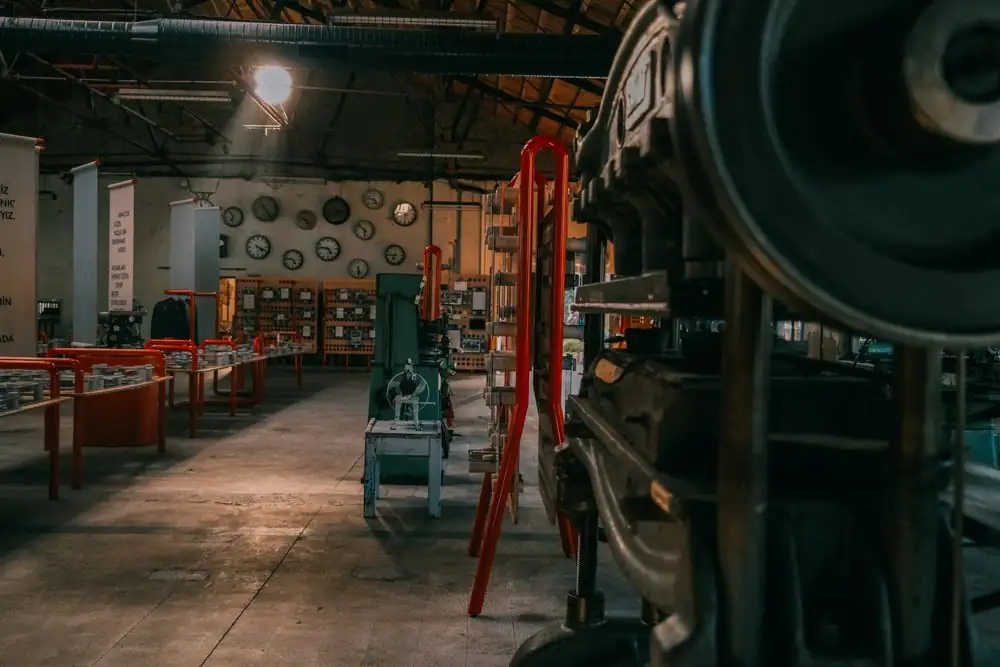
Photograph · source and license
The image, credit, reuse license, editorial context and delivered file are recorded in the exact Sites editorial review. This review is separate from the article’s canonical CIE assessment.
Image and publication standards →At a glance
- The arts center occupies a historic tobacco building.
- Renovation began in 2002.
- The adapted space included performance, gallery and teaching uses.
In this story
A building carried the name of its work
The Prizery occupies a substantial historic tobacco building in South Boston’s warehouse district. Its institutional account describes 38,000 square feet of space and a renovation that began in 2002.
The preservation setting connects the arts center to a town landscape shaped by tobacco commerce and processing.
The building’s name preserves an earlier workplace identity even as its purpose changed. Keeping that connection matters: the arts institution did not begin on an empty site.
Its rooms, structure and scale came from a commercial past that had already influenced the surrounding streets and other buildings.
New activities required a new arrangement
The renovation introduced a performing-arts theater, an art gallery, classrooms and a large space for community functions. According to the center’s own history, the project retained the building’s sense of openness.
Rehabilitation therefore involved fitting new uses into a recognizable older shell rather than merely saving a façade.
Performance and teaching brought different requirements from tobacco work. Audiences, artworks and classes needed places of their own within the converted structure.
The institution’s account identifies those functions without establishing the experience of every participant or the precise decisions behind each element of the interior design.
Industry and culture share a landscape
Virginia DHR’s South Boston Historic District record places tobacco buildings within the town’s larger architectural history. The Prizery’s later arts chapter adds another layer to that setting.
A cultural center can become a reason to retain a working building while inviting people to use it in a new way.
For regional families, this history makes the arts space part of the story of Southside work and community building. A theater or gallery can be both a place for contemporary creativity and an encounter with an earlier economy.
The documented 2002 renovation marks the transition between those chapters; it does not erase the first one.
Sources & verification
Undated institutional account; describes renovation beginning in 2002. Retrieved October 3, 2026. Primary institutional account by the arts center occupying the historic tobacco building; used for its own rehabilitation history, without asserting current events or schedules.
Read the sourceRegister record includes original 1986 listing and 2009 boundary increase. Retrieved October 3, 2026. Primary administrative preservation record issued by Virginia DHR; the nomination includes original building inventory and documented historical research.
Read the sourceThis article was written with AI assistance from the linked sources. No firsthand interview or visit is implied. Source dates and limits are identified in the reporting. Advertising does not determine editorial coverage. Request a correction or read our standards.
EVERY NEIGHBOR HAS A VOICE
Keep the conversation going.
Share experiences, ask questions and link evidence for factual claims. Automated publication checks apply to each submitted version. Comments are independent community discussion, not submissions to a government body.
Sign in to join · freeCommunity standards