
History Civic life · County
The 1878 Pittsylvania jury list became a national question about equal citizenship
Ex parte Virginia connected a Chatham courthouse decision with the power to enforce the Fourteenth Amendment.
Checking whether this browser can read the story aloud.
Explore related topics
Sources & editorial review
Sites editorial review recorded for this exact revision. This AI-assisted article or learning resource includes source links and credited contextual imagery.
This is a local editorial review, not a canonical Cultural Imprint Engine assessment. No CIE score is claimed. Source review does not verify third-party playback, provider availability or image pixels.
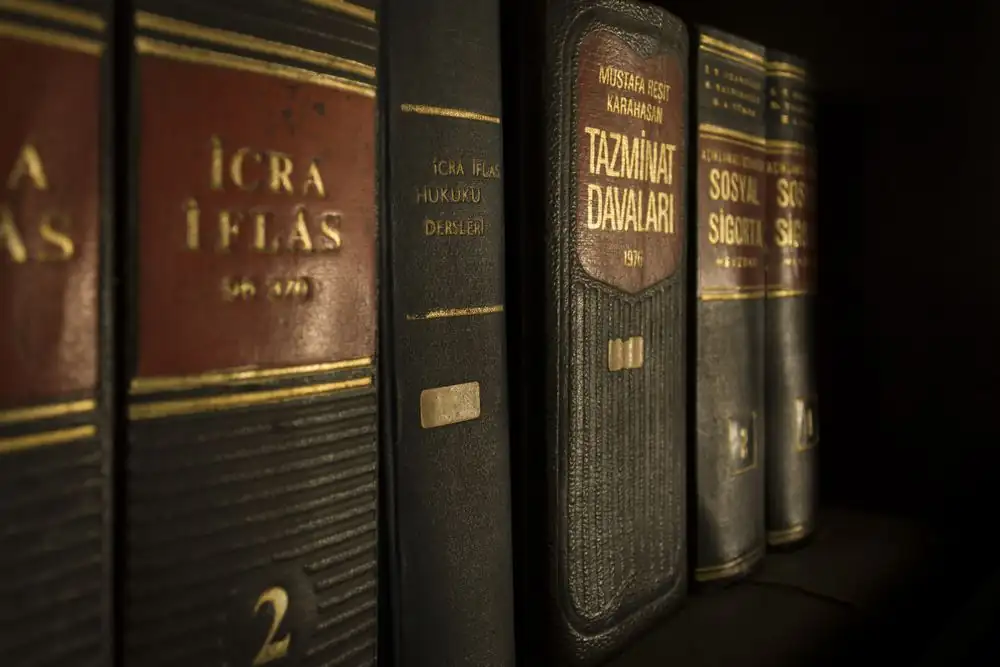
Photograph · source and license
The image, credit, reuse license, editorial context and delivered file are recorded in the exact Sites editorial review. This review is separate from the article’s canonical CIE assessment.
Image and publication standards →At a glance
- The federal indictment alleged racial exclusion from Pittsylvania jury lists in 1878.
- The Supreme Court’s 1880 opinion rejected Judge Coles’s request for release.
- Habeas review of federal authority was distinct from a criminal-trial conviction.
- The case concerns Black civic participation as well as state and federal power.
In this story
A familiar courthouse held a national conflict
The Pittsylvania County Courthouse in Chatham was built in 1853, before emancipation and the constitutional amendments that followed the Civil War. Its National Historic Landmark nomination describes a brick public building combining Classical Revival and Italianate features.
The building’s early architectural identity belongs to antebellum county government. A later episode inside that institution gave it a different national significance: a conflict over whether qualified Black citizens could be excluded from jury service because of their race.
Virginia DHR identifies the courthouse as a landmark in the postwar African American struggle for civil rights. That description shifts attention from the appearance of its portico to the operation of public authority.
A courthouse can be important because of what was designed and built, but also because of decisions made through the institution it housed. At Chatham, architectural survival preserves a location associated with a constitutional controversy, allowing the county’s legal history to be understood as part of a wider struggle over citizenship.
The accusation concerned the selection of citizens
The published Supreme Court opinion in Ex parte Virginia states that Judge J. D.
Coles was held under a federal indictment concerning his selection of jurors in 1878. The indictment alleged that he excluded qualified Black citizens from grand and petit jury lists because of race, color and previous condition of servitude.
Those were allegations reported in the proceeding, not a jury verdict announced by the Supreme Court. The historical account should retain that procedural distinction.
Coles sought a writ of habeas corpus and review of the federal record, arguing that his detention was not authorized by the Constitution and federal law. The question reaching the Supreme Court consequently concerned the legal authority for the prosecution and custody.
It was not an appellate review of a completed county trial against the excluded citizens. Nor was it a criminal trial in which the Supreme Court heard witnesses and independently established every fact about the creation of the jury lists.
Reconstruction changed the constitutional terms
The Fourteenth Amendment, ratified in 1868, established national citizenship and directed states to provide equal protection of the laws. Its fifth section gave Congress power to enforce the amendment through appropriate legislation.
Those provisions supplied a new constitutional framework for examining official acts after emancipation. A state’s administrative practices could no longer be considered only through the rules and authority of the state itself when they denied rights protected by the federal Constitution.
The distinction mattered for jury selection because a list could shape participation before any person entered a courtroom to decide a case. Exclusion from that list removed citizens from a public role in the legal system.
Equal protection therefore involved practical institutional arrangements as well as general promises. The amendment’s enforcement provision raised another issue: how could Congress make constitutional protection effective when a state official, rather than a legislature writing an explicitly discriminatory rule, carried out the exclusion?
The Court treated an official’s act as state action
In its 1880 opinion, the Court upheld congressional authority to prohibit racial exclusion from jury service under the Civil Rights Act of 1875. It treated an official acting under state authority as capable of committing the state action prohibited by the Fourteenth Amendment.
Selecting jurors was described as a ministerial responsibility in this context, and the judge’s official position did not remove that duty from the reach of federal constitutional requirements. The Court denied the requested release.
The significance of the holding lies in the relationship between a public office and the person performing its work. A constitutional prohibition could not function if officials were able to deny rights while claiming that their conduct belonged only to them as individuals.
Here, authority derived from the state carried responsibilities under the national Constitution. The decision linked a practical county task with a federal standard and supplied an answer to the argument that the officer’s state position placed the act beyond congressional enforcement.
Jury participation and voting were separate civic roles
The Fifteenth Amendment, ratified in 1870, protected voting against denial based on race, color or previous condition of servitude. That voting provision belongs to the same Reconstruction constitutional period, but it is not the provision at the center of Ex parte Virginia.
The jury dispute concerned another way citizens participated in government. Keeping the two roles distinct makes the local case more specific than a general account of postwar political rights.
Juries could influence how law was applied, which made exclusion from service consequential even for people who were not parties to a particular prosecution. The struggle concerned membership in the community of people permitted to exercise legal judgment on public matters.
A voting right and eligibility for a jury did different work; access to one did not automatically establish access to the other. The Pittsylvania episode shows why equal citizenship required attention to several institutions rather than one constitutional milestone alone.
A legal victory did not complete the local story
The 1986 landmark nomination places Ex parte Virginia among important postwar civil-rights cases. Its significance should not be expanded into an assertion that discrimination in Pittsylvania ended with the opinion.
A ruling on federal authority did not by itself describe every later jury, remove every unequal practice or preserve the individual experiences of the people excluded in 1878. The available opinion concentrates on Coles’s petition and the legal questions it raised; it does not offer full biographies of those affected by the alleged exclusion.
That imbalance in the record is itself worth recognizing. The named public official appears prominently because he sought relief, while Black citizens appear as people whose eligibility and exclusion were described in the indictment.
An honest local history can explain that structure without inventing testimony to fill it. The case remains a substantial Chatham story: a county jury-selection task tested the reach of Reconstruction citizenship, and the courthouse became a place where the relationship between local authority and national rights entered the historical record.
The civic significance also extends beyond the people eventually called to sit on a particular jury. Selecting a pool was an exercise of government power before the visible courtroom proceeding began.
That earlier stage could determine whose judgment would be available when the court assembled. By focusing on selection, the case exposed a barrier built into the ordinary preparation of public business, making the administrative work behind a hearing part of the constitutional story.
Chatham’s place in that story is consequently specific. The case was not attached to the county merely because a famous lawyer once passed through town.
It arose from a county officer’s recorded responsibility and a federal challenge to how he allegedly performed it. That connection joins the courthouse’s local working life with national constitutional history, giving the building a significance that cannot be explained by its formal architecture alone.
Sources & verification
Register account of the 1853 courthouse and the 1878 jury-exclusion episode. Retrieved October 3, 2026. Primary administrative preservation record issued by Virginia DHR; the nomination includes original building inventory and documented historical research.
Read the source1986 NHL nomination; describes the 1853 building and Ex parte Virginia. Retrieved October 3, 2026. Primary administrative preservation record issued by Virginia DHR; the nomination includes original building inventory and documented historical research.
Read the sourceSupreme Court opinion published at 100 U.S. 339 (1880); allegations concern jury selection in 1878. Retrieved October 3, 2026. Primary Supreme Court published opinion; this is a historical account of habeas review, not an assertion that the opinion was a criminal-trial conviction or present legal advice.
Read the sourceOriginal amendment proposed in 1866 and ratified July 9, 1868; archival transcript. Retrieved October 3, 2026. Primary constitutional document and archival transcript; used for citizenship, equal protection and congressional enforcement provisions.
Read the sourceOriginal amendment ratified February 3, 1870; archival transcript. Retrieved October 3, 2026. Primary constitutional document and archival transcript; used to distinguish voting protection from the jury-selection issue.
Read the sourceThis article was written with AI assistance from the linked sources. No firsthand interview or visit is implied. Source dates and limits are identified in the reporting. Advertising does not determine editorial coverage. Request a correction or read our standards.
EVERY NEIGHBOR HAS A VOICE
Keep the conversation going.
Share experiences, ask questions and link evidence for factual claims. Automated publication checks apply to each submitted version. Comments are independent community discussion, not submissions to a government body.
Sign in to join · freeCommunity standards