
History Community · County
John Hargraves and Wesley Inge built part of Danville’s Black residential landscape
Holbrook-Ross Street’s houses preserve the work of named craftspeople as well as the lives of their occupants.
Checking whether this browser can read the story aloud.
Explore related topics
Sources & editorial review
Sites editorial review recorded for this exact revision. This AI-assisted article or learning resource includes source links and credited contextual imagery.
This is a local editorial review, not a canonical Cultural Imprint Engine assessment. No CIE score is claimed. Source review does not verify third-party playback, provider availability or image pixels.
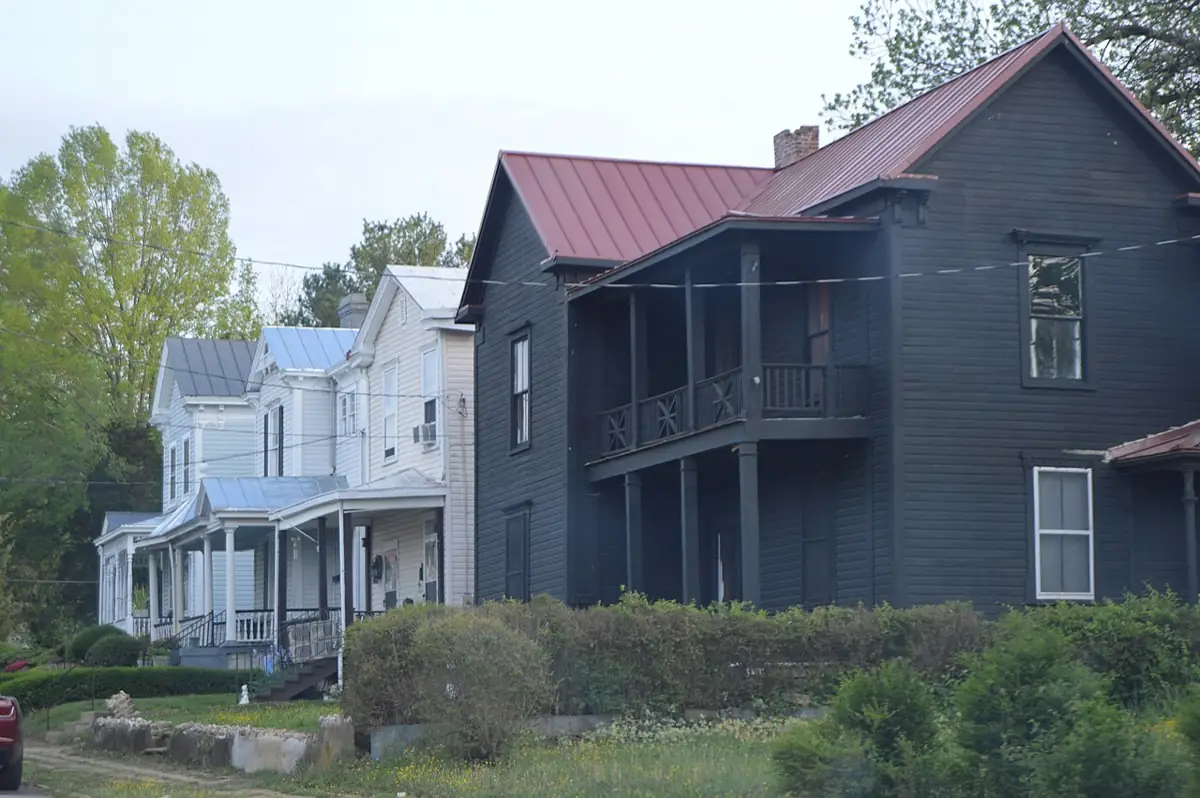
Photograph · source and license
The image, credit, reuse license, editorial context and delivered file are recorded in the exact Sites editorial review. This review is separate from the article’s canonical CIE assessment.
Image and publication standards →At a glance
- The 1997 nomination names Black carpenters associated with district houses.
- Holbrook-Ross combined residences, churches and institutional spaces.
- Builder attribution and household association are distinct historical facts.
In this story
Houses record skill as well as ownership
Danville’s Holbrook-Ross Street Historic District contains evidence of Black craftsmanship that can be missed in a history centered on factory owners and large Main Street mansions. The 1997 nomination identifies John Hargraves as a Black carpenter who worked on houses along Millionaires’ Row and built residences within the Holbrook neighborhood.
It also names Wesley Inge as the builder of a substantial house nearby.
Those identifications put workers inside the architectural story. A finished house can be associated with the person who commissioned or occupied it, but its form also embodies the knowledge of the people who built it.
The nomination offers concrete names and property connections, allowing craftsmanship to receive attention without inventing biographies or assuming that every similar porch came from the same builder.
A neighborhood had several kinds of residents
Virginia DHR describes the district as a residential center for Danville’s Black community, with houses, churches and schools expressing its development. The area’s historical account includes professional households as well as people connected with tobacco work.
It was therefore neither a single employer’s village nor a neighborhood whose significance can be reduced to one occupation or income group.
The house associated with Hargraves later held a professional family: the nomination connects it with his daughter Nellie Hargraves Geary and her husband, a dentist. That combination of builder and household history shows how a property can carry several relationships.
A family’s residence, a craftsperson’s work and a professional practice belong to connected lives, but they should not be collapsed into one interchangeable label.
Architectural choices became community evidence
The district’s buildings include vernacular interpretations of Italianate and Queen Anne design. Decorative porches, projecting bays and roof forms gave ordinary streets a varied appearance.
These features show that sophisticated building knowledge was present beyond the city’s most celebrated houses. Skill traveled across neighborhoods, even while segregation and unequal opportunity shaped where people lived and the institutions they could use.
This does not make an elaborate house a measure of a family’s worth. Smaller homes, churches and school buildings also formed the community.
Architectural variety matters because it resists a narrow visual story: Black Danville was not represented by a single building type. The neighborhood accommodated domestic life, religious gathering, education and livelihoods, with different structures performing different tasks within a shared geographical setting.
The historical record has room to grow
The nomination’s builder attributions vary in certainty. Some entries identify a builder directly; others use qualifying language.
That distinction belongs in the history. An attributed house can establish a particular connection without proving that the same person built all its neighbors.
Preserving uncertainty protects the named craftspeople from a biography assembled out of architectural resemblance alone.
Holbrook-Ross consequently broadens the city’s account of who made its built environment. The houses are evidence of construction work, household decisions and a Black community’s institutions.
For regional families, they offer a fuller history of Danville’s prosperity: the people whose skill shaped celebrated streets also helped create places of their own. Remembering both kinds of work makes the city’s architecture more human and more complete.
The builder’s place in the story also changes how the neighborhood relates to Danville’s celebrated industrial wealth. A craftsperson working across streets could contribute to someone else’s imposing residence and then shape a household’s own home.
Those projects belonged to different economic relationships, even when they drew on the same skills. The neighborhood’s houses thus connect the city’s public image with less frequently named workers, making construction labor part of the account rather than an anonymous background to architectural taste.
Sources & verification
Register entry updated January 31, 2024; National Register listing November 18, 1997. Retrieved October 3, 2026. Primary administrative preservation record issued by Virginia DHR; the nomination includes original building inventory and documented historical research.
Read the source1997 nomination; inventory and historical account identify Black builders and household associations. Retrieved October 3, 2026. Primary administrative preservation record issued by Virginia DHR; the nomination includes original building inventory and documented historical research.
Read the sourceThis article was written with AI assistance from the linked sources. No firsthand interview or visit is implied. Source dates and limits are identified in the reporting. Advertising does not determine editorial coverage. Request a correction or read our standards.
EVERY NEIGHBOR HAS A VOICE
Keep the conversation going.
Share experiences, ask questions and link evidence for factual claims. Automated publication checks apply to each submitted version. Comments are independent community discussion, not submissions to a government body.
Sign in to join · freeCommunity standards