
History Schools · County
Virginia Young Lee helped make Gainsboro’s library a place for self-education
The 1921 and 1942 library chapters show a Black neighborhood building an institution under segregation.
Checking whether this browser can read the story aloud.
Explore related topics
Sources & editorial review
Sites editorial review recorded for this exact revision. This AI-assisted article or learning resource includes source links and credited contextual imagery.
This is a local editorial review, not a canonical Cultural Imprint Engine assessment. No CIE score is claimed. Source review does not verify third-party playback, provider availability or image pixels.
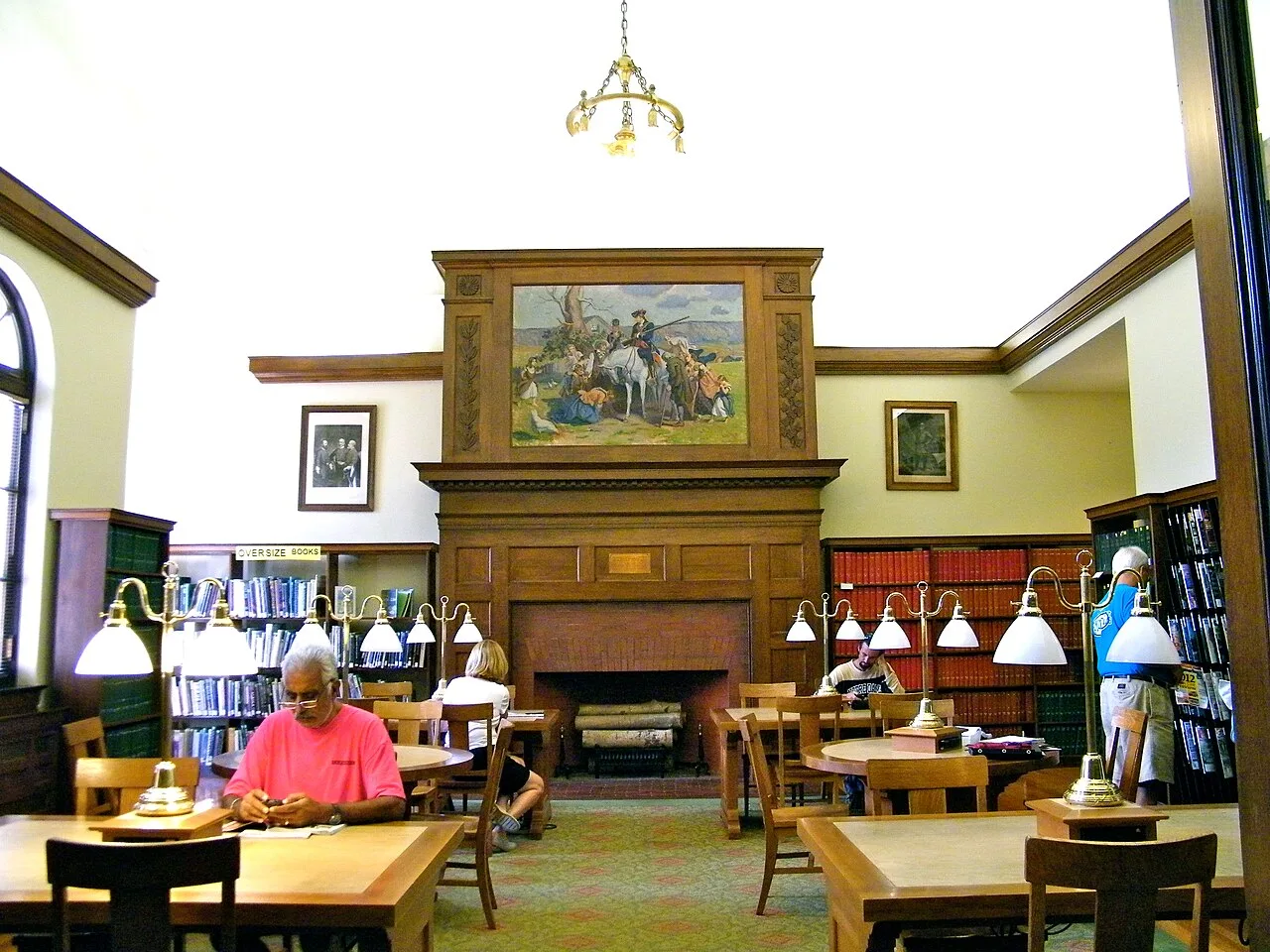
Photograph · source and license
The image, credit, reuse license, editorial context and delivered file are recorded in the exact Sites editorial review. This review is separate from the article’s canonical CIE assessment.
Image and publication standards →At a glance
- Gainsboro’s first public library opened in an Odd Fellows Hall in 1921.
- A new Tudor Revival building opened in 1942.
- Virginia Young Lee developed a collection of African American materials.
In this story
A library began inside another institution
Gainsboro’s first public library opened in 1921 in an Odd Fellows Hall, according to Virginia DHR. The arrangement supplied a place for Black Roanoke residents to read and pursue education within a segregated city.
A library could begin in borrowed or shared institutional space before obtaining a building designed for its own work.
That beginning connects the library with a neighborhood’s larger organizational life. A fraternal hall and a public reading institution had different purposes, but their shared address made one activity possible within another place.
The 1996 nomination documents this early chapter, showing that the familiar library building was preceded by an earlier service rather than creating public reading opportunities from nothing.
Expansion required a public decision
By the late 1930s, the existing space could not accommodate the proposed expansion. DHR describes discussions between city officials and Black leaders that led to agreement on a new library.
In 1942, Gainsboro’s second library opened in a domestic-scale Tudor Revival building designed by the Roanoke firm of Eubank and Caldwell.
The modest scale matters. Public importance did not require a monumental stone entrance.
A neighborhood library could resemble a substantial home while performing an essential educational task. The building’s design supplied an institutional setting within the community, and its construction represented a decision to devote public space and resources to readers who faced racial restrictions elsewhere in the city.
A librarian shaped what readers could find
Virginia Young Lee served as librarian for more than forty years. DHR credits her with encouraging children to use the library and developing a special collection of African American materials.
This places a woman’s professional work at the center of the institution’s history. A collection is not assembled by a building; people select, organize and make its contents available.
Lee’s collection work also affected whose lives and ideas could enter the room. African American materials offered readers knowledge that could be missing or marginalized in other settings.
The available records do not reveal every encounter between Lee and a child, but they establish a sustained commitment to readers and collection building. That is substantial institutional work, even when it leaves fewer public monuments than a construction project.
An interior record complements the building
Roanoke Public Libraries’ Virginia Room preserves an interior photograph cataloged as GB112. The catalog’s identification connects a surviving image to Gainsboro Library without requiring an invented date or a guess about people pictured.
Interior records matter because the library’s history includes rooms used for reading and learning, not only the exterior selected for architectural recognition.
Together, the 1921 beginning, the 1942 building and Lee’s long service show an institution made through several kinds of effort. Neighborhood leadership obtained space; architects designed it; a librarian developed collections and encouraged their use.
For Southside families, Gainsboro’s history is a reminder that access to knowledge has depended on people doing practical, sustained work, especially where segregation limited the choices available to a community.
The two openings also separate institutional age from building age. Gainsboro’s reading service began more than two decades before the Tudor Revival structure opened.
Remembering only the 1942 architecture would shorten that history and obscure the neighborhood work that preceded it. The earlier hall and Lee’s collection building show that an institution can have a substantial life before obtaining its familiar public face, and that the people who develop it deserve recognition alongside its designers.
Sources & verification
Register entry updated October 21, 2025; describes library openings in 1921 and 1942. Retrieved October 3, 2026. Primary administrative preservation record issued by Virginia DHR; the nomination includes original building inventory and documented historical research.
Read the source1996 nomination; architectural survey and institutional history. Retrieved October 3, 2026. Primary administrative preservation record issued by Virginia DHR; the nomination includes original building inventory and documented historical research.
Read the sourceUndated archival catalog record identifying an interior photograph of Gainsboro Library. Retrieved October 3, 2026. Primary archival photographic item and repository catalog; used only to identify the surviving interior record, not to infer an unverified date or people’s identities.
Read the sourceThis article was written with AI assistance from the linked sources. No firsthand interview or visit is implied. Source dates and limits are identified in the reporting. Advertising does not determine editorial coverage. Request a correction or read our standards.
EVERY NEIGHBOR HAS A VOICE
Keep the conversation going.
Share experiences, ask questions and link evidence for factual claims. Automated publication checks apply to each submitted version. Comments are independent community discussion, not submissions to a government body.
Sign in to join · freeCommunity standards