
History Community · County
Danville’s 1899 passenger depot gave the rail journey a distinctive front door
Frank P. Milburn’s station brought unusual Flemish detailing to a familiar railroad building form.
Checking whether this browser can read the story aloud.
Explore related topics
Sources & editorial review
Sites editorial review recorded for this exact revision. This AI-assisted article or learning resource includes source links and credited contextual imagery.
This is a local editorial review, not a canonical Cultural Imprint Engine assessment. No CIE score is claimed. Source review does not verify third-party playback, provider availability or image pixels.
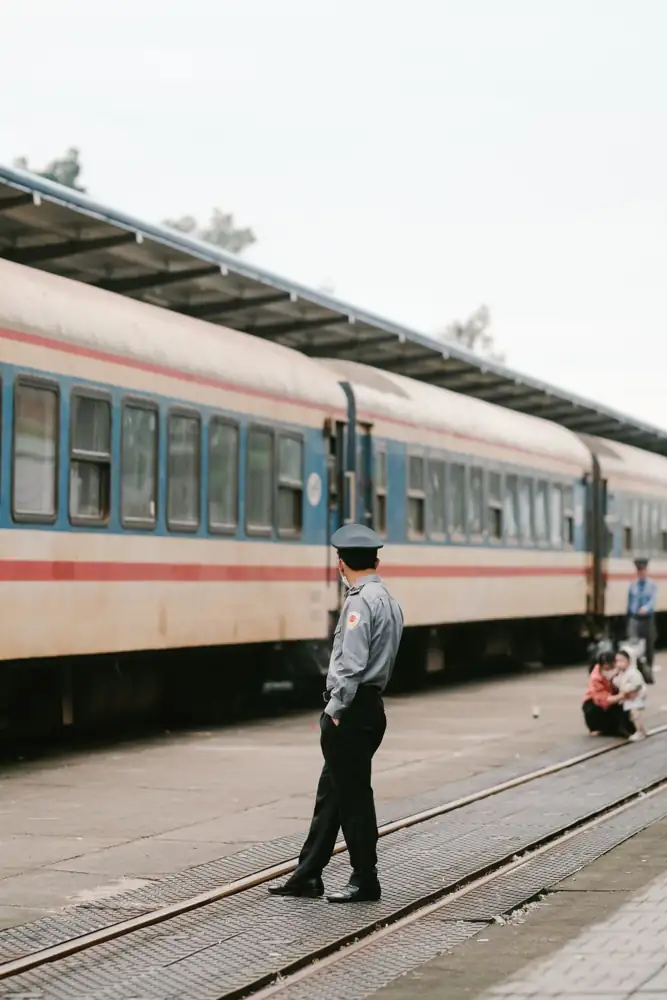
Photograph · source and license
The image, credit, reuse license, editorial context and delivered file are recorded in the exact Sites editorial review. This review is separate from the article’s canonical CIE assessment.
Image and publication standards →At a glance
- The passenger depot was built in 1899.
- Frank P. Milburn designed its elongated brick form.
- A 1990s rehabilitation combined passenger and museum uses.
In this story
A station for people as well as freight
Danville’s Southern Railway Passenger Depot opened in 1899 as the city’s principal rail passenger facility. The 1995 nomination identifies architect Frank P.
Milburn as its designer. Its history belongs to the movement of people, alongside the tobacco and textile goods for which Danville’s rail connections are often remembered.
A passenger station translated a large transportation network into a local place. Travelers needed somewhere to arrive, wait and depart.
The building gave those transitions an address and a recognizable form. The nomination establishes the institution’s role without supplying the personal experiences of every passenger who passed through its doors.
An unusual architectural vocabulary
The station followed an elongated, one-story arrangement under a hipped roof, a practical form for a railroad depot. Milburn distinguished it with Flemish-inspired features, including stepped parapets and patterned brickwork.
Virginia DHR highlights that detailing as unusual within the state’s railroad architecture.
The result was a useful building with an individual public identity. Brick patterns and roofline details could distinguish this stop from others along a journey.
Looking at those elements connects the station’s design to a broader architectural history while keeping the building’s passenger purpose at the center of the story.
Another chapter at the tracks
DHR records a temporary closure to passenger service in 1993. The depot subsequently gained museum use, with one waiting room refurbished for Amtrak passengers.
The 1995 nomination was written while restoration was underway, so its future-tense language belongs to that particular rehabilitation moment.
This later chapter illustrates how a transportation building could hold more than one public function. A station did not have to become only a memorial to vanished travel.
Its documented adaptation linked learning and passenger service in the same landmark, preserving the old building while giving its rooms additional reasons to remain in community use.
Sources & verification
Register entry updated June 3, 2024; describes the 1899 station and 1993 service interruption. Retrieved October 3, 2026. Primary administrative preservation record issued by Virginia DHR; the nomination includes original building inventory and documented historical research.
Read the source1995 nomination; original architectural inventory and transportation history. Retrieved October 3, 2026. Primary administrative preservation record issued by Virginia DHR; the nomination includes original building inventory and documented historical research.
Read the sourceThis article was written with AI assistance from the linked sources. No firsthand interview or visit is implied. Source dates and limits are identified in the reporting. Advertising does not determine editorial coverage. Request a correction or read our standards.
EVERY NEIGHBOR HAS A VOICE
Keep the conversation going.
Share experiences, ask questions and link evidence for factual claims. Automated publication checks apply to each submitted version. Comments are independent community discussion, not submissions to a government body.
Sign in to join · freeCommunity standards