
History Community · County
After the Appomattox meeting, printers turned surrender terms into papers for the road home
The parole record reveals administrative work, named soldiers and coerced Black laborers at the end of the campaign.
Checking whether this browser can read the story aloud.
Explore related topics
Sources & editorial review
Sites editorial review recorded for this exact revision. This AI-assisted article or learning resource includes source links and credited contextual imagery.
This is a local editorial review, not a canonical Cultural Imprint Engine assessment. No CIE score is claimed. Source review does not verify third-party playback, provider availability or image pixels.
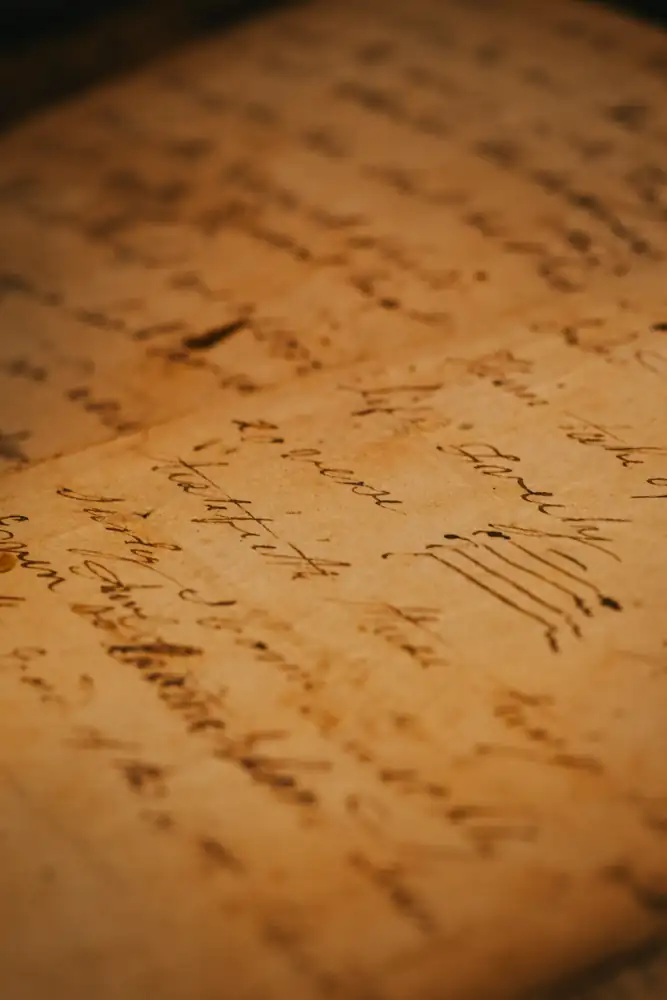
Photograph · source and license
The image, credit, reuse license, editorial context and delivered file are recorded in the exact Sites editorial review. This review is separate from the article’s canonical CIE assessment.
Image and publication standards →At a glance
- Grant’s April 9 terms required duplicate rolls and paroles.
- More than 30,000 blanks were printed; 28,231 paroles were issued.
- The NPS list identifies thirty-nine enslaved or impressed free Black laborers.
- Black Union soldiers at Appomattox were a different group with a different military role.
In this story
The agreement required work after the meeting
The April 9, 1865 surrender at Appomattox Court House is often represented by the encounter between Robert E. Lee and Ulysses S.
Grant. The written terms reveal another part of the event.
Grant required rolls of officers and men in duplicate, specified paroles and directed the surrender of arms, artillery and public property. Lee’s acceptance said he would designate officers to carry out the stipulations.
The meeting therefore produced instructions for a substantial administrative process, not merely a symbolic end to fighting.
The National Park Service reproduces the letters and their transcriptions, allowing that work to remain visible. Names had to be recorded, property accounted for and permissions documented.
An army could not become thousands of people traveling home simply because two commanders had agreed on terms. The agreement created tasks for officers, clerks and printers, linking a major military decision with repeated acts of writing, copying, signing and distributing paper.
A pass supplied evidence of a person’s status
At a second meeting on April 10, Lee requested proof that his men were paroled prisoners. The park’s historical account explains that many would return to places not yet surrendered.
Grant agreed, and Major General George Sharpe took responsibility for printing and issuing passes for Confederate officers to sign and distribute. The document would identify a bearer’s status within the terms already accepted by the commanders.
In this setting, parole concerned prisoners of war rather than the later criminal-justice meaning familiar to many readers. A pass did not declare that the Confederate cause was just or turn its bearer into a civilian who had never taken part in the army.
It documented an obligation and a permission under the surrender arrangement. Its usefulness depended on recognition by people the bearer might meet beyond the immediate place where the document had been issued.
Printing blanks and issuing passes were different totals
The park records that printers began work on April 10 and produced more than 30,000 blank forms. It reports 28,231 paroles officially signed and issued before April 15.
Those totals describe different stages of the process. A printed blank supplied a form that could be completed; an issued parole connected the printed words with a particular person and the authority of the officer who signed it.
The park’s packet of historic pass examples preserves the relationship between repeated language and individualized details. A standardized form could carry a name, organization and signature.
That arrangement made large-scale administration possible while giving each bearer a portable record. Printing supplied consistency; completion supplied the personal and official connection.
The result was a document small enough to carry but tied to an agreement affecting the entire Army of Northern Virginia.
The record includes Black people forced into army labor
The NPS parole index identifies thirty-nine African Americans among those who received paroles with the Confederate army. It describes them as enslaved people or free Black people impressed into labor.
The recorded roles include cooks, musicians, teamsters, camp servants and a blacksmith. Some individuals are named, such as Solomon Wright and James Polk; others appear as an unnamed group in a military department’s account.
Their presence must not be converted into a claim of voluntary Confederate enlistment. A document associated with an army can record a person compelled to work for it.
The status and circumstances stated in the index are central to understanding these entries. The pass recorded a place within the surrender administration, but it did not supply a complete life history or establish that a person freely chose the labor role under which the record listed him.
Black Union service belonged to another history
More than 5,000 United States Colored Troops from seven regiments participated in the Battle of Appomattox Court House, according to the park’s unit history. They served in the Union army and helped block Lee’s remaining escape routes.
Their military role was fundamentally different from that of enslaved or impressed Black people working with the Confederate army. The two groups should not be merged merely because both appear in the history of the same place and date.
The USCT account identifies men from different backgrounds, including people who had escaped slavery and people born free. Their presence places Black military action inside the defeat of the Confederacy and the realization of emancipation.
It also changes a familiar visual story centered only on white commanders. Appomattox was a military outcome produced by many units and people, with Black soldiers helping create the conditions under which the surrender agreement became possible.
Surrender and emancipation were connected, distinct processes
The park’s emancipation account describes April 9 as a moment of freedom for enslaved people in Appomattox County and much of the surrounding region as federal troops enforced emancipation. Its preserved testimony connects military victory with the experiences of people who had long sought freedom.
The surrender terms and the parole passes address a different immediate task: the status and departure of people included in the surrendered army’s administration.
These processes overlapped in time without becoming interchangeable. A Confederate soldier returning home under a parole and an enslaved person realizing freedom faced different transitions.
The paper trail helps explain one process, while testimony and emancipation records help explain another. Giving each its own place produces a more complete regional history than treating Appomattox only as reconciliation between two armies, with everyone else left outside the room.
The list continued through later custody
The park explains that its alphabetical list was developed from an 1887 published compilation based on the original Confederate parole list. Later corrections draw on original slips, service records, descendant information and the federal copy at the National Archives.
That provenance distinguishes the April 1865 records from the later work of compiling, checking and presenting them. The searchable list is a modern access tool with a documented historical lineage.
For regional families, the printing chapter adds people and labor to the familiar surrender scene. The record contains officers, named enlisted men, anonymous entries and coerced laborers; the battlefield history contains Black Union regiments.
The documents can establish specific status and dates while leaving many personal experiences unrecorded. Remembering those limits preserves the value of the passes without asking a small paper to tell more than it can, and keeps the wider human consequences of April 1865 in view.
The printing operation also makes the end of a campaign a history of technical capacity. Commanders supplied terms, but forms had to be produced and completed before thousands of people could carry their status beyond the surrender ground.
The small pass joins those scales of action: a large military agreement became a personal document through practical work performed after the celebrated meeting.
Sources & verification
Grant’s terms and Lee’s acceptance dated April 9, 1865; NPS page updated May 5, 2025. Retrieved October 3, 2026. Primary surrender letters reproduced and transcribed by the custodial national historical park; document terms are distinguished from subsequent implementation.
Read the sourcePark historical account updated May 5, 2025; describes April 10–15, 1865 printing and issuance. Retrieved October 3, 2026. Custodial federal park historical account tied to preserved parole records; printed blanks and issued passes are distinguished.
Read the sourcePark record index updated May 14, 2025; explains 1887 compilation and subsequent documentary corrections. Retrieved October 3, 2026. Primary custodial index to historic parole records, with named coerced Black laborers and disclosed provenance; no family relationship or voluntary Confederate service is inferred.
Read the sourceEducational document reproduces April 1865 parole forms and contemporary accounts of their printing; PDF filename dated February 2016. Retrieved October 3, 2026. Primary historic document reproductions and account excerpts in a federal park teaching packet; used for the relationship between forms, names, signatures and authority.
Read the sourcePark historical account of seven USCT regiments at the April 9, 1865 battle. Retrieved October 3, 2026. Custodial federal historical account with unit identifications and contemporary testimony; Union military service is distinguished from coerced labor in the Confederate army.
Read the sourcePark page updated February 24, 2025; reproduces and contextualizes accounts of emancipation in April 1865. Retrieved October 3, 2026. Federal historical account grounded in preserved testimony; no quotation or invented witness encounter is used in the article.
Read the sourceThis article was written with AI assistance from the linked sources. No firsthand interview or visit is implied. Source dates and limits are identified in the reporting. Advertising does not determine editorial coverage. Request a correction or read our standards.
EVERY NEIGHBOR HAS A VOICE
Keep the conversation going.
Share experiences, ask questions and link evidence for factual claims. Automated publication checks apply to each submitted version. Comments are independent community discussion, not submissions to a government body.
Sign in to join · freeCommunity standards