
History People · County
Anne Spencer’s literary life joined education, library work and a Lynchburg garden
A Henry County-born poet built a public voice from a home and working life rooted in the region.
Checking whether this browser can read the story aloud.
Explore related topics
Sources & editorial review
Sites editorial review recorded for this exact revision. This AI-assisted article or learning resource includes source links and credited contextual imagery.
This is a local editorial review, not a canonical Cultural Imprint Engine assessment. No CIE score is claimed. Source review does not verify third-party playback, provider availability or image pixels.
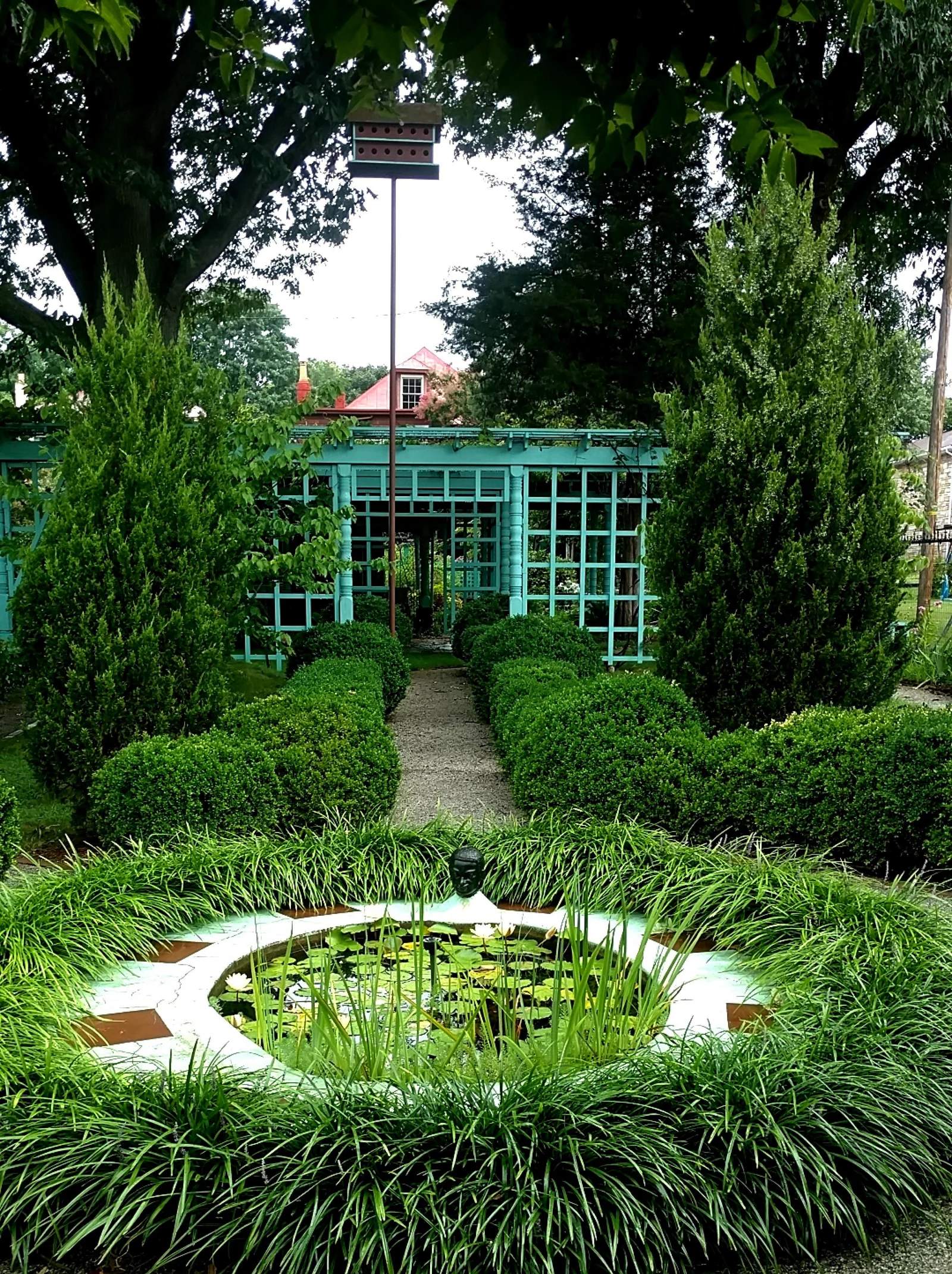
Photograph · source and license
The image, credit, reuse license, editorial context and delivered file are recorded in the exact Sites editorial review. This review is separate from the article’s canonical CIE assessment.
Image and publication standards →At a glance
- Spencer graduated from Virginia Seminary in 1899 and married Edward Spencer in 1901.
- Her poem appeared in The Crisis in February 1920.
- She began library work at Dunbar High School in 1924.
- Her house, garden and writing cottage preserve related parts of her working life.
In this story
Education connected Henry County with Lynchburg
Anne Spencer was born in Henry County on February 6, 1882. The Library of Virginia’s biographical account follows her from childhood in West Virginia to graduation from Virginia Seminary in Lynchburg in 1899.
She married fellow student Edward Spencer in 1901, and the couple settled in Lynchburg. These dates connect the poet’s later public identity with an earlier educational journey through institutions and places familiar to regional families.
The museum’s account describes her arrival at the seminary in 1893 and an education that developed her command of language alongside other academic subjects. Her achievement was not an isolated moment of inspiration.
It depended on sustained study in a Black educational institution during an era of restricted opportunity. Placing the school years within her life helps restore the work behind the celebrated poet, rather than imagining that publication emerged fully formed from a garden or an encounter with a famous visitor.
A household became a setting for creative work
Edward Spencer designed and built the house at 1313 Pierce Street in 1903, according to the museum’s property history. The Queen Anne-style home became a place for the family’s everyday life and for the hospitality extended to Black writers, artists and travelers.
Its public significance developed through use, not simply through the architectural choices made when the house was constructed.
Domestic space could carry responsibilities that a hotel or public institution did not provide equally under segregation. Welcoming travelers required practical household work as well as conversation.
Remembering that labor gives the home a fuller identity than a salon defined only by its guests’ fame. Anne Spencer was a wife and mother as well as a writer, and the same property accommodated family relationships, reading, friendship and the repeated tasks that made hospitality possible.
Publication carried her work beyond the household
The museum’s literary history identifies James Weldon Johnson’s 1919 visit as an encouragement to publish. Her poem Before the Feast at Shushan appeared in the NAACP journal The Crisis in February 1920.
The record supplies a dated public milestone while preserving the fact that Spencer had already been writing. An editor’s encouragement helped bring existing work into circulation; it did not create the writer’s ability or substitute for her own choices on the page.
The museum records later appearances in journals and anthologies, including The Book of American Negro Poetry and Caroling Dusk. Those publications connected a writer living in Lynchburg with the literary activity commonly grouped under the Harlem Renaissance.
The geographical label should not make her Virginia life seem peripheral. A cultural movement could involve writers rooted in different communities, exchanging work through journals, books, correspondence and visits while continuing to live and work outside New York.
Library work widened other people’s literary possibilities
In 1924, Spencer became a librarian at the branch for African American readers located in segregated Dunbar High School. The Library of Virginia credits her with developing the collection, sometimes using her own books, and influencing students’ reading.
This work made literary culture a practical local service. A poem published in a national journal and a book made available to a student were different achievements, but both involved language reaching another person.
The institution’s importance lay partly in the limits surrounding it. A library restricted by the racial structure of the city still supplied a place where Black readers could seek knowledge.
Spencer’s collection work did not endorse that segregation. It addressed readers’ needs within the circumstances they faced.
Her biography consequently includes both a public creative voice and a sustained professional effort to widen access to books for people whose choices were constrained.
A garden was part of an intellectual landscape
The DHR preservation account identifies Edankraal, a one-room writing cottage in the garden. A schematic drawing by Jane Baber White locates the cottage within the property and connects it with the house and planted space.
The garden was therefore not simply a decorative backdrop to the writer’s portrait. It formed part of the environment where she thought, wrote and carried out a longstanding personal interest.
The museum’s account of her poetry connects her writing with nature, beauty, indignation and questions of human dignity. Those interests should not be reduced to the assumption that a flower always represented a particular political message.
Nor should garden imagery be used to detach her from civil-rights commitments. The same person could cultivate plants, explore beauty in language and oppose injustice.
Her creative range allows those activities to coexist without forcing every line into a single biographical explanation.
Preservation retains several kinds of evidence
The house entered the preservation record through its 1976 nomination, shortly after Spencer’s death in 1975. That document combines architectural description with assessment of her historical importance.
The museum’s stewardship of the house and garden and the archival accounts of her papers preserve different parts of a life. Buildings hold spatial relationships; books and manuscripts hold literary work; institutional records supply dates for education and employment.
None is a complete substitute for the others.
The source accounts differ on the endpoint of her library service, so this article does not assign a retirement year. That restraint is part of honoring a documented life.
The dates that can be stated firmly already show a substantial sequence: graduation in 1899, marriage in 1901, the 1903 house, public literary recognition in 1920 and library work beginning in 1924. For regional families, Spencer’s history connects Black education, women’s creativity and local institution building in a life that reached a national literary audience while remaining rooted in Virginia.
The relationship between her own writing and other people’s reading gives Spencer’s regional life a distinctive shape. Publication placed her words before an audience she might never meet, while library work brought books within reach of people in her own community.
Those activities involved different forms of responsibility. A poet decided how to express an experience; a librarian helped sustain a collection through which readers could encounter many voices, including voices beyond her own.
Both kinds of work contributed to the region’s literary culture.
The preserved home also gives women’s creative work a physical setting often missing from accounts centered on formal public offices. A room, a shelf and a garden cottage can hold part of an intellectual history without having been built as an academy or a literary monument.
Their significance developed through a person’s repeated use of them. Spencer’s life makes that ordinary continuity visible: study became writing, personal books became a shared resource, and a family property became part of a wider network of Black cultural life.
Sources & verification
Register account describes the 1903 house and Anne Spencer’s 1882–1975 life. Retrieved October 3, 2026. Primary administrative preservation record issued by Virginia DHR; the nomination includes original building inventory and documented historical research.
Read the source1976 nomination; architectural inventory and contemporary preservation assessment. Retrieved October 3, 2026. Primary administrative preservation record issued by Virginia DHR; the nomination includes original building inventory and documented historical research.
Read the sourceUndated custodial biography; describes 1893–99 education and library work. Retirement dates differ from the Library of Virginia account, so no retirement year is asserted. Retrieved October 3, 2026. Primary custodial institution’s account; dated milestones are cross-checked with the Library of Virginia and discrepancies are not silently resolved.
Read the sourceUndated institutional account; house designed and built by Edward Spencer in 1903. Retrieved October 3, 2026. Primary custodial institution’s description of its historic property; no current access schedule is asserted.
Read the sourceInstitutional account identifies the February 1920 Crisis publication and later anthologies. Retrieved October 3, 2026. Primary custodial account and displayed literary material; poems are not reproduced or closely paraphrased in the article.
Read the sourceBiographical exhibit for the 2016 Strong Men and Women program; identifies 1899 graduation, 1901 marriage and 1924 library appointment. Retrieved October 3, 2026. Primary state archival institution’s biographical exhibit, including an archival image; used to cross-check institutional dates.
Read the sourceUndated preservation slideshow; identifies Jane Baber White’s schematic drawing and the cottage Edankraal. Retrieved October 3, 2026. Primary preservation interpretation with a documented garden drawing; used for the relationship of house, garden and writing cottage.
Read the sourceThis article was written with AI assistance from the linked sources. No firsthand interview or visit is implied. Source dates and limits are identified in the reporting. Advertising does not determine editorial coverage. Request a correction or read our standards.
EVERY NEIGHBOR HAS A VOICE
Keep the conversation going.
Share experiences, ask questions and link evidence for factual claims. Automated publication checks apply to each submitted version. Comments are independent community discussion, not submissions to a government body.
Sign in to join · freeCommunity standards