
Service guide Life · World
An Ardour meter needs a place in the signal path
A researched exercise compares input, pre-fader and post-fader readings without treating them as interchangeable.
Checking whether this browser can read the story aloud.
Explore related topics
Sources & editorial review
Sites editorial review recorded for this exact revision. This AI-assisted article or learning resource includes source links and credited contextual imagery.
This is a local editorial review, not a canonical Cultural Imprint Engine assessment. No CIE score is claimed. Source review does not verify third-party playback, provider availability or image pixels.
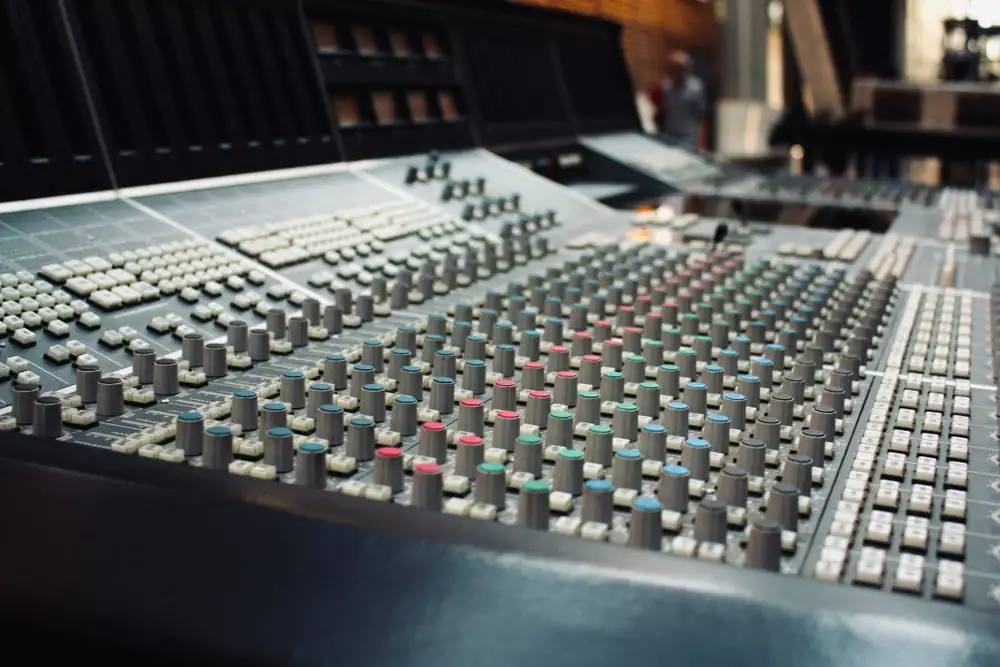
Photograph · source and license
The image, credit, reuse license, editorial context and delivered file are recorded in the exact Sites editorial review. This review is separate from the article’s canonical CIE assessment.
Image and publication standards →At a glance
- Meter location and meter type answer separate questions.
- A fader cannot repair distortion already recorded.
In this story
Ask where the reading comes from
A moving meter is evidence about a particular point in an audio path. Ardour’s manual documents input, pre-fader, post-fader, output and custom metering positions.
It also distinguishes digital peak measurement from averaging meters. This researched tutorial suits teen and adult beginners; reserve fifteen minutes for a practice recording.
Imagine a spoken phrase whose recorded waveform is unchanged while you lower its track fader. A meter placed after that fader should reflect the reduced playback level.
A reading before it answers an earlier question. Comparing them helps explain why changing a playback control does not necessarily change what was captured.
Use one phrase
Load a short practice clip and remove unrelated effects from the exercise. Note the meter position, meter type and highest reading.
Lower the fader, replay the same phrase, and record what changes. Then choose another meter point and repeat.
Keep listening volume comfortable; the lesson needs a comparison, not a loud demonstration.
The manual’s digital peak explanation treats zero dBFS as the digital ceiling represented by that scale. It is not a musical target that every voice should approach.
If the source recording already contains audible clipping, lowering the fader makes the damaged recording quieter; it does not reconstruct the missing shape.
Keep the diagnosis small
Write the conclusion in plain language: “The playback fader changed the downstream reading.” Avoid claiming that one number explains every problem.
Microphone position, input gain, plugins and output connections each deserve their own check. Saving the little comparison beside the practice clip helps a second volunteer understand what was measured and what remains untested.
Use the same phrase for every replay, so a louder word in another passage cannot masquerade as the effect of moving the meter.
Sources & verification
Official manual retrieved 2026-10-03; explains digital peak and RMS meters. Page gives no publication or revision date.
Read the sourceOfficial manual retrieved 2026-10-03; input, pre-fader, post-fader, output and custom meter points documented. No exact page revision date.
Read the sourceThis article was written with AI assistance from the linked sources. No firsthand interview or visit is implied. Source dates and limits are identified in the reporting. Advertising does not determine editorial coverage. Request a correction or read our standards.
EVERY NEIGHBOR HAS A VOICE
Keep the conversation going.
Share experiences, ask questions and link evidence for factual claims. Automated publication checks apply to each submitted version. Comments are independent community discussion, not submissions to a government body.
Sign in to join · freeCommunity standards