
Service guide Life · World
A lossless audio archive needs both a playable file and an integrity record
A researched preservation workflow explains sample fidelity, metadata, checksums and a recoverable copy.
Checking whether this browser can read the story aloud.
Explore related topics
Sources & editorial review
Sites editorial review recorded for this exact revision. This AI-assisted article or learning resource includes source links and credited contextual imagery.
This is a local editorial review, not a canonical Cultural Imprint Engine assessment. No CIE score is claimed. Source review does not verify third-party playback, provider availability or image pixels.
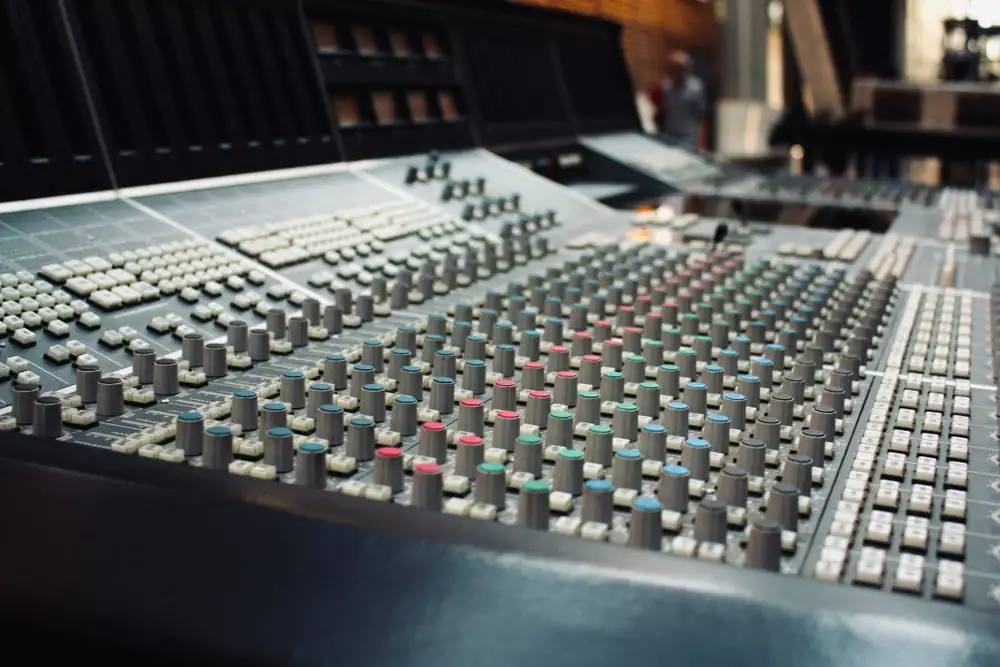
Photograph · source and license
The image, credit, reuse license, editorial context and delivered file are recorded in the exact Sites editorial review. This review is separate from the article’s canonical CIE assessment.
Image and publication standards →At a glance
- Lossless describes audio recovery, not complete archival care.
- A file checksum and a decoded-audio check answer different questions.
- A second copy becomes useful when recovery is demonstrated.
In this story
Decide which audio you are preserving
A lossless format can preserve encoded audio samples without the deliberate sample loss of a lossy codec. It does not choose the right recording, supply a title or protect a drive from failure.
The Library of Congress’s audio-format guidance, Xiph.Org’s FLAC documentation and NDSA’s preservation framework address different parts of that larger task. This researched workflow is intended for adult creators and supervised older teens preparing a modest audio collection.
Allow separate sessions for inventory, copying and recovery checks.
Begin by identifying the object you intend to keep. A complete source interview, an edited program and a distribution MP3 are three different objects even when they contain some of the same voice.
Preserve the source and final version when they serve different future needs, within the permissions governing them. Write that relationship down.
Converting an MP3 to a large uncompressed file does not recover information already discarded during its earlier encoding.
Use the original resolution when making an archival decision. The Library’s guidance prefers native resolution over up-sampled resolution and distinguishes metadata-bearing WAVE from an undescribed file.
These are institutional collection preferences, not a rule that every creator must buy a particular recorder or record everything at an ever-higher rate. A faithful account of the material you actually have is more useful than a technical label that exaggerates its origin.
Keep samples and container context distinct
WAVE is a container family, and FLAC is a lossless audio codec and file ecosystem. The extension alone cannot tell you every detail of the encoding or the description stored inside.
Inspect the file’s actual sample rate, sample format, channels and duration using an appropriate documented tool. Record those findings as properties of this file.
Do not infer them from a filename such as “master-high-quality.wav.” A name communicates intention; inspection supplies evidence.
Consider a hypothetical stereo recording stored as twenty-four-bit samples at forty-eight thousand samples per second. A lossless conversion should preserve its audio samples, but the new file’s overall bytes will differ because encoding and container structure differ.
A checksum of the original WAVE will therefore not normally match a checksum of its FLAC version. That mismatch does not by itself establish that the audible content was damaged.
The comparison must be designed around the question you want to answer.
Metadata requires its own attention. Xiph’s documentation explains FLAC tool behavior, including metadata handling during re-encoding, but a cross-format conversion should not be assumed to carry every original field into an equivalent destination field.
Keep an external descriptive record with title, creator, date, version relationship and access status. Verify any embedded fields you rely on.
A preserved audio stream and a preserved contextual record are complementary objects.
Use verification for a specific purpose
The FLAC command-line documentation provides a verification option during encoding and a test mode for a completed FLAC stream. For a practice WAVE, a documented example is “flac --verify practice.wav”; it creates the encoded file while checking the conversion.
The test command “flac --test practice.flac” checks the FLAC stream without writing decoded audio. These commands are researched examples, not operations this publication has performed on your collection.
A successful stream test is useful but bounded evidence. It concerns the integrity information and structure that the tool checks.
It does not prove that you chose the complete interview, that the date in your description is correct or that publication permission exists. Play the beginning, several internal passages and the ending as a separate content check.
For especially important material, establish an appropriately thorough review rather than treating a quick spot check as comprehensive listening.
For each stored file, create a checksum using a documented cryptographic hash tool and retain the result in a manifest. A file-level checksum compares the bytes of that same object across time or copies.
If you deliberately edit metadata, the bytes and checksum may change even though the decoded audio remains the same. Record the intentional change and create a new baseline.
Never replace an old manifest silently when the reason for a difference is still unknown.
Make copies that can actually be recovered
NDSA’s framework treats storage, integrity, control, metadata and content as related dimensions of preservation. A practical small collection should not depend on one storage device.
Choose additional storage appropriate to the importance and privacy of the material, and make clear which copy is authoritative. Several folders on the same failing drive do not provide the same protection as a copy whose failure risks are meaningfully separate.
Test recovery with a copy, not with the only original. Retrieve a stored item into a temporary review folder, compare its file checksum with the manifest and confirm that it opens in a suitable player.
Check the description as well. If the filename matches but the checksum differs, investigate which version was retrieved and whether a documented change explains it.
The task is to discover problems while the source and another valid copy are still available.
Keep access and restoration instructions simple enough for another responsible person to use. Private audio may need restricted storage and a clear custodian rather than a publicly shared folder.
The preservation plan should say where permissions are recorded without exposing sensitive participant details in the manifest that accompanies a public copy. More copies can improve resilience while also creating more places where access must be controlled.
Both consequences deserve deliberate handling.
Maintain the record after the first successful copy
Choose a realistic review interval and note who will conduct it. Recheck integrity after significant transfers and investigate reported storage problems.
Maintain a dated log of expected checksums, observed results and intentional migrations. If you replace a format or storage medium, retain the migration reason and verification method.
A future custodian should be able to distinguish a planned transition from an unexplained disappearance or silent overwrite.
For a five-file pilot collection, finish one file completely before multiplying the method. The first file should have a clear identity, inspected technical properties, a descriptive record, verified storage copies and a successful recovery check.
Apply the same procedure to the remaining files, revising it if the pilot reveals a missing field or confusing instruction. This bounded exercise teaches an actual workflow rather than merely accumulating reassuring format names.
This article does not assign a preservation level, certify a collection or report a hardware test. It offers a researched chain of evidence.
Lossless encoding answers whether audio samples can be retained faithfully; metadata answers what the recording is; file fixity answers whether a stored object changed; recovery answers whether someone can obtain and use it. Keeping those questions distinct makes a small creator archive more useful to the people who inherit it.
Sources & verification
Primary current formats statement retrieved directly 2026-10-03. No exact page revision date; preferences are LC collection guidance, not universal delivery requirements.
Read the sourcePrimary format description retrieved 2026-10-03. Exact significant update date not captured; filename extension alone does not prove encoding.
Read the sourceOfficial documentation retrieved 2026-10-03; encoding verification and test modes documented. No exact page revision date.
Read the sourcePrimary preservation framework retrieved 2026-10-03; framework distinguishes storage, integrity, control, metadata and content. Exact current framework document date not captured; no level rating claimed.
Read the sourceThis article was written with AI assistance from the linked sources. No firsthand interview or visit is implied. Source dates and limits are identified in the reporting. Advertising does not determine editorial coverage. Request a correction or read our standards.
EVERY NEIGHBOR HAS A VOICE
Keep the conversation going.
Share experiences, ask questions and link evidence for factual claims. Automated publication checks apply to each submitted version. Comments are independent community discussion, not submissions to a government body.
Sign in to join · freeCommunity standards