
Service guide Life · Gretna
Keep a sound notebook before you build a soundtrack
A quiet observation exercise can turn everyday listening into material for original storytelling.
Checking whether this browser can read the story aloud.
Explore related topics
Sources & editorial review
Sites editorial review recorded for this exact revision. This AI-assisted article or learning resource includes source links and credited contextual imagery.
This is a local editorial review, not a canonical Cultural Imprint Engine assessment. No CIE score is claimed. Source review does not verify third-party playback, provider availability or image pixels.
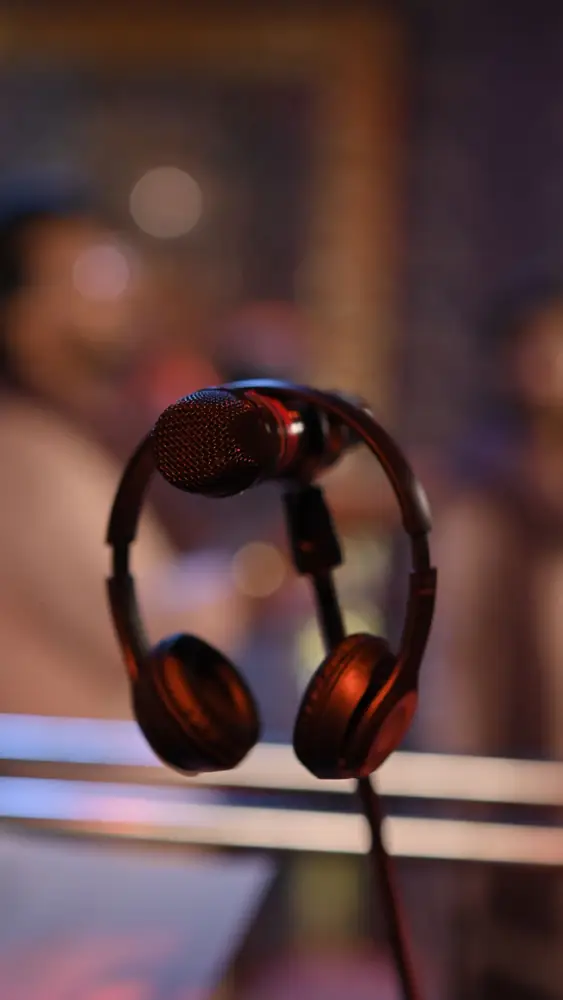
Photograph · source and license
The image, credit, reuse license, editorial context and delivered file are recorded in the exact Sites editorial review. This review is separate from the article’s canonical CIE assessment.
Image and publication standards →At a glance
- Write down sounds before reaching for a recorder.
- Avoid recording private conversations.
- Keep a source note with any sound you plan to use.
In this story
Begin with observation
For this hypothetical family exercise, choose a familiar place where you can stand or sit safely without blocking anyone. Spend a few minutes describing what you hear: a close sound, a distant sound, a repeated rhythm and a sound that changes.
Writing “metal wheels rattle, then stop” is more useful for a future story than writing “town noise.” There is no need to record strangers to practice attentive listening.
Draw a simple time line on paper. Put each observation near the moment you noticed it.
Then decide which sound would help a listener understand a scene and which would merely fill silence.
Create rather than collect indiscriminately
At home, make your own small sound scene with objects you can use safely: paper moving, a cup set on a table or footsteps in your own room. Ask everyone involved whether the exercise can be recorded and whether the result can leave the household.
Label it as a constructed scene, not a recording of an actual local event.
The Library of Congress recommends descriptive audio filenames and information about what a recording contains. Apply that principle with a note naming the maker, date, objects used and permission boundary.
Keep that note beside the audio file.
Try the story both ways
Write four sentences about an imaginary visitor arriving somewhere. Read them first without effects, then with one of your homemade sounds.
Ask whether the effect clarifies an action or distracts from the words. Remove it if the scene becomes harder to follow.
Keep the unedited recording as well as the selected excerpt. If a sound is later used in a public project, revisit the permission note and identify it accurately in the credits.
The notebook’s value is the habit of noticing and explaining choices, not the number of clips it contains.
Sources & verification
Descriptive filenames, summaries, copies in separate places and periodic readability checks. Checked October 3, 2026.
Read the sourceThis article was written with AI assistance from the linked sources. No firsthand interview or visit is implied. Source dates and limits are identified in the reporting. Advertising does not determine editorial coverage. Request a correction or read our standards.
EVERY NEIGHBOR HAS A VOICE
Keep the conversation going.
Share experiences, ask questions and link evidence for factual claims. Automated publication checks apply to each submitted version. Comments are independent community discussion, not submissions to a government body.
Sign in to join · freeCommunity standards