
Service guide Life · Gretna
Clean a voice recording by listening for what you might lose
An Audacity exercise tests a small edit before applying it to an entire spoken recording.
Checking whether this browser can read the story aloud.
Explore related topics
Sources & editorial review
Sites editorial review recorded for this exact revision. This AI-assisted article or learning resource includes source links and credited contextual imagery.
This is a local editorial review, not a canonical Cultural Imprint Engine assessment. No CIE score is claimed. Source review does not verify third-party playback, provider availability or image pixels.
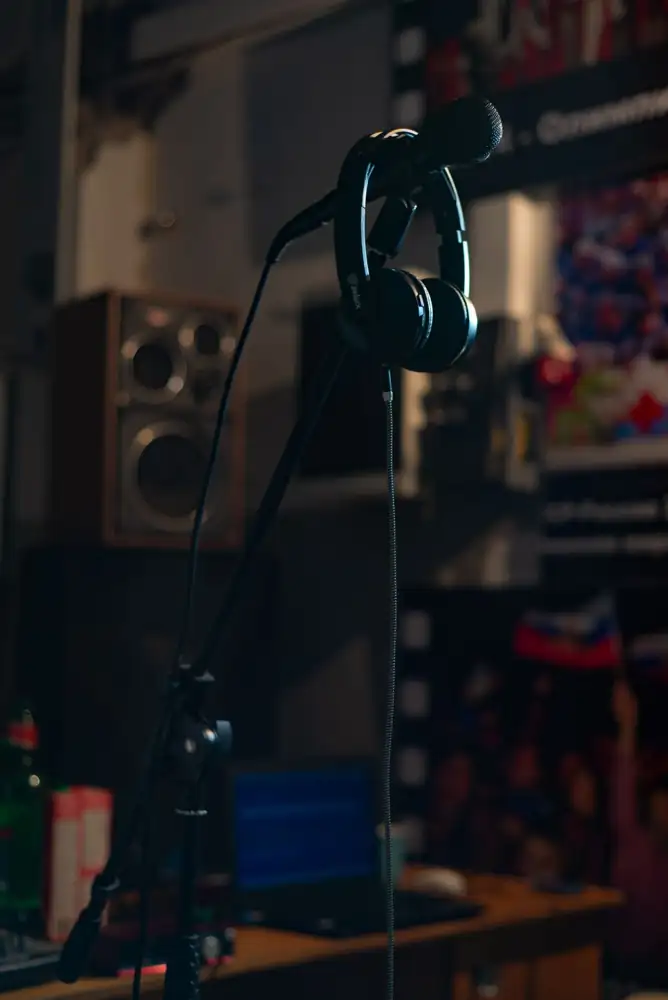
Photograph · source and license
The image, credit, reuse license, editorial context and delivered file are recorded in the exact Sites editorial review. This review is separate from the article’s canonical CIE assessment.
Image and publication standards →At a glance
- Preserve the unedited recording.
- Test processing on a short representative passage.
- Compare meaning and clarity as well as background noise.
In this story
Describe the problem before choosing an effect
A spoken recording may contain steady room noise, a bump against a table, a repeated phrase or a voice that is difficult to hear. Naming the problem matters because a single effect cannot resolve every cause.
For this hypothetical practice recording, an adult reads an original paragraph in a room with a gentle, steady fan sound. The aim is to reduce distraction while preserving the words and the speaker’s character.
Save the unedited recording before making changes. Note where it came from, who is speaking and whether the exercise can be shared.
If the intended project is an interview, an edit also has an editorial meaning: removing a pause or a sentence can change how an answer is understood.
Use a representative test
Audacity’s noise-reduction guidance describes learning a profile from noise and applying reduction to selected audio; it also discusses audible distortion when the noise and wanted sound are difficult to separate. Treat that as a reason to test, not as a promise that a noisy recording can be restored.
Choose a brief passage that contains a quiet word, a stronger phrase and a pause. Keep an unchanged copy for comparison.
Apply a modest trial according to the documentation for your installed version. Listen for thinning, watery sounds or damaged consonants.
If the improvement in the pause comes at the expense of the words, reduce the processing or leave that passage alone.
Compare without being fooled by level
A louder result can feel clearer simply because it is louder. Compare the unprocessed and processed passage at similar comfortable listening levels.
Use the same headphones or speaker for the first comparison, then try another familiar listening setup. Ask a second listener which words they can understand, not which version sounds more expensive.
Write a small edit log: file name, passage, problem, action and result. “Fan less distracting; last word less clear” is a useful observation.
It tells you why the change may be rejected. A chain of effects with no recorded purpose makes it harder to learn from the exercise.
Repeat the comparison the next day before committing to the edit. Fresh listening can reveal a distracting artifact you stopped noticing during repeated playback.
Keep the earlier observation rather than deleting it, and explain why your decision changed.
Make structural edits honestly
For a solo reading, you may remove a false start or choose a different take if it preserves the intended text. For an interview or community record, keep the original and avoid joins that manufacture a sentence the person did not say.
Mark a public excerpt as an excerpt and retain enough context to understand the answer.
Audacity labels can mark positions or regions. Use them to identify a repeated sentence, a sound needing review or a passage you intend to keep.
The label is a reminder to investigate; it does not decide whether a cut is justified.
Finish with a complete listen
Export a listening copy and play it from start to finish. Check that no section is missing, that the ending is complete and that the words remain understandable.
Keep the original, the working project and the released copy clearly distinguished.
If the recording cannot support its intended use, a new take may be the most useful answer. Repeating a controlled recording can teach more than trying to hide every defect.
The exercise succeeds when you can explain what improved, what remained imperfect and why the chosen version represents the speaker fairly.
Sources & verification
Noise-profile workflow and potential distortion; no product testing claimed. Checked October 3, 2026.
Read the sourceLabels mark positions or selected regions in a recording. Checked October 3, 2026.
Read the sourceThis article was written with AI assistance from the linked sources. No firsthand interview or visit is implied. Source dates and limits are identified in the reporting. Advertising does not determine editorial coverage. Request a correction or read our standards.
EVERY NEIGHBOR HAS A VOICE
Keep the conversation going.
Share experiences, ask questions and link evidence for factual claims. Automated publication checks apply to each submitted version. Comments are independent community discussion, not submissions to a government body.
Sign in to join · freeCommunity standards