
Explainer Food · Virginia
Market table, kitchen, permit, label: follow the record behind local food sales
Virginia farmers-market vendors can fall under different safety and permit paths depending on what they make and how they serve it. A careful guide starts with the product, not a guess about the agency.
Checking whether this browser can read the story aloud.
Explore related topics
Sources & editorial review
Sites editorial review recorded for this exact revision. This AI-assisted article or learning resource includes source links and credited contextual imagery.
This is a local editorial review, not a canonical Cultural Imprint Engine assessment. No CIE score is claimed. Source review does not verify third-party playback, provider availability or image pixels.
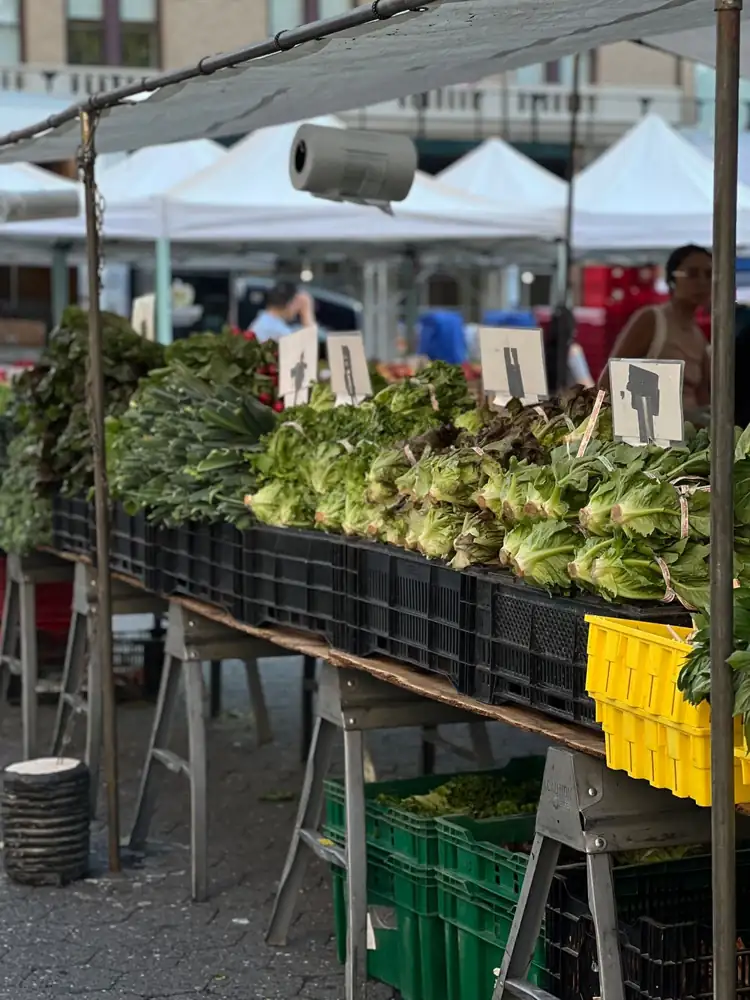
Photograph · source and license
The image, credit, reuse license, editorial context and delivered file are recorded in the exact Sites editorial review. This review is separate from the article’s canonical CIE assessment.
Image and publication standards →In this story
The product determines the pathway
A farmers market can bring together whole produce, packaged food, baked goods, refrigerated products and meals prepared for immediate service. Virginia’s official vendor guidance explains that different products and processes can involve the Department of Agriculture and Consumer Services, the Department of Health or other requirements.
The word “market” does not create one universal permit.
Start with a product list and a process map. Record where ingredients come from, where food is prepared, whether it requires temperature control, how it is packaged, whether samples are offered and how it reaches the buyer.
Those facts help the responsible agency identify the correct route.
Market organizers can request vendor documents, but an organizer’s checklist does not replace an agency determination. Keep the venue agreement, public-health record and product approval in separate files.
That separation makes renewals and later menu changes easier to review.
Whole produce and processed food are not the same
Selling uncut fruits and vegetables is different from cutting, canning, bottling or combining them. A change that looks small to a customer can alter contamination risk and regulatory responsibility.
Do not copy a neighboring vendor’s approval because the booths look similar. The underlying food and handling steps may differ.
Produce-safety guidance also addresses farm practices and covered operations. A public article should not declare a farm exempt or covered without the farm’s facts and current agency interpretation.
It can explain the questions and link the official program so growers can obtain the applicable determination.
Prepared service can involve local health review
VDACS notes that food-service vendors at farmers markets are permitted through the Virginia Department of Health. Temporary food service can involve equipment, handwashing, water, waste, temperature control and a person responsible for safe operation.
Event permission from an organizer does not replace the appropriate food permit.
A vendor should contact the relevant health district early and preserve the application, approved menu, inspection or permit record and any conditions. A shopper should read a displayed permit only for what it says.
It does not guarantee that no mistake can occur or prove that every product on a shared table came through the same process.
Home kitchens have bounded routes
Virginia identifies circumstances in which certain home-based food operations may sell products under exemptions or inspection frameworks. The details depend on product, ingredients, packaging, venue and labeling.
“Homemade” is not a complete legal category, and a social-media sale does not avoid food law.
Before printing labels or accepting orders, use the current VDACS home-kitchen guidance and request an agency answer for uncertain products. Record whether the answer is general guidance or a decision about the specific operation.
Do not advertise an exemption before the predicate is satisfied.
Labels carry claims that must be supportable
Packaged foods may need identity, ingredient, allergen, net-quantity, business and handling information. A label can also create risk when it makes unsupported health, origin or production claims.
Copying another product’s format does not establish compliance. Build the label from the applicable official guidance and the actual recipe.
Ingredient or process changes should trigger a new review. Preserve the prior label with its sale period so a later question can be traced.
Do not silently substitute ingredients while leaving an old allergen statement. For a newsroom, photograph or transcribe only what is relevant and avoid exposing a home address unnecessarily.
Sampling is a separate handling event
Cutting or portioning a product for samples adds utensils, hands, surfaces, time and exposure. VDACS publishes guidance for safe samples at markets.
A vendor who may lawfully sell a sealed product should not assume the same controls cover open sampling. Ask which authority applies and what setup is required.
Event organizers can support compliance by collecting current vendor records, explaining water and waste arrangements and making agency contact information available. They should not certify food safety beyond their role.
A logo on the event poster is not an inspection receipt.
Benefits and price claims need their own evidence
A market may participate in SNAP or another nutrition-incentive program, but each authorization has rules, dates and eligible products. Never advertise benefit acceptance from an old flyer.
Confirm the market or vendor in the current official channel and state whether an incentive is funded and active before describing extra value.
Likewise, a pictured price is date- and vendor-specific. It is not evidence of the market’s current price or a guaranteed deal.
If coverage compares cost, record unit, grade, quantity, date and source. Expired promotions belong in an archive, not the current help shelf.
Keep a market-day record
A vendor file can contain product list, process summary, agency contact, permit or inspection identity, label version, cold-holding plan, sampling plan, insurance if required by the venue and current market agreement. Record submitted, approved, corrected and expired states separately.
A paid fee is not approval.
A market manager can maintain a roster without publishing private documents. Shoppers need clear vendor identity, truthful product description, price and a way to raise a safety concern.
Regulators need the complete official records through their authorized channel. One file should not be repurposed for every audience.
What these sources establish
The checked state sources establish the general division of farmers-market, food-service, home-kitchen and food-safety guidance. They do not approve a named vendor, menu, kitchen or event.
This article is educational and cannot replace current agency review of the actual operation.
The durable method is to follow the food. Identify the product, process, place and point of service, then ask the responsible office.
That approach makes local food coverage more useful without inventing inspection results, shaming vendors from incomplete records or treating an attractive table as proof of compliance.
Sources & verification
Official overview of vendor and food-service regulatory routes.
Read the sourceOfficial guidance for market sampling and regulated food operations.
Read the sourceOfficial home-kitchen, commercial-kitchen and food-service information.
Read the sourceOfficial produce-safety program and grower resources.
Read the sourceThis article was written with AI assistance from the linked sources. No firsthand interview or visit is implied. Source dates and limits are identified in the reporting. Advertising does not determine editorial coverage. Request a correction or read our standards.
EVERY NEIGHBOR HAS A VOICE
Keep the conversation going.
Share experiences, ask questions and link evidence for factual claims. Automated publication checks apply to each submitted version. Comments are independent community discussion, not submissions to a government body.
Sign in to join · freeCommunity standards