
Service guide Family · County
When a Bedford school route changes, families need the route, privacy and decision records
A bus schedule, boundary map, funding report and parent notice answer different questions. This guide shows how to seek help without exposing a child’s daily routine.
Checking whether this browser can read the story aloud.
Explore related topics
Sources & editorial review
Sites editorial review recorded for this exact revision. This AI-assisted article or learning resource includes source links and credited contextual imagery.
This is a local editorial review, not a canonical Cultural Imprint Engine assessment. No CIE score is claimed. Source review does not verify third-party playback, provider availability or image pixels.
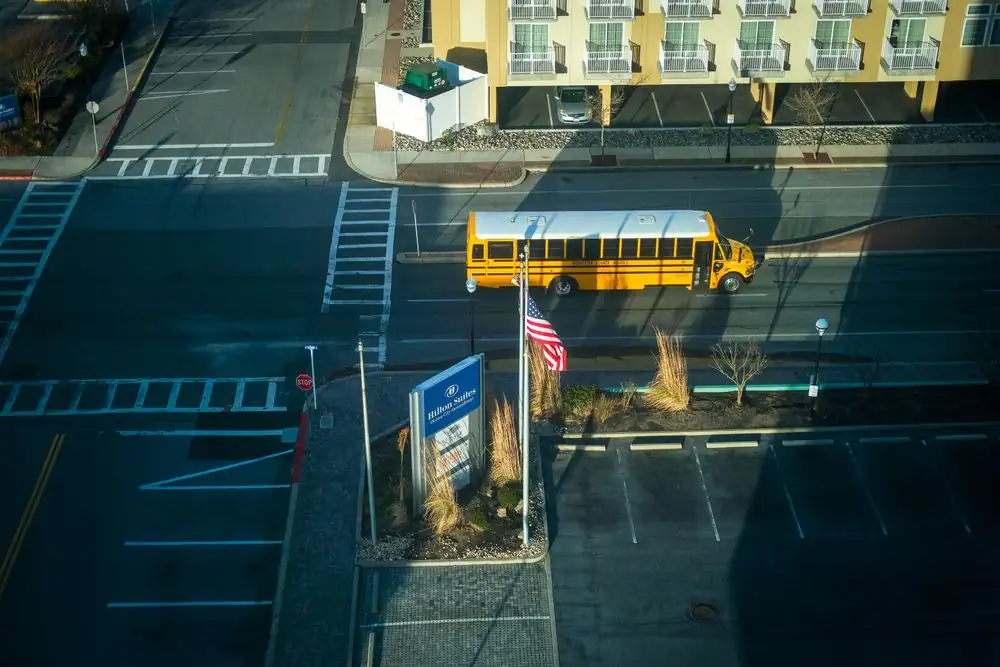
Photograph · source and license
The image, credit, reuse license, editorial context and delivered file are recorded in the exact Sites editorial review. This review is separate from the article’s canonical CIE assessment.
Image and publication standards →In this story
Start with the individual assignment privately
A family’s first question is usually practical: which bus, stop, pickup window and school assignment apply to this student? Use the division’s authenticated or direct support route.
Do not post a child’s name, address, stop, disability, custody arrangement or daily schedule in a public form or social thread.
A public article can link the Transportation Department and explain response steps, but it cannot verify an individual route from a crowd-sourced map. Bedford County Public Schools identifies its transportation office as responsible for eligible student service.
Record the contact route and checked date without promising a particular assignment.
Distinguish a route change from a boundary change
A bus may be rerouted because of road work, driver availability, timing or safety while the student’s assigned school remains the same. A boundary change alters which school serves an area and usually follows a different public process.
Label the type before describing consequences.
A temporary delay, emergency detour, stop adjustment and long-term route redesign are also different statuses. Preserve the issuing office, effective date, affected riders and expiration or next-review condition.
Remove expired instructions from current shelves while retaining the dated archive.
Read state transportation rules in context
VDOE develops standards and procedures for public-school pupil transportation, and divisions submit annual transportation data tied to funding. Statewide totals or requirements do not reveal one Bedford route’s daily operation.
Use them to frame the system, then retrieve the local policy and record.
Virginia regulations require route schedules to be kept while also protecting student records and information. A public-record request should seek non-identifying policy, methodology, aggregate performance or decision documents—not a roster that could expose children.
Redaction can be a necessary privacy control, not evidence of concealment.
Document the safety question precisely
Name the issue without publishing a vulnerable location: sight distance, shoulder, crossing, turnaround, road restriction, travel time or accessibility need. Give transportation staff the exact address through a secure channel and retain the date, ticket or response.
For public discussion, generalize the location unless disclosure is necessary and safe.
A parent photograph can illustrate a physical condition when taken lawfully, but it should avoid children, house numbers and predictable routines. Weather and traffic conditions change.
A single image supports a dated observation, not a permanent conclusion that a stop is safe or unsafe.
Follow the decision record
For a systemic change, gather the proposal, maps, staff analysis, cost, enrollment assumptions, meeting agenda, public comments and final action. A workshop statement is not the board’s adopted decision.
Record amendments and implementation dates.
If the division says efficiency improved, ask which measure changed: miles, buses, driver hours, ride time, on-time performance or cost. Every metric has a denominator and tradeoff.
Report distribution, not just an average, when a small number of very long rides matters.
Protect disability and family records
Transportation can be part of an individual student plan, medical accommodation or other protected service. Those decisions belong in the appropriate private school process.
A newsroom, public poll or neighbor group should not ask families to upload records to prove eligibility.
Public reporting can examine whether policies and resources are accessible without identifying students. Use aggregate counts only when groups are large enough to protect privacy.
Consent from one family member may not authorize disclosure of another child or household’s information.
Make notices accessible and resilient
Route-change notices should use plain language, a clear effective date, direct contact and alternatives for families who cannot use an app. Important instructions need readable text, not only an image.
Offer language and disability access through the responsible division routes.
During outages or low connectivity, a phone line and concise text update can matter more than an interactive map. Timestamp every status.
A delayed source is verification pending; do not infer that a bus is canceled or that normal service resumed.
Build a correction and escalation path
A family should know who owns an immediate missed-bus issue, a recurring route concern, a safety complaint and a school-boundary question. List those routes separately.
Emergency danger belongs with 911 or the proper immediate authority, not a web comment queue.
For public accountability, publish the source dates, policy, aggregate evidence and fair responses from the division or other criticized parties. Preserve corrections when maps or schedules change.
The goal is a safer, understandable service record without turning children’s movements into public data.
Work one recurring-delay question safely
A family reports repeated late arrivals. They provide exact dates and route details privately to transportation staff and keep the reference number.
A public inquiry asks for aggregate on-time methodology, affected route groups and documented operational causes without requesting student names, stop lists or driver license information.
The newsroom compares the division’s response with board records, road notices and like-period data. One construction detour may explain a date but not an entire semester; an authorized driver vacancy may show capacity pressure but not who drove a particular route.
Each explanation stays attached to its source.
Before publication, give the division the calculation and dates. If the schedule or coding changed, correct the comparison.
Publish assistance routes beside the analysis so families can solve immediate problems without surrendering privacy, while the aggregate record supports a fair question about recurring service.
If the division changes the route, document the effective date and private notice method rather than publishing the stop list. Recheck whether the reported outcome improved using the same definition.
A correction can acknowledge that service changed while preserving the original dates and evidence that made the question reasonable. Keep the immediate family-help route visible even after the aggregate investigation closes.
Sources & verification
Official local transportation office and service information.
Read the sourceOfficial state standards, practices and transportation resources.
Read the sourceOfficial annual reporting and funding context.
Read the sourceOfficial regulation governing route schedules and information security.
Read the sourceThis article was written with AI assistance from the linked sources. No firsthand interview or visit is implied. Source dates and limits are identified in the reporting. Advertising does not determine editorial coverage. Request a correction or read our standards.
EVERY NEIGHBOR HAS A VOICE
Keep the conversation going.
Share experiences, ask questions and link evidence for factual claims. Automated publication checks apply to each submitted version. Comments are independent community discussion, not submissions to a government body.
Sign in to join · freeCommunity standards