Feature Life · Virginia
Give fall leaves three useful places to land
A little lawn care, a quiet habitat corner and a compost supply can share the same yard.
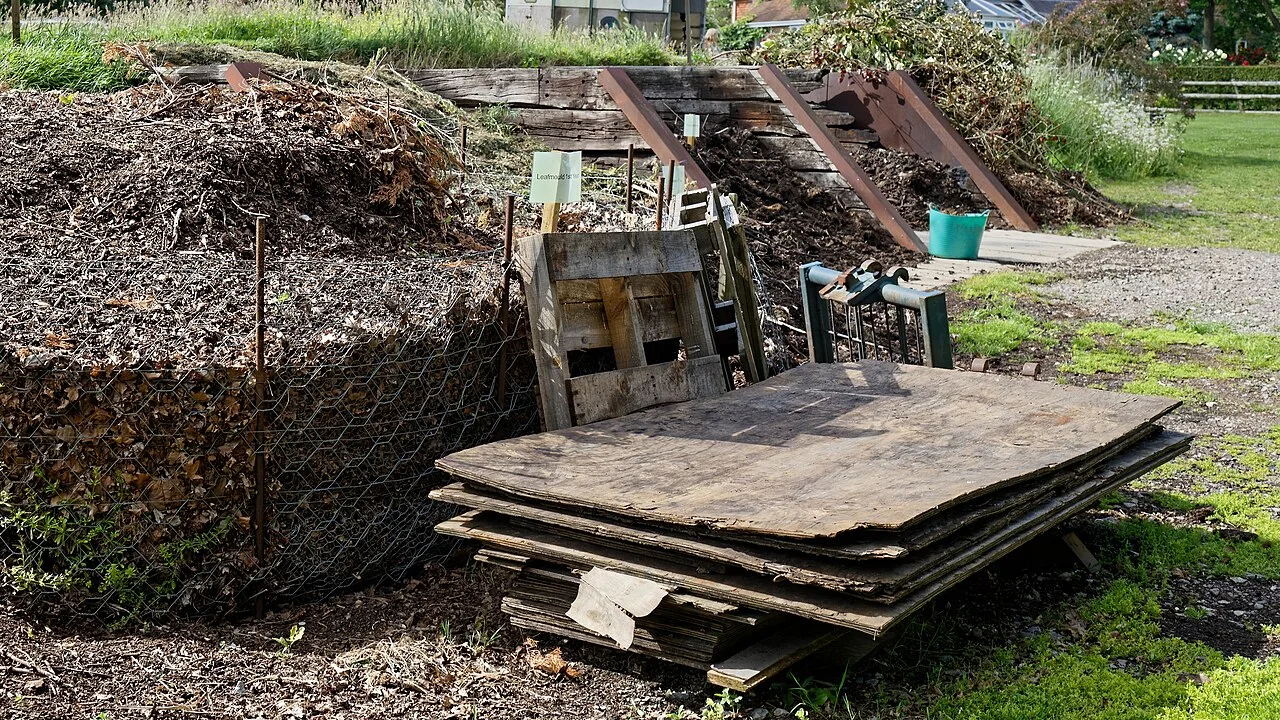
Image provenance · CIE 100/100
Assessment applies to the credited image record and its editorial context. Image delivery and the pictured event’s current status are not certified by a score. Receipt: bb5c19b0-bb2c-4d2c-9d3e-3348edd4372c
Image & publication standards →At a glance
- Match leaf handling to the part of the yard.
- Keep some leaves undisturbed where habitat is the goal.
- Use suitable leaves in a managed compost pile and avoid diseased material.
In this story
Make the plan before the piles arrive
A fall yard does not need one rule for every leaf. The patch where children play, the bed under a tree and the corner where you keep a compost bin each serve a different purpose.
Decide how you use those spaces before the heavy raking begins.
For Gretna-area households, September is a useful moment to draw that simple plan. Mark the paths and lawn you want clear, a planted area where some leaves can remain, and a place to hold leaves for compost.
The goal is to give the material a destination while the work is still manageable.
This can be a small project. You do not need to redesign the whole yard or buy a machine.
Start with one bed and one storage area, then see whether the arrangement suits your space and the amount of work you want to do.
On the lawn, watch the coverage
Virginia Cooperative Extension supports mowing suitable leaf cover into an established lawn. Chopped leaves settle among the grass and return organic matter as they break down.
The practical limit is whether the grass remains exposed enough to keep growing, rather than buried under a mat.
Work with dry leaves when possible and make additional passes if needed. If the volume overwhelms the lawn, move the excess to another appropriate part of the yard.
Repeating a modest job as leaves fall can be more manageable than confronting the entire season's accumulation at once.
Before mowing, remove branches, sticks and other debris. VCE cautions that a rotary mower should not be treated as a wood chipper.
Follow the mower's operating instructions and keep other people clear of the work.
This route is for the lawn area you are managing as turf. It does not need to determine what you do with every leaf under shrubs or at the edge of a wooded section.
Keep a quieter corner for insects
University of Maryland Extension explains that leaf litter and standing stems shelter many insects through winter, including pollinators and predators that feed on garden pests. A bed or less-used edge can provide that shelter if some material remains undisturbed.
Choose that area deliberately. Leave its leaves intact instead of shredding everything first.
A clear edge or small sign can help explain that the space has a purpose. The Maryland Extension gardening blog describes signs as one way to communicate a habitat choice to neighbors.
Keep regularly used paths accessible. If a leaf layer drifts out of its intended area, move it gently back where it belongs.
Think of the boundary as part of the design, just as you would the edge of a flower bed.
There are exceptions to leaving plant material. Maryland's guidance recommends removing diseased leaves and stems because home compost piles may not reliably destroy plant pathogens.
Identify a plant problem before deciding to save all of its fallen material.
Use the surplus as a compost ingredient
Dry leaves supply carbon-rich material, often called browns, for a backyard compost pile. Fruit and vegetable scraps and grass clippings provide nitrogen-rich greens.
The Environmental Protection Agency recommends using roughly two to three times as much browns as greens by volume, with enough moisture and air for decomposition.
Keep a supply of suitable dry leaves near the compost area so you can cover new food scraps. EPA recommends covering scraps with four to eight inches of browns.
Exclude meat, dairy, grease, pet waste, diseased plants and herbicide-treated material from a basic home pile.
Virginia Cooperative Extension's yard-waste composting guide explains why pile size, moisture, air and the mix of ingredients affect how quickly decomposition proceeds. A pile is a living process to check occasionally, not a container into which every household waste belongs.
Choose a location you can reach easily with a small kitchen container or garden fork. Leave room to work beside it.
An awkward route can turn a good intention into a pile nobody wants to maintain once the weather changes.
Keep mulch around plants, with space at the stems
Some leaves can also be used on the soil surface as mulch. Virginia Cooperative Extension's mulching guide notes that whole leaves can mat together, while shredded leaves decompose more quickly.
Choose the form and location to match the job.
Keep mulch away from tree trunks and plant crowns. The same guide recommends an even layer and warns against burying the trunk flare or piling material against stems.
Check what is already in a bed before adding another layer; fresh leaves do not make the existing mulch disappear.
If your main goal in a bed is overwintering habitat, leave an undisturbed area there and send the leaves intended for shredding elsewhere. That simple separation allows the yard to support several uses without asking one patch to perform all of them.
Check the result, then make next year easier
Visit the compost pile when you add material. EPA advises adjusting moisture and air: a dry pile may need water and turning, while an unpleasant smell can signal too much moisture or too little air.
Finished compost should be dark and crumbly, with an earthy smell, after decomposition and curing.
Do not promise yourself a fixed finish date. Weather, ingredients and attention affect the process.
Keep using the complete Extension or EPA directions as you learn how your own pile behaves.
Later in fall, take a photograph of the lawn, habitat bed and compost area. Note where leaves drifted and which jobs were easy to repeat.
Next September's plan can start from those observations, with fewer bags to handle and a clearer idea of where the leaves are useful.
Cultural & community review
Assessment passed This recorded version passed its cultural and community assessment.
- Reviews the cultural and community context of this editorial item.
- Source, rights and publisher checks remain separate.
- It does not score people or certify every fact.
Read the assessment record & limits
- This record applies to the identified content revision. Later changes require another assessment.
- Asset
- gj:article:fall-leaves-compost-yard-plan
- Engine
- ct.algorithm.cie.v1 · 1.0.1
- Receipt
- c1398777-8058-4cde-99f5-09eaa7ea79c9
- Assessed
- Revision
- sha256-f6ccdaf8a1ba840ab5ae29938daa67f713674a6cfd6a9ca6e51fee8a24567691
- Record state
- eligible · PASS
- Binding
- BOUND
Sources & verification
Reviewed August 2025. Checked September 7, 2026. Leaf mulching in turf, dry leaves, excess coverage and mower safety.
Read the sourceUpdated December 2, 2025. Checked September 7, 2026. Overwintering habitat and removing diseased material; no guarantee of pest elimination.
Read the sourceNovember 13, 2024. Checked September 7, 2026. Practical communication of deliberate leaf-habitat areas.
Read the sourceUpdated December 8, 2025. Checked September 7, 2026. Browns and greens, covered scraps, exclusions, moisture, aeration and compost maturity.
Read the source2022 publication. Checked September 7, 2026. Pile size, ingredients, moisture and air in managed home composting.
Read the sourceNovember 24, 2025. Checked September 7, 2026. Leaf mulch behavior, even application and keeping material away from trunks and crowns.
Read the sourceThis article was written with AI assistance from the linked sources. No firsthand interview or visit is implied. Source dates and limits are identified in the reporting. Advertising does not determine editorial coverage. Request a correction or read our standards.
EVERY NEIGHBOR HAS A VOICE
Keep the conversation going.
Share experiences, ask questions and link evidence for factual claims. Automated checks assess each version; posts that pass publish immediately with their CIE score and reasons. Comments are independent community discussion, not submissions to a government body.
Sign in to join · freeCommunity standards