
Service guide Creators · Virginia
A Lawrenceville oral-history project needs consent, recording identity, preservation and reuse rights
Permission to record is not automatically permission to publish every excerpt forever. A durable community archive keeps the interviewee's choices attached to each recording, transcript and derivative use.
Checking whether this browser can read the story aloud.
Explore related topics
Sources & editorial review
Sites editorial review recorded for this exact revision. This AI-assisted article or learning resource includes source links and credited contextual imagery.
This is a local editorial review, not a canonical Cultural Imprint Engine assessment. No CIE score is claimed. Source review does not verify third-party playback, provider availability or image pixels.
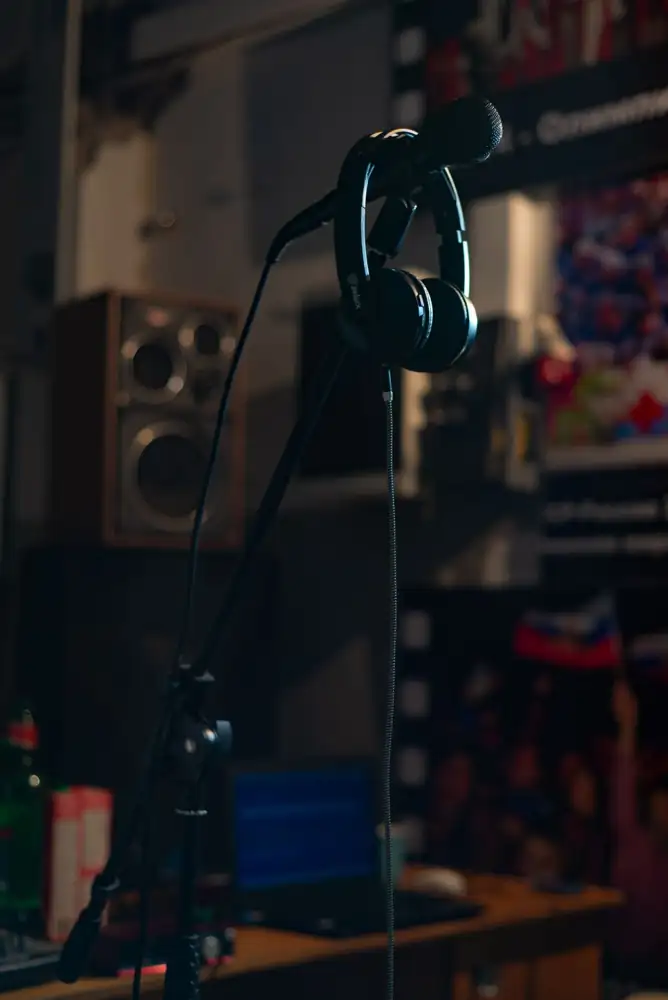
Photograph · source and license
The image, credit, reuse license, editorial context and delivered file are recorded in the exact Sites editorial review. This review is separate from the article’s canonical CIE assessment.
Image and publication standards →In this story
The local question and the jurisdiction test
Which records let a Lawrenceville oral-history team preserve an interview while respecting the narrator's choices and future reuse? In Lawrenceville and Brunswick County, a reliable answer begins with the named custodian, the exact record date and the next official event that could change the conclusion.
For community oral-history production, a place name helps discovery, but it does not convert a search result into an approval, payment, safety finding, ownership decision or completed service.
A Lawrenceville interview may concern places, families and institutions across Brunswick County or beyond, so location metadata should describe the interview and its subject without claiming community authority from a mailing address. The practical consequence for community oral-history production is that a reader should write down the address, parcel, account, system, school, business, interview, project or participant identity before searching.
Similar names and overlapping Lawrenceville and Brunswick County service areas in a community oral-history production search are common enough that identity matching is part of the reporting, not clerical cleanup after publication.
Do not publish private contact information, health details, minors' information, restricted cultural knowledge or third-party allegations merely because they were recorded. Gretna Junction does not collect the underlying community oral-history production private evidence for this guide.
A Lawrenceville and Brunswick County reader handling community oral-history production should use the official secure route when a custodian needs protected material and keep the public account limited to dates, public identifiers and the status actually returned.
Four records that answer different questions
Record 1 is the project brief and interview plan, owned or maintained by the community team and intended repository. It can state purpose, scope, audience, questions, format, custody and foreseeable uses, but it cannot create the narrator's consent or rights transfer.
Read the project brief and interview plan this way: Write the preservation and access plan before recording so the narrator can make an informed choice. Preserve the official title, covered period, direct address, retrieval date and any amendment or successor for record 1.
A screenshot of the project brief and interview plan without those anchors can become impossible to audit when a page changes.
Record 2 is the narrator consent and release, owned or maintained by the narrator and project under the signed terms. It can document agreed recording, deposit, access, editing, credit and reuse permissions, but it cannot grant rights the narrator does not control or waive ethical duties.
Read the narrator consent and release this way: Use plain language, record restrictions and provide a copy to the narrator. Preserve the official title, covered period, direct address, retrieval date and any amendment or successor for record 2.
A screenshot of the narrator consent and release without those anchors can become impossible to audit when a page changes.
Record 3 is the master recording, transcript and metadata package, owned or maintained by the repository or custodian named in the agreement. It can preserve the authentic files, technical history, participants, dates and controlled transcript changes, but it cannot make an edited excerpt the complete historical record.
Read the master recording, transcript and metadata package this way: Keep masters read-only, derive access copies and log transcript corrections. Preserve the official title, covered period, direct address, retrieval date and any amendment or successor for record 3.
A screenshot of the master recording, transcript and metadata package without those anchors can become impossible to audit when a page changes.
Record 4 is the access and publication decision, owned or maintained by the repository and applicable rights holders. It can state whether a proposed exhibit, podcast, classroom use or commercial reuse fits the agreement, but it cannot be assumed from online availability or attribution.
Read the access and publication decision this way: Review the exact excerpt, context, credit, platform and audience against the release. Preserve the official title, covered period, direct address, retrieval date and any amendment or successor for record 4.
A screenshot of the access and publication decision without those anchors can become impossible to audit when a page changes.
What the official sources establish
The Library of Congress Veterans History Project uses a field kit with interview guidance and a participant release form. This is source finding 1 for Lawrenceville and Brunswick County.
The useful scope of community oral-history production finding 1 is the program, record or duty that the named custodian actually describes. Keep finding 1 attached to the October 15, 2026 check date, because a later form, tariff, inventory, calendar, policy or project update may supersede the present route.
Library of Congress oral-history collection pages state that documented individuals may retain copyright and related rights. This is source finding 2 for Lawrenceville and Brunswick County.
The useful scope of community oral-history production finding 2 is the program, record or duty that the named custodian actually describes. Keep finding 2 attached to the October 15, 2026 check date, because a later form, tariff, inventory, calendar, policy or project update may supersede the present route.
The Library distinguishes educational access from commercial or other reuse requiring additional permission. This is source finding 3 for Lawrenceville and Brunswick County.
The useful scope of community oral-history production finding 3 is the program, record or duty that the named custodian actually describes. Keep finding 3 attached to the October 15, 2026 check date, because a later form, tariff, inventory, calendar, policy or project update may supersede the present route.
Virginia Humanities' public work demonstrates that oral-history projects combine recording, archiving and public interpretation rather than treating them as one event. This is source finding 4 for Lawrenceville and Brunswick County.
The useful scope of community oral-history production finding 4 is the program, record or duty that the named custodian actually describes. Keep finding 4 attached to the October 15, 2026 check date, because a later form, tariff, inventory, calendar, policy or project update may supersede the present route.
Build an auditable sequence
Define the community purpose, intended repository, formats, interview roles and access expectations before recruitment. For Lawrenceville and Brunswick County, sequence step 1 is to preserve the input, the official response and the next required action as separate events.
A community oral-history production confirmation at step 1 proves receipt only when the custodian says it does; it is not an award, permit, eligibility ruling, inspection result, corrected account or completed project.
Discuss topics that may be recorded but restricted, embargoed, anonymized or removed from public derivatives. For Lawrenceville and Brunswick County, sequence step 2 is to preserve the input, the official response and the next required action as separate events.
A community oral-history production confirmation at step 2 proves receipt only when the custodian says it does; it is not an award, permit, eligibility ruling, inspection result, corrected account or completed project.
Capture uncompressed or preservation-quality masters and create controlled access copies for editing and listening. For Lawrenceville and Brunswick County, sequence step 3 is to preserve the input, the official response and the next required action as separate events.
A community oral-history production confirmation at step 3 proves receipt only when the custodian says it does; it is not an award, permit, eligibility ruling, inspection result, corrected account or completed project.
Return a transcript or summary for the narrator review promised by the project and log accepted changes. For Lawrenceville and Brunswick County, sequence step 4 is to preserve the input, the official response and the next required action as separate events.
A community oral-history production confirmation at step 4 proves receipt only when the custodian says it does; it is not an award, permit, eligibility ruling, inspection result, corrected account or completed project.
Test the attractive alternative explanation
A spoken yes at the start of a conversation may not cover later publication, translation, advertising or commercial reuse. This is alternative 1 to test before stating a conclusion about community oral-history production.
For Lawrenceville and Brunswick County alternative 1, reposted copies, a map pin, a remembered practice, a third-party directory or a search-engine excerpt may point toward the record, but none replaces the current document and authority. Record what would disprove community oral-history production alternative 1 and look for that evidence.
The interviewer, narrator, photographer and music owner can hold different rights in one finished piece. This is alternative 2 to test before stating a conclusion about community oral-history production.
For Lawrenceville and Brunswick County alternative 2, reposted copies, a map pin, a remembered practice, a third-party directory or a search-engine excerpt may point toward the record, but none replaces the current document and authority. Record what would disprove community oral-history production alternative 2 and look for that evidence.
A corrected transcript does not authorize destructive editing of the preserved master. This is alternative 3 to test before stating a conclusion about community oral-history production.
For Lawrenceville and Brunswick County alternative 3, reposted copies, a map pin, a remembered practice, a third-party directory or a search-engine excerpt may point toward the record, but none replaces the current document and authority. Record what would disprove community oral-history production alternative 3 and look for that evidence.
An online archive record can describe a restricted interview without making the file publicly downloadable. This is alternative 4 to test before stating a conclusion about community oral-history production.
For Lawrenceville and Brunswick County alternative 4, reposted copies, a map pin, a remembered practice, a third-party directory or a search-engine excerpt may point toward the record, but none replaces the current document and authority. Record what would disprove community oral-history production alternative 4 and look for that evidence.
Worked local scenarios
Scenario 1: A Lawrenceville church history group records an elder about a former neighborhood. The first community oral-history production check is explain the repository, public uses, sensitive topics and withdrawal limits before recording.
The second Lawrenceville and Brunswick County check is preserve the signed release, master, metadata and reviewed transcript together. The reporting boundary for scenario 1 is do not publish third-party allegations or private family facts simply because the narrator mentioned them.
This community oral-history production order for scenario 1 matters because it lets a reader distinguish a missing record from a negative decision, an incomplete step from a refusal, and a pending review from a final outcome without inventing motive or fault.
Scenario 2: A podcast producer wants a two-minute excerpt from an archived interview. The first community oral-history production check is read the release and repository access note for the exact recording.
The second Lawrenceville and Brunswick County check is obtain any additional narrator, interviewer, music or photograph permission the new use requires. The reporting boundary for scenario 2 is credit alone does not expand the license or cure a restricted use.
This community oral-history production order for scenario 2 matters because it lets a reader distinguish a missing record from a negative decision, an incomplete step from a refusal, and a pending review from a final outcome without inventing motive or fault.
Scenario 3: A narrator asks to correct names in the transcript after deposit. The first community oral-history production check is preserve the request and confirm what the agreement permits.
The second Lawrenceville and Brunswick County check is update the access transcript with a version note while retaining the authentic prior record. The reporting boundary for scenario 3 is do not silently rewrite the master or erase documented provenance.
This community oral-history production order for scenario 3 matters because it lets a reader distinguish a missing record from a negative decision, an incomplete step from a refusal, and a pending review from a final outcome without inventing motive or fault.
Scenario 4: A school wants students to collect community interviews. The first community oral-history production check is design age-appropriate consent, guardian and privacy procedures before assignments begin.
The second Lawrenceville and Brunswick County check is limit collection and publication to the approved educational scope and repository plan. The reporting boundary for scenario 4 is do not place minors or vulnerable narrators in a public archive by default.
This community oral-history production order for scenario 4 matters because it lets a reader distinguish a missing record from a negative decision, an incomplete step from a refusal, and a pending review from a final outcome without inventing motive or fault.
What each source contributes—and what it does not
Source 1 is Library of Congress — Veterans History Project Field Kit. It contributes this part of the community oral-history production record: Primary interview, required-element and release-form route for a national oral-history program.
The direct address for Library of Congress — Veterans History Project Field Kit is https://www.loc.gov/vets/memoirkit-overview.html. Use source 1 as a primary route to the named program, then inspect the effective date, covered locality and linked form or document.
Do not infer from Library of Congress — Veterans History Project Field Kit that the custodian has approved a particular person's, property's or organization's case merely because the general page exists.
Source 2 is Library of Congress — VHP Rights and Access. It contributes this part of the community oral-history production record: Primary explanation of permissions, access copies and publication limits.
The direct address for Library of Congress — VHP Rights and Access is https://www.loc.gov/collections/veterans-history-project-collection/about-this-collection/rights-and-access/. Use source 2 as a primary route to the named program, then inspect the effective date, covered locality and linked form or document.
Do not infer from Library of Congress — VHP Rights and Access that the custodian has approved a particular person's, property's or organization's case merely because the general page exists.
Source 3 is Library of Congress — Sample Release Forms. It contributes this part of the community oral-history production record: Primary sample language showing deposit, access and retained-rights concepts.
The direct address for Library of Congress — Sample Release Forms is https://wwws.loc.gov/folklife/edresources/edcenter_files/samplereleaseforms.pdf. Use source 3 as a primary route to the named program, then inspect the effective date, covered locality and linked form or document.
Do not infer from Library of Congress — Sample Release Forms that the custodian has approved a particular person's, property's or organization's case merely because the general page exists.
Source 4 is Virginia Humanities — Oral History. It contributes this part of the community oral-history production record: Primary Virginia public-humanities examples and project context.
The direct address for Virginia Humanities — Oral History is https://virginiahumanities.org/by-tag/oral-history/. Use source 4 as a primary route to the named program, then inspect the effective date, covered locality and linked form or document.
Do not infer from Virginia Humanities — Oral History that the custodian has approved a particular person's, property's or organization's case merely because the general page exists.
Failure modes worth preventing
Risk 1 is recording before informed consent. Repair community oral-history production risk 1 by returning to the exact identity, source authority, date and status.
If the Lawrenceville and Brunswick County evidence for risk 1 remains incomplete, say which record is absent and which office owns it. Narrow community oral-history production language for risk 1 is more useful than certainty built from a partial page, and it leaves a clean path for a correction.
Risk 2 is using attribution as a substitute for permission. Repair community oral-history production risk 2 by returning to the exact identity, source authority, date and status.
If the Lawrenceville and Brunswick County evidence for risk 2 remains incomplete, say which record is absent and which office owns it. Narrow community oral-history production language for risk 2 is more useful than certainty built from a partial page, and it leaves a clean path for a correction.
Risk 3 is losing the master or release. Repair community oral-history production risk 3 by returning to the exact identity, source authority, date and status.
If the Lawrenceville and Brunswick County evidence for risk 3 remains incomplete, say which record is absent and which office owns it. Narrow community oral-history production language for risk 3 is more useful than certainty built from a partial page, and it leaves a clean path for a correction.
Risk 4 is publishing third-party private allegations. Repair community oral-history production risk 4 by returning to the exact identity, source authority, date and status.
If the Lawrenceville and Brunswick County evidence for risk 4 remains incomplete, say which record is absent and which office owns it. Narrow community oral-history production language for risk 4 is more useful than certainty built from a partial page, and it leaves a clean path for a correction.
Risk 5 is changing a transcript without version history. Repair community oral-history production risk 5 by returning to the exact identity, source authority, date and status.
If the Lawrenceville and Brunswick County evidence for risk 5 remains incomplete, say which record is absent and which office owns it. Narrow community oral-history production language for risk 5 is more useful than certainty built from a partial page, and it leaves a clean path for a correction.
A reader's verification notebook
Notebook line 1 should name the project brief and interview plan, the person or office contacted, the public identifier used, the date checked and the response status. Add a short note explaining that the project brief and interview plan can state purpose, scope, audience, questions, format, custody and foreseeable uses and cannot create the narrator's consent or rights transfer.
Keeping the project brief and interview plan limits beside the evidence prevents a later editor from turning a preliminary document into a stronger claim than the custodian made.
Notebook line 2 should name the narrator consent and release, the person or office contacted, the public identifier used, the date checked and the response status. Add a short note explaining that the narrator consent and release can document agreed recording, deposit, access, editing, credit and reuse permissions and cannot grant rights the narrator does not control or waive ethical duties.
Keeping the narrator consent and release limits beside the evidence prevents a later editor from turning a preliminary document into a stronger claim than the custodian made.
Notebook line 3 should name the master recording, transcript and metadata package, the person or office contacted, the public identifier used, the date checked and the response status. Add a short note explaining that the master recording, transcript and metadata package can preserve the authentic files, technical history, participants, dates and controlled transcript changes and cannot make an edited excerpt the complete historical record.
Keeping the master recording, transcript and metadata package limits beside the evidence prevents a later editor from turning a preliminary document into a stronger claim than the custodian made.
Notebook line 4 should name the access and publication decision, the person or office contacted, the public identifier used, the date checked and the response status. Add a short note explaining that the access and publication decision can state whether a proposed exhibit, podcast, classroom use or commercial reuse fits the agreement and cannot be assumed from online availability or attribution.
Keeping the access and publication decision limits beside the evidence prevents a later editor from turning a preliminary document into a stronger claim than the custodian made.
What happens next
Open “Open oral-history field kit” and confirm the current office, supported action and effective date for Lawrenceville and Brunswick County. The next community oral-history production evidence events are written project and repository plan; informed narrator release; preservation package and reviewed transcript; use-specific rights check before publication.
A reached community oral-history production event can support an update. An unchanged Lawrenceville and Brunswick County search, a missed call or silence cannot create a new fact.
When an expected community oral-history production record is absent, ask the most likely custodian for the narrowest existing document and any fee estimate, response time or appeal route before requesting a broad search. Preserve the Lawrenceville and Brunswick County request date and wording.
If another office owns the next community oral-history production stage, record the referral instead of treating it as completion.
Gretna Junction does not receive the community oral-history production filing, decide eligibility, diagnose health, certify safety, approve money, resolve title, issue a permit, select a team, authorize media reuse or guarantee provider performance. The Lawrenceville and Brunswick County reader action goes to the named official source.
Corrections, access and method
A correction should identify the changed community oral-history production claim, the stronger source and the correction date while preserving the original citation. This Lawrenceville and Brunswick County article is free to read.
Its community oral-history production estimate is calculated from readable body words at 220 words per minute rather than assigned from a target label.
This publisher-owned community oral-history production article uses the Sites exact-revision source and rights review. That Lawrenceville and Brunswick County bounded review is separate from canonical Cultural Imprint Engine intake.
The community oral-history production review issues no CIE score, protected-feature authorization, payment, entitlement, provider acceptance, delivery receipt or government outcome.
The community oral-history production method is intentionally reproducible: identify the local question, map each question to its custodian, preserve the current record and date, test alternative explanations, state privacy and authority boundaries, and name the next evidence event. A later Lawrenceville and Brunswick County reporter should be able to repeat those steps without relying on private chat or an undocumented recollection.
For community oral-history production, the notebook should make every source, date, limit and handoff visible.
Sources & verification
Primary interview, required-element and release-form route for a national oral-history program.
Read the sourcePrimary explanation of permissions, access copies and publication limits.
Read the sourcePrimary sample language showing deposit, access and retained-rights concepts.
Read the sourcePrimary Virginia public-humanities examples and project context.
Read the sourceThis article was written with AI assistance from the linked sources. No firsthand interview or visit is implied. Source dates and limits are identified in the reporting. Advertising does not determine editorial coverage. Request a correction or read our standards.
EVERY NEIGHBOR HAS A VOICE
Keep the conversation going.
Share experiences, ask questions and link evidence for factual claims. Automated publication checks apply to each submitted version. Comments are independent community discussion, not submissions to a government body.
Sign in to join · freeCommunity standards