
History Creators · Virginia
Camilla Williams’s Danville story connects training, opera, teaching and civil-rights performance
From a Danville classroom to New York City Opera and an Indiana voice studio, Williams’s career shows how an artist’s work travels through communities, institutions and generations.
Checking whether this browser can read the story aloud.
Explore related topics
Sources & editorial review
Sites editorial review recorded for this exact revision. This AI-assisted article or learning resource includes source links and credited contextual imagery.
This is a local editorial review, not a canonical Cultural Imprint Engine assessment. No CIE score is claimed. Source review does not verify third-party playback, provider availability or image pixels.
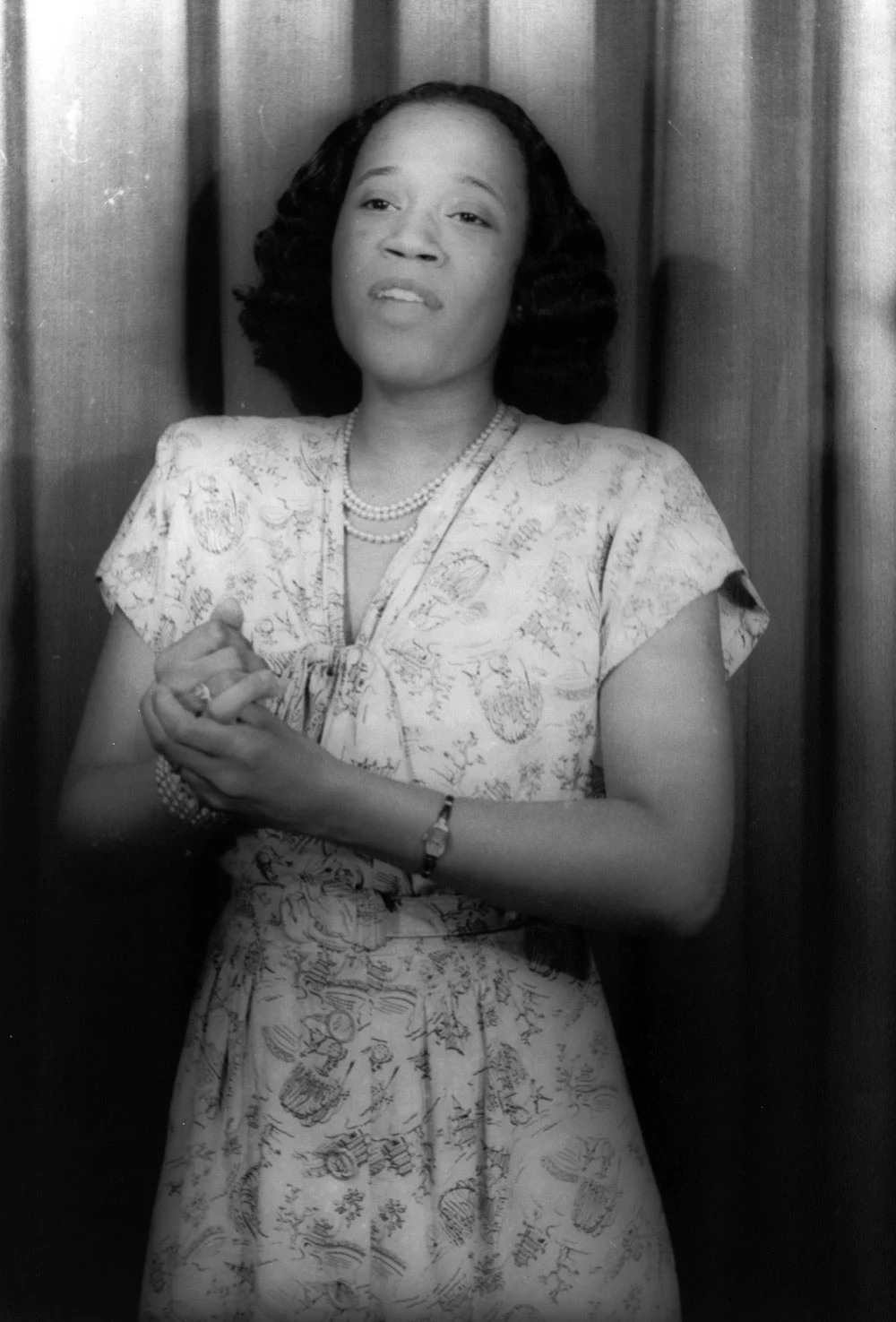
Photograph · source and license
The image, credit, reuse license, editorial context and delivered file are recorded in the exact Sites editorial review. This review is separate from the article’s canonical CIE assessment.
Image and publication standards →In this story
Start in Danville, before the opera milestone
Camilla Williams belongs in Danville’s cultural history as more than a name attached to a celebrated first. Her career connects local education, church music, professional training, international performance and the transmission of musical knowledge.
Those connections matter to a region where a young singer may begin in a school or congregation before anyone calls that work a creative industry. Williams’s history asks a useful question: what must happen between an early voice and a durable artistic career?
The surviving record offers several answers, and none fits into a single opening-night photograph.
Indiana University’s scholarship biography identifies Williams’s parents as Fannie Carey Williams, a laundress, and Cornelius Booker Williams, a chauffeur. It describes a grandfather who sang and led a choir, and a child singing in school and Danville’s Calvary Baptist Church.
The university’s memorial resolution places her graduation from John M. Langston High School in 1937.
These details restore institutions and ordinary work to a story that can otherwise sound as if national recognition appeared without a local foundation.
That foundation deserves attention without an invented childhood scene. We have not interviewed relatives or listened to an early church performance for this article.
Instead, the institutional accounts establish a neighborhood and educational beginning. The interpretation is straightforward: a creator’s development can involve many people and places long before a commercial contract makes that labor visible.
A school choir, a teacher and a scholarship belong in the cultural record alongside the venue that eventually receives the publicity.
A teacher became a student again
The Library of Virginia records that Williams graduated from Virginia State College in 1941, taught third grade in Danville for a year and then went to Philadelphia to study voice. Indiana University’s honors biography adds the enabling mechanism: a scholarship from her college’s Philadelphia alumni association.
It identifies Marion Szekely-Freschl as her teacher and notes that Williams worked as a theater usher while training. Education, alumni support and paid work were therefore parts of the same transition rather than separate decorations in a résumé.
For contemporary local creators, the important lesson is the structure of that transition. Additional training takes time and resources even when talent is evident.
A scholarship can make a move possible; it does not erase the work needed to live through it. Williams’s employment alongside study supplies a concrete counterweight to the idea that an artistic breakthrough is only an audition.
The historical account does not provide a full budget, and it cannot tell a present student what their own training should cost. It does show why artistic preparation and economic support need to be discussed together.
The return from teaching to study also complicates an easy success narrative. Teaching was already skilled work.
Moving into advanced vocal training was another professional decision, not proof that the earlier job lacked value. Readers can follow two threads from this point: the performer who would enter opera and the educator who would later build a long second phase of her career.
Keeping both threads in view prevents the final milestone from swallowing the route that made it possible.
May 15, 1946: be precise about the first
On May 15, 1946, Williams made her New York City Opera debut in the title role of Puccini’s Madama Butterfly. The Library of Virginia identifies her as the company’s first African American contract singer.
The city’s later historical-marker account uses a broader but carefully defined milestone: the first African American woman to secure a contract with a major United States opera company. The contract, company and date belong together.
Replacing that description with a sweeping claim that she was the first Black opera singer would obscure other artists and the specific barrier she crossed.
The title role was artistic work as well as institutional change. Opera asks a performer to connect music, words, characterization and ensemble timing across an extended dramatic structure.
This article does not claim to assess Williams’s technique from an unexamined recording, nor does it reconstruct rehearsals. Its point is that the historic employment milestone should invite readers toward the performance, not end their curiosity about it.
A biography that stops at the contract can tell us who admitted an artist while leaving the artist’s actual craft largely unexplored.
The distinction is useful for a local hall of fame or school display. A label can name the verified first, explain the institution and identify the work performed.
A longer account can then ask what repertoire followed and how critics, audiences and colleagues documented it. That approach honors Williams without turning a complicated music history into a contest over one unqualified word.
The career continued beyond Butterfly
Indiana University’s memorial resolution lists roles after Williams’s debut, including Nedda in Pagliacci, Mimì in La Bohème and Aida. It also records appearances connected with Mozart’s Idomeneo and Handel’s Orlando.
The Library of Virginia identifies her work as a recitalist and interpreter of lieder, songs for voice and piano. The evidence therefore points toward a varied professional identity: opera performer, concert artist and recording singer.
Her signature role can introduce that range, but it should not replace it.
In 1951, Williams sang Bess in Columbia Records’ first full-length recording of Gershwin’s Porgy and Bess, according to the Library of Virginia. A recording has a different afterlife from a staged engagement.
It can preserve an interpretation for listeners who never attended the performance, while its label, edition and credits become part of the research trail. An online clip with no reliable attribution is a weaker starting point than a catalog record identifying the work, performer and release.
That is a practical distinction for students preparing an assignment or musicians studying an earlier interpreter.
A worthwhile listening project would compare a documented operatic role with a documented song recital rather than assume that one excerpt represents an entire voice. Readers can investigate the relation between text, accompaniment and dramatic situation, then record which authorized edition they used.
This is a proposed study method, not a review of audio played during our research. It turns the list of titles into an invitation to serious listening while keeping the historical claim separate from a judgment this article has not made.
An international artist remained connected to home
Williams’s career extended well beyond Virginia and New York. Indiana University’s honors account places her major-role appearance with the Vienna State Opera in 1954.
The Library of Virginia describes cultural-ambassador travel for the United States State Department, including Africa, the Far East and Israel. The Amistad Research Center’s account likewise traces an international performing and diplomatic career.
These were distinct kinds of engagement: an opera-company role, a concert tour and a cultural mission should not be flattened into one generic claim that she performed everywhere.
There is a productive tension in cultural diplomacy. A government can present an artist abroad as a representative of national accomplishment, while that artist’s biography documents racial barriers within the nation.
Williams’s work supplies a way to examine that tension without inventing her private thoughts about every tour. The relevant questions concern the commission, program, host institution and contemporary record.
How was the performance presented? Which audience was addressed?
What could an artist’s achievement communicate that an official statement could not? Those questions deepen the history rather than resolve it through an imagined backstage conversation.
For Danville, an international career is also a reminder that local cultural history need not end at the county line. A person’s departure can create connections that return through teaching, fundraising, archives or commemoration.
The regional story is not diminished when the geography expands. It becomes more interesting when readers can identify which local institutions helped launch the work and which later institutions preserved it.
The civil-rights connection includes a local action
The national milestone is familiar: Williams sang at the 1963 March on Washington. The Indiana University archive dates the appearance to August 28 and identifies the national anthem before Martin Luther King Jr.’s speech.
But the Library of Virginia also records a Danville performance that year to raise money for jailed civil-rights demonstrators. That local action deserves its own place in the story.
It connects a professional voice to a specific community need rather than treating civil rights as background scenery around a famous Washington appearance.
The two performances illuminate different scales of public life. A mass gathering can place an artist within a national memory; a fundraising engagement can connect artistic labor to the costs borne by people in one city.
Neither should be described solely as a symbolic gesture. The Danville record identifies a financial purpose, while the Washington record locates her within a documented public program.
We do not have a complete accounting of the local proceeds or a firsthand transcript of Williams’s planning conversations, so this article makes neither claim.
A local classroom can work with that contrast. Students might map the Danville and Washington events, identify the record supporting each and consider the different tasks a performer can undertake in civic life.
They should distinguish their interpretation from evidence about the amount raised or the people released. The exercise makes the community connection concrete without inventing a causal result.
It also restores a local chapter to a history too often remembered only through the best-known national photograph or speech.
Teaching was a second center of gravity
Williams joined Indiana University’s voice faculty in 1977, becoming its first African American professor of voice. The university’s honors record states that she retired in 1997.
Its scholarship page describes the Camilla Williams Voice Scholarship for undergraduate voice students. Those facts extend the career beyond performance dates: an artist’s knowledge became part of a teaching institution, and her name later became attached to support for another generation’s training.
A scholarship listing establishes that purpose, not an individual reader’s eligibility, selection or award.
Teaching changes the unit of cultural impact. A singer’s own engagement has a date and venue; a teacher’s work can travel through students who choose different repertoires, institutions and careers.
That influence is harder to summarize in a headline, but it belongs in the account. Technique and interpretation require repeated attention, and professional knowledge includes preparing material, responding to feedback and sustaining a working practice.
This is general analysis of the teaching role, not an assertion that every student received the same instruction or that a particular exercise came from Williams.
For a region developing its creator economy, the distinction is consequential. A performance series attracts an audience; instruction develops people who can contribute to later series.
Archives, scholarships, schools and accessible learning opportunities can keep a legacy active without copying an artist’s recordings into an unauthorized product. Williams’s biography supports a broad understanding of cultural infrastructure, in which the teacher’s studio deserves attention alongside the stage.
Three kinds of custody tell different parts of the story
The surviving evidence is distributed. Amistad says Williams donated papers to the center in 1975 and describes a substantial performance-era record, including programs, correspondence, photographs and scrapbooks.
Indiana University’s collection C497 spans 1947–2010, with much of its material concentrated in 1978–1996. Its finding aid identifies teaching-related material and records involving former students as well as her career.
Danville Museum of Fine Arts and History maintains an exhibition with personal memorabilia. A visitor, scholar and classroom therefore have several starting points, each with a different emphasis.
This distribution suggests a research route rather than a competition over which institution owns the most authentic legacy. Start with the public biographies for chronology.
Use Amistad’s collection description to locate questions about performing and touring. Use Indiana’s description for questions about teaching and the later career.
Use the Danville exhibition to connect the national account to hometown interpretation. A finding aid describes holdings; reading it is not the same as examining every item.
We have reviewed the institutional descriptions, not conducted an in-person archival visit.
The distinction matters especially for music. A program can identify a billed performer and work, but it is not the sound of that performance.
A photograph can establish an appearance or setting when its caption is reliable, but it cannot supply the whole event. A letter may add an individual viewpoint without becoming everyone’s account.
Good cultural history lets different forms of evidence answer different questions, instead of forcing every object to confirm one finished legend.
Commemoration has dates of its own
Danville’s archived municipal announcement dates the dedication of Williams’s state historical marker to October 18, 2021. It reports that the marker stands at 238 West End Avenue and that state approval occurred in June 2020, with the pandemic delaying the ceremony.
The marker’s text connects the opera contract, recording work, international career and civil-rights performances. These are records of a later public interpretation of her life, not evidence that every form of recognition arrived when the original achievements occurred.
Commemoration can be a useful local research subject in its own right. Who proposes a marker?
Which achievements fit its limited space? How does a museum exhibition provide the detail that a roadside sign cannot?
Those questions can help residents see public history as a set of choices. They can also help a creator desk design better profiles: put a concise milestone where people will encounter it, then give readers a route to the fuller chronology and records.
Some institutional summaries disagree on subsidiary dates, including the transition out of opera and the dedication of the named park. This article does not choose an unsupported precise date to make its timeline look complete.
The central sequence is well supported: Danville education, Philadelphia training, the 1946 contract, international performance, 1963 civil-rights appearances and the 1977 Indiana appointment. Future research can use contemporaneous programs, personnel records or municipal minutes to resolve the narrower discrepancies.
A living reading project, without borrowing someone else’s rights
Williams’s history can support several worthwhile local projects: a sourced school timeline, a lawful listening guide, a study of performing and teaching careers, or an archive visit planned around a defined question. Each should keep the source beside the claim and identify whether the material is a biography, catalog description, performance program or later tribute.
That is more useful than assembling an attractive gallery whose captions and dates cannot be traced.
The institutions also set limits that affect publication. Amistad explicitly requires permission to reproduce images from its website.
Indiana’s finding aid requires researchers to investigate reuse rights and seek permissions where needed. Credit is necessary context, but credit alone does not grant those permissions.
The illustration attached to this article is an original career diagram, not an archival portrait or evidence of a performance. Readers seeking photographs or recordings should follow the institution’s own catalog and reuse guidance.
The strongest local legacy is therefore an open route into the work: name the performer precisely, preserve the chronology, explain the institutions and encourage further listening through authorized sources. Williams’s Danville story includes the voice, the teacher and the communities connected by both.
Following those threads gives contemporary artists something richer than a slogan about being first. It offers a history of preparation, opportunity, public purpose and knowledge handed forward.
Sources & verification
State biography supports the 1941 education, 1946 debut, 1951 recording, international and civil-rights chronology; its retrospective retirement date differs from IU summaries.
Read the sourceInstitutional biography and current scholarship-purpose description; no scholarship award or reader eligibility is claimed.
Read the sourceTraining scholarship, Vienna appearance and faculty chronology.
Read the sourceFaculty memorial supplies high-school context and repertoire; retrospective recollections are not interviews conducted by Junction.
Read the sourceActual finding aid, date range, teaching materials, research access and reuse conditions. Collection items have not been examined in person.
Read the source1975 donation and performance-era holdings; website images require permission.
Read the sourceCurrent institutional description of the Williams exhibit; no visit, booking or program availability is certified.
Read the sourceArchived announcement published October 18, 2021; used as historical evidence, not a current event invitation.
Read the sourceThis article was written with AI assistance from the linked sources. No firsthand interview or visit is implied. Source dates and limits are identified in the reporting. Advertising does not determine editorial coverage. Request a correction or read our standards.
EVERY NEIGHBOR HAS A VOICE
Keep the conversation going.
Share experiences, ask questions and link evidence for factual claims. Automated publication checks apply to each submitted version. Comments are independent community discussion, not submissions to a government body.
Sign in to join · freeCommunity standards