
Service guide Conservation · Virginia
A Halifax invasive-plant concern needs identification, land authority, treatment scope and follow-up records
An unfamiliar plant is not automatically regulated or invasive. The record chain separates identification, ownership, legal status, treatment choice and later monitoring.
Checking whether this browser can read the story aloud.
Explore related topics
Sources & editorial review
Sites editorial review recorded for this exact revision. This AI-assisted article or learning resource includes source links and credited contextual imagery.
This is a local editorial review, not a canonical Cultural Imprint Engine assessment. No CIE score is claimed. Source review does not verify third-party playback, provider availability or image pixels.
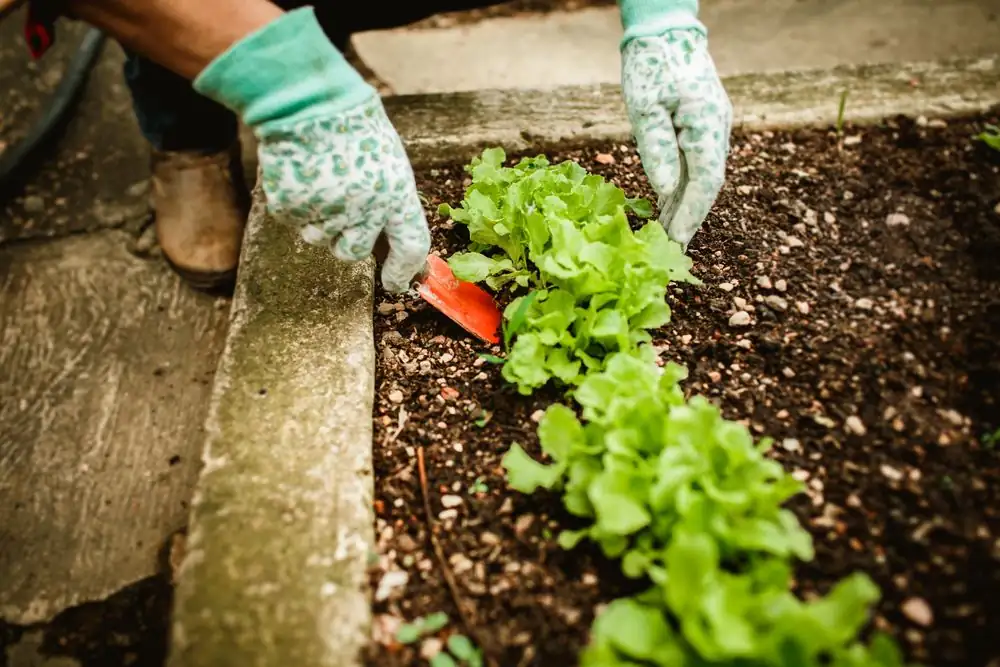
Photograph · source and license
The image, credit, reuse license, editorial context and delivered file are recorded in the exact Sites editorial review. This review is separate from the article’s canonical CIE assessment.
Image and publication standards →In this story
Start with the exact question
Which records help confirm a suspected invasive plant, identify the responsible land manager and document a lawful treatment and follow-up plan? The useful answer for Halifax, South Boston and Halifax County begins with the named custodian, the date of the record and the identity that connects one document to the next.
A search result or request receipt is evidence of a step, not a final decision about invasive-plant management.
A road right-of-way, stream buffer, park, farm, utility corridor and private parcel can overlap visually while having different owners, access permissions and treatment rules. For Halifax, South Boston and Halifax County, that boundary matters because a familiar place name can point to several agencies while only one office owns the controlling invasive-plant management record.
Do not publish a private resident's address, gate code, precise rare-species location or pesticide credential, and do not enter land without permission. Gretna Junction does not collect those protected materials for Halifax, South Boston and Halifax County; this guide is a public map of the invasive-plant management record chain.
Build the record chain
1. identification record: a qualified extension, natural-heritage or herbarium resource maintains or issues this part of the file. It can connect diagnostic features and images to a named species.
It cannot establish ownership, legal status or the correct treatment. For invasive-plant management link 1, preserve the official title, date, identifier and direct source address, and keep a superseded copy when a correction changes the public record.
2. land and access record: the parcel owner or public land manager maintains or issues this part of the file. It can identify who can authorize entry and management.
It cannot grant access because a plant appears harmful. For invasive-plant management link 2, preserve the official title, date, identifier and direct source address, and keep a superseded copy when a correction changes the public record.
3. management plan and label record: the responsible manager and applicable regulator maintains or issues this part of the file. It can document the selected method, product limits, timing and protected areas.
It cannot guarantee eradication or authorize use outside the label. For invasive-plant management link 3, preserve the official title, date, identifier and direct source address, and keep a superseded copy when a correction changes the public record.
4. monitoring record: the land manager or project partner maintains or issues this part of the file. It can track treated area, regrowth, non-target effects and follow-up dates.
It cannot prove success from one photograph or visit. For invasive-plant management link 4, preserve the official title, date, identifier and direct source address, and keep a superseded copy when a correction changes the public record.
What the official material establishes
Virginia DCR publishes invasive-species information tied to the state's natural-heritage program. For Halifax, South Boston and Halifax County, finding 1 should remain attached to the cited source and the October 15, 2026 review date.
Before relying on invasive-plant management finding 1, recheck the live office page for the current filing, payment, health, school, property, work or participation rule.
Virginia law and VDACS maintain a separate noxious-weed framework that should not be confused with every nonnative species list. For Halifax, South Boston and Halifax County, finding 2 should remain attached to the cited source and the October 15, 2026 review date.
Before relying on invasive-plant management finding 2, recheck the live office page for the current filing, payment, health, school, property, work or participation rule.
Virginia Cooperative Extension provides identification and management education for landowners. For Halifax, South Boston and Halifax County, finding 3 should remain attached to the cited source and the October 15, 2026 review date.
Before relying on invasive-plant management finding 3, recheck the live office page for the current filing, payment, health, school, property, work or participation rule.
The pesticide label and applicator requirements control any chemical treatment rather than an online suggestion. For Halifax, South Boston and Halifax County, finding 4 should remain attached to the cited source and the October 15, 2026 review date.
Before relying on invasive-plant management finding 4, recheck the live office page for the current filing, payment, health, school, property, work or participation rule.
Season, growth stage and surrounding habitat affect identification and the useful timing of follow-up. For Halifax, South Boston and Halifax County, finding 5 should remain attached to the cited source and the October 15, 2026 review date.
Before relying on invasive-plant management finding 5, recheck the live office page for the current filing, payment, health, school, property, work or participation rule.
A treatment record should document the authorized area and later observations rather than only the amount applied. For Halifax, South Boston and Halifax County, finding 6 should remain attached to the cited source and the October 15, 2026 review date.
Before relying on invasive-plant management finding 6, recheck the live office page for the current filing, payment, health, school, property, work or participation rule.
How the chain works in practice
A roadside plant is suspected, so the observer records diagnostic features from a lawful location and routes the location to the road owner. In Halifax, South Boston and Halifax County scenario 1, write down what is known, what remains unverified and which custodian can resolve the invasive-plant management gap.
For scenario 1, do not let an acknowledgment, map, roster, receipt or informal explanation stand in for the separate invasive-plant management record that the next step requires.
A streamside population is confirmed, so the manager checks buffer, water and label restrictions before choosing a method. In Halifax, South Boston and Halifax County scenario 2, write down what is known, what remains unverified and which custodian can resolve the invasive-plant management gap.
For scenario 2, do not let an acknowledgment, map, roster, receipt or informal explanation stand in for the separate invasive-plant management record that the next step requires.
Regrowth appears after treatment, so the project preserves the original date and method and schedules a supported follow-up rather than declaring failure or increasing use blindly. In Halifax, South Boston and Halifax County scenario 3, write down what is known, what remains unverified and which custodian can resolve the invasive-plant management gap.
For scenario 3, do not let an acknowledgment, map, roster, receipt or informal explanation stand in for the separate invasive-plant management record that the next step requires.
Failure modes to avoid
For invasive-plant management, risk 1 is identifying a plant from one poor photograph. Repair Halifax, South Boston and Halifax County risk 1 by returning to the exact person, parcel, account, project, application or event identity and narrowing the public claim to what the dated official record actually supports.
For invasive-plant management, risk 2 is entering private land without permission. Repair Halifax, South Boston and Halifax County risk 2 by returning to the exact person, parcel, account, project, application or event identity and narrowing the public claim to what the dated official record actually supports.
For invasive-plant management, risk 3 is treating every nonnative plant as legally prohibited. Repair Halifax, South Boston and Halifax County risk 3 by returning to the exact person, parcel, account, project, application or event identity and narrowing the public claim to what the dated official record actually supports.
For invasive-plant management, risk 4 is using a pesticide outside its label. Repair Halifax, South Boston and Halifax County risk 4 by returning to the exact person, parcel, account, project, application or event identity and narrowing the public claim to what the dated official record actually supports.
For invasive-plant management, risk 5 is declaring eradication after one inspection. Repair Halifax, South Boston and Halifax County risk 5 by returning to the exact person, parcel, account, project, application or event identity and narrowing the public claim to what the dated official record actually supports.
Source ownership and current access
Virginia DCR — Invasive Species owns invasive-plant management source lane 1: Official state natural-heritage information, lists and management context. The direct address reviewed for Halifax, South Boston and Halifax County lane 1 is https://www.dcr.virginia.gov/natural-heritage/invspinfo.
In source lane 1, a copied document or third-party summary does not replace the current invasive-plant management custodian page.
Virginia VDACS — Noxious Weeds owns invasive-plant management source lane 2: Official regulated noxious-weed program and state legal context. The direct address reviewed for Halifax, South Boston and Halifax County lane 2 is https://www.vdacs.virginia.gov/plant-industry-services-noxious-weeds.shtml.
In source lane 2, a copied document or third-party summary does not replace the current invasive-plant management custodian page.
Virginia Cooperative Extension owns invasive-plant management source lane 3: Public university extension identification and management education. The direct address reviewed for Halifax, South Boston and Halifax County lane 3 is https://pubs.ext.vt.edu/420/420-320/420-320.html.
In source lane 3, a copied document or third-party summary does not replace the current invasive-plant management custodian page.
Virginia DCR — Natural Heritage Data owns invasive-plant management source lane 4: Official conservation-data access and sensitive-record boundaries. The direct address reviewed for Halifax, South Boston and Halifax County lane 4 is https://www.dcr.virginia.gov/natural-heritage/nhdata.
In source lane 4, a copied document or third-party summary does not replace the current invasive-plant management custodian page.
Next steps, corrections and rights
Open “Open Virginia's invasive-species information” and confirm the current office, supported action, deadline and effective date. Gretna Junction does not submit the invasive-plant management record, decide eligibility, certify safety, issue money or credentials, approve property work, guarantee service or speak for the public custodian.
If an expected invasive-plant management record for Halifax, South Boston and Halifax County is missing, request the narrowest existing document and ask for any fee estimate before authorizing a broad search. Preserve the request and response status without treating silence, a timeout or a blank search result as approval, denial, closure or wrongdoing.
Corrections to this Halifax, South Boston and Halifax County invasive-plant management guide should identify the changed claim, stronger source and correction date while retaining the earlier citation. This free article uses a reading estimate calculated from readable body words at 220 words per minute.
The Sites exact-revision review is separate from canonical CIE and issues no CIE score.
Sources & verification
Official state natural-heritage information, lists and management context.
Read the sourceOfficial regulated noxious-weed program and state legal context.
Read the sourcePublic university extension identification and management education.
Read the sourceOfficial conservation-data access and sensitive-record boundaries.
Read the sourceThis article was written with AI assistance from the linked sources. No firsthand interview or visit is implied. Source dates and limits are identified in the reporting. Advertising does not determine editorial coverage. Request a correction or read our standards.
EVERY NEIGHBOR HAS A VOICE
Keep the conversation going.
Share experiences, ask questions and link evidence for factual claims. Automated publication checks apply to each submitted version. Comments are independent community discussion, not submissions to a government body.
Sign in to join · freeCommunity standards