
Service guide Conservation · Virginia
A Dillwyn timber harvest needs notification, stream planning, field BMPs and closeout evidence
Virginia requires a commercial timber-harvest notification and uses forestry best practices backed by water-quality law. A notification alone is not a harvest plan or a clean closeout.
Checking whether this browser can read the story aloud.
Explore related topics
Sources & editorial review
Sites editorial review recorded for this exact revision. This AI-assisted article or learning resource includes source links and credited contextual imagery.
This is a local editorial review, not a canonical Cultural Imprint Engine assessment. No CIE score is claimed. Source review does not verify third-party playback, provider availability or image pixels.
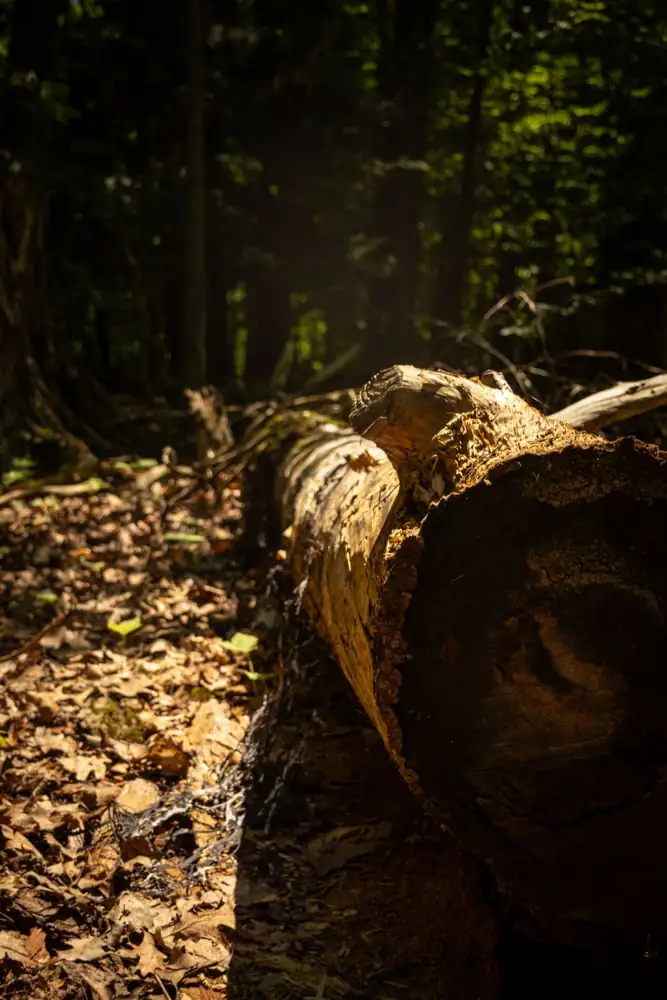
Photograph · source and license
The image, credit, reuse license, editorial context and delivered file are recorded in the exact Sites editorial review. This review is separate from the article’s canonical CIE assessment.
Image and publication standards →In this story
The local question and the jurisdiction test
Which records show whether a Dillwyn-area commercial harvest has been identified, planned around water and closed out responsibly? In Dillwyn and Buckingham County, a reliable answer begins with the named custodian, the exact record date and the next official event that could change the conclusion.
For timber-harvest water-quality planning, a place name helps discovery, but it does not convert a search result into an approval, payment, safety finding, ownership decision or completed service.
A Dillwyn mailing address may describe land elsewhere in Buckingham County, so the harvest tract, watershed, road and responsible operator must be matched before using a town label. The practical consequence for timber-harvest water-quality planning is that a reader should write down the address, parcel, account, system, school, business, interview, project or participant identity before searching.
Similar names and overlapping Dillwyn and Buckingham County service areas in a timber-harvest water-quality planning search are common enough that identity matching is part of the reporting, not clerical cleanup after publication.
Do not publish private gate codes, precise sensitive-species locations, financial terms, worker identities or unsupported allegations about a named landowner or logger. Gretna Junction does not collect the underlying timber-harvest water-quality planning private evidence for this guide.
A Dillwyn and Buckingham County reader handling timber-harvest water-quality planning should use the official secure route when a custodian needs protected material and keep the public account limited to dates, public identifiers and the status actually returned.
Four records that answer different questions
Record 1 is the timber-harvest notification, owned or maintained by the logging operator and Virginia Department of Forestry. It can identify the operation location, timing, owner contact and operator notification identity required by law, but it cannot approve every road, crossing, sale term or environmental result.
Read the timber-harvest notification this way: Match the tract and commencement date and keep any correction to the notification. Preserve the official title, covered period, direct address, retrieval date and any amendment or successor for record 1.
A screenshot of the timber-harvest notification without those anchors can become impossible to audit when a page changes.
Record 2 is the pre-harvest map and BMP plan, owned or maintained by the landowner, logger and consulting or public forester. It can identify streams, slopes, roads, landings, crossings and planned protective practices, but it cannot show that every measure was installed and maintained.
Read the pre-harvest map and BMP plan this way: Use current field conditions and mark the practices tied to each risk point. Preserve the official title, covered period, direct address, retrieval date and any amendment or successor for record 2.
A screenshot of the pre-harvest map and BMP plan without those anchors can become impossible to audit when a page changes.
Record 3 is the field inspection and corrective record, owned or maintained by the operator, landowner and Virginia Department of Forestry within their roles. It can document observed conditions, BMP implementation and any required correction, but it cannot be inferred from one photograph or a notification entry.
Read the field inspection and corrective record this way: Preserve date, weather, location and the specific measure inspected or corrected. Preserve the official title, covered period, direct address, retrieval date and any amendment or successor for record 3.
A screenshot of the field inspection and corrective record without those anchors can become impossible to audit when a page changes.
Record 4 is the tract closeout and stabilization record, owned or maintained by the responsible operator and landowner. It can show road, landing, crossing and exposed-soil stabilization and later maintenance checks, but it cannot guarantee that a future storm will cause no change.
Read the tract closeout and stabilization record this way: Inspect after completion and again after meaningful weather when the plan calls for it. Preserve the official title, covered period, direct address, retrieval date and any amendment or successor for record 4.
A screenshot of the tract closeout and stabilization record without those anchors can become impossible to audit when a page changes.
What the official sources establish
Virginia law requires a logging operator to notify the State Forester of a commercial timber harvest before completion and no later than three working days after commencement. This is source finding 1 for Dillwyn and Buckingham County.
The useful scope of timber-harvest water-quality planning finding 1 is the program, record or duty that the named custodian actually describes. Keep finding 1 attached to the October 15, 2026 check date, because a later form, tariff, inventory, calendar, policy or project update may supersede the present route.
The Department of Forestry provides an official harvest-notification system and explains the required operator identity. This is source finding 2 for Dillwyn and Buckingham County.
The useful scope of timber-harvest water-quality planning finding 2 is the program, record or duty that the named custodian actually describes. Keep finding 2 attached to the October 15, 2026 check date, because a later form, tariff, inventory, calendar, policy or project update may supersede the present route.
The department's forestry BMP program addresses sediment, nutrients, organics, temperature and chemicals that can reach water. This is source finding 3 for Dillwyn and Buckingham County.
The useful scope of timber-harvest water-quality planning finding 3 is the program, record or duty that the named custodian actually describes. Keep finding 3 attached to the October 15, 2026 check date, because a later form, tariff, inventory, calendar, policy or project update may supersede the present route.
Virginia's Silvicultural Water Quality Law backs field protection and gives the department an enforcement role. This is source finding 4 for Dillwyn and Buckingham County.
The useful scope of timber-harvest water-quality planning finding 4 is the program, record or duty that the named custodian actually describes. Keep finding 4 attached to the October 15, 2026 check date, because a later form, tariff, inventory, calendar, policy or project update may supersede the present route.
Build an auditable sequence
Map perennial and intermittent waters, steep grades, wet areas, access points and proposed crossings before equipment moves. For Dillwyn and Buckingham County, sequence step 1 is to preserve the input, the official response and the next required action as separate events.
A timber-harvest water-quality planning confirmation at step 1 proves receipt only when the custodian says it does; it is not an award, permit, eligibility ruling, inspection result, corrected account or completed project.
Choose road, deck, skid-trail and crossing locations that reduce disturbed soil and direct runoff. For Dillwyn and Buckingham County, sequence step 2 is to preserve the input, the official response and the next required action as separate events.
A timber-harvest water-quality planning confirmation at step 2 proves receipt only when the custodian says it does; it is not an award, permit, eligibility ruling, inspection result, corrected account or completed project.
Install, inspect and maintain the planned practices during active work rather than waiting for tract closeout. For Dillwyn and Buckingham County, sequence step 3 is to preserve the input, the official response and the next required action as separate events.
A timber-harvest water-quality planning confirmation at step 3 proves receipt only when the custodian says it does; it is not an award, permit, eligibility ruling, inspection result, corrected account or completed project.
Stabilize disturbed approaches and remove or close temporary structures according to the applicable plan and guidance. For Dillwyn and Buckingham County, sequence step 4 is to preserve the input, the official response and the next required action as separate events.
A timber-harvest water-quality planning confirmation at step 4 proves receipt only when the custodian says it does; it is not an award, permit, eligibility ruling, inspection result, corrected account or completed project.
Test the attractive alternative explanation
A harvest notification is a legally important identity record but not a certification that all BMPs are complete. This is alternative 1 to test before stating a conclusion about timber-harvest water-quality planning.
For Dillwyn and Buckingham County alternative 1, reposted copies, a map pin, a remembered practice, a third-party directory or a search-engine excerpt may point toward the record, but none replaces the current document and authority. Record what would disprove timber-harvest water-quality planning alternative 1 and look for that evidence.
Muddy water after a storm can have several sources; the tract, drainage path, timing and official inspection matter. This is alternative 2 to test before stating a conclusion about timber-harvest water-quality planning.
For Dillwyn and Buckingham County alternative 2, reposted copies, a map pin, a remembered practice, a third-party directory or a search-engine excerpt may point toward the record, but none replaces the current document and authority. Record what would disprove timber-harvest water-quality planning alternative 2 and look for that evidence.
A voluntary BMP can still be central evidence of compliance with water-quality duties. This is alternative 3 to test before stating a conclusion about timber-harvest water-quality planning.
For Dillwyn and Buckingham County alternative 3, reposted copies, a map pin, a remembered practice, a third-party directory or a search-engine excerpt may point toward the record, but none replaces the current document and authority. Record what would disprove timber-harvest water-quality planning alternative 3 and look for that evidence.
A cost-share or assistance inquiry is not an award and does not prove installation or reimbursement. This is alternative 4 to test before stating a conclusion about timber-harvest water-quality planning.
For Dillwyn and Buckingham County alternative 4, reposted copies, a map pin, a remembered practice, a third-party directory or a search-engine excerpt may point toward the record, but none replaces the current document and authority. Record what would disprove timber-harvest water-quality planning alternative 4 and look for that evidence.
Worked local scenarios
Scenario 1: A landowner plans a harvest on a tract with a small stream and an old farm road. The first timber-harvest water-quality planning check is walk and map the tract with the operator or forester before work.
The second Dillwyn and Buckingham County check is connect the notification identity to specific road, crossing and stabilization decisions. The reporting boundary for scenario 1 is do not treat an old road as automatically suitable or the notification as the field plan.
This timber-harvest water-quality planning order for scenario 1 matters because it lets a reader distinguish a missing record from a negative decision, an incomplete step from a refusal, and a pending review from a final outcome without inventing motive or fault.
Scenario 2: A neighbor observes sediment-colored runoff after heavy rain. The first timber-harvest water-quality planning check is document the public observation, time and weather without entering the property.
The second Dillwyn and Buckingham County check is send the location to the responsible official route and preserve any inspection response. The reporting boundary for scenario 2 is do not identify a cause or violation until the evidence supports it.
This timber-harvest water-quality planning order for scenario 2 matters because it lets a reader distinguish a missing record from a negative decision, an incomplete step from a refusal, and a pending review from a final outcome without inventing motive or fault.
Scenario 3: A logger wants help with an expensive stream crossing. The first timber-harvest water-quality planning check is review the technical BMP and available assistance criteria with the local forester.
The second Dillwyn and Buckingham County check is obtain a written approval or cost-share decision before treating support as available. The reporting boundary for scenario 3 is do not spend or announce an award from an inquiry or draft application.
This timber-harvest water-quality planning order for scenario 3 matters because it lets a reader distinguish a missing record from a negative decision, an incomplete step from a refusal, and a pending review from a final outcome without inventing motive or fault.
Scenario 4: Cutting has ended but roads and landings remain exposed. The first timber-harvest water-quality planning check is compare the tract with the closeout plan and BMP guidance.
The second Dillwyn and Buckingham County check is record stabilization, drainage, crossing removal and scheduled follow-up. The reporting boundary for scenario 4 is do not call the job closed merely because timber trucks have left.
This timber-harvest water-quality planning order for scenario 4 matters because it lets a reader distinguish a missing record from a negative decision, an incomplete step from a refusal, and a pending review from a final outcome without inventing motive or fault.
What each source contributes—and what it does not
Source 1 is Virginia Department of Forestry — Logger Notification. It contributes this part of the timber-harvest water-quality planning record: Primary notification duty, timing and operator-system route.
The direct address for Virginia Department of Forestry — Logger Notification is https://www.dof.virginia.gov/logger-notification/. Use source 1 as a primary route to the named program, then inspect the effective date, covered locality and linked form or document.
Do not infer from Virginia Department of Forestry — Logger Notification that the custodian has approved a particular person's, property's or organization's case merely because the general page exists.
Source 2 is Virginia Department of Forestry — Forestry BMPs for Water Quality. It contributes this part of the timber-harvest water-quality planning record: Primary water-pollutant, planning and BMP guidance.
The direct address for Virginia Department of Forestry — Forestry BMPs for Water Quality is https://www.dof.virginia.gov/forest-utilization-sustainability/logger-assistance/forestry-best-management-practices-bmps-for-water-quality/. Use source 2 as a primary route to the named program, then inspect the effective date, covered locality and linked form or document.
Do not infer from Virginia Department of Forestry — Forestry BMPs for Water Quality that the custodian has approved a particular person's, property's or organization's case merely because the general page exists.
Source 3 is Virginia Department of Forestry — Pre-Harvest Planning. It contributes this part of the timber-harvest water-quality planning record: Primary forester-assistance and technical planning route.
The direct address for Virginia Department of Forestry — Pre-Harvest Planning is https://www.dof.virginia.gov/forest-utilization-sustainability/logger-assistance/pre-harvest-planning/. Use source 3 as a primary route to the named program, then inspect the effective date, covered locality and linked form or document.
Do not infer from Virginia Department of Forestry — Pre-Harvest Planning that the custodian has approved a particular person's, property's or organization's case merely because the general page exists.
Source 4 is Code of Virginia § 10.1-1181.2. It contributes this part of the timber-harvest water-quality planning record: Primary statutory notification and silvicultural water-quality authority.
The direct address for Code of Virginia § 10.1-1181.2 is https://law.lis.virginia.gov/vacode/title10.1/chapter11/section10.1-1181.2/. Use source 4 as a primary route to the named program, then inspect the effective date, covered locality and linked form or document.
Do not infer from Code of Virginia § 10.1-1181.2 that the custodian has approved a particular person's, property's or organization's case merely because the general page exists.
Failure modes worth preventing
Risk 1 is publishing private tract access details. Repair timber-harvest water-quality planning risk 1 by returning to the exact identity, source authority, date and status.
If the Dillwyn and Buckingham County evidence for risk 1 remains incomplete, say which record is absent and which office owns it. Narrow timber-harvest water-quality planning language for risk 1 is more useful than certainty built from a partial page, and it leaves a clean path for a correction.
Risk 2 is using a notification as proof of compliance. Repair timber-harvest water-quality planning risk 2 by returning to the exact identity, source authority, date and status.
If the Dillwyn and Buckingham County evidence for risk 2 remains incomplete, say which record is absent and which office owns it. Narrow timber-harvest water-quality planning language for risk 2 is more useful than certainty built from a partial page, and it leaves a clean path for a correction.
Risk 3 is entering an active operation without permission. Repair timber-harvest water-quality planning risk 3 by returning to the exact identity, source authority, date and status.
If the Dillwyn and Buckingham County evidence for risk 3 remains incomplete, say which record is absent and which office owns it. Narrow timber-harvest water-quality planning language for risk 3 is more useful than certainty built from a partial page, and it leaves a clean path for a correction.
Risk 4 is attributing runoff from one photograph. Repair timber-harvest water-quality planning risk 4 by returning to the exact identity, source authority, date and status.
If the Dillwyn and Buckingham County evidence for risk 4 remains incomplete, say which record is absent and which office owns it. Narrow timber-harvest water-quality planning language for risk 4 is more useful than certainty built from a partial page, and it leaves a clean path for a correction.
Risk 5 is forgetting post-harvest stabilization and follow-up. Repair timber-harvest water-quality planning risk 5 by returning to the exact identity, source authority, date and status.
If the Dillwyn and Buckingham County evidence for risk 5 remains incomplete, say which record is absent and which office owns it. Narrow timber-harvest water-quality planning language for risk 5 is more useful than certainty built from a partial page, and it leaves a clean path for a correction.
A reader's verification notebook
Notebook line 1 should name the timber-harvest notification, the person or office contacted, the public identifier used, the date checked and the response status. Add a short note explaining that the timber-harvest notification can identify the operation location, timing, owner contact and operator notification identity required by law and cannot approve every road, crossing, sale term or environmental result.
Keeping the timber-harvest notification limits beside the evidence prevents a later editor from turning a preliminary document into a stronger claim than the custodian made.
Notebook line 2 should name the pre-harvest map and BMP plan, the person or office contacted, the public identifier used, the date checked and the response status. Add a short note explaining that the pre-harvest map and BMP plan can identify streams, slopes, roads, landings, crossings and planned protective practices and cannot show that every measure was installed and maintained.
Keeping the pre-harvest map and BMP plan limits beside the evidence prevents a later editor from turning a preliminary document into a stronger claim than the custodian made.
Notebook line 3 should name the field inspection and corrective record, the person or office contacted, the public identifier used, the date checked and the response status. Add a short note explaining that the field inspection and corrective record can document observed conditions, BMP implementation and any required correction and cannot be inferred from one photograph or a notification entry.
Keeping the field inspection and corrective record limits beside the evidence prevents a later editor from turning a preliminary document into a stronger claim than the custodian made.
Notebook line 4 should name the tract closeout and stabilization record, the person or office contacted, the public identifier used, the date checked and the response status. Add a short note explaining that the tract closeout and stabilization record can show road, landing, crossing and exposed-soil stabilization and later maintenance checks and cannot guarantee that a future storm will cause no change.
Keeping the tract closeout and stabilization record limits beside the evidence prevents a later editor from turning a preliminary document into a stronger claim than the custodian made.
What happens next
Open “Open Virginia timber-harvest guidance” and confirm the current office, supported action and effective date for Dillwyn and Buckingham County. The next timber-harvest water-quality planning evidence events are matched harvest notification; site-specific pre-harvest plan; documented field inspection or correction; stabilized closeout and follow-up.
A reached timber-harvest water-quality planning event can support an update. An unchanged Dillwyn and Buckingham County search, a missed call or silence cannot create a new fact.
When an expected timber-harvest water-quality planning record is absent, ask the most likely custodian for the narrowest existing document and any fee estimate, response time or appeal route before requesting a broad search. Preserve the Dillwyn and Buckingham County request date and wording.
If another office owns the next timber-harvest water-quality planning stage, record the referral instead of treating it as completion.
Gretna Junction does not receive the timber-harvest water-quality planning filing, decide eligibility, diagnose health, certify safety, approve money, resolve title, issue a permit, select a team, authorize media reuse or guarantee provider performance. The Dillwyn and Buckingham County reader action goes to the named official source.
Corrections, access and method
A correction should identify the changed timber-harvest water-quality planning claim, the stronger source and the correction date while preserving the original citation. This Dillwyn and Buckingham County article is free to read.
Its timber-harvest water-quality planning estimate is calculated from readable body words at 220 words per minute rather than assigned from a target label.
This publisher-owned timber-harvest water-quality planning article uses the Sites exact-revision source and rights review. That Dillwyn and Buckingham County bounded review is separate from canonical Cultural Imprint Engine intake.
The timber-harvest water-quality planning review issues no CIE score, protected-feature authorization, payment, entitlement, provider acceptance, delivery receipt or government outcome.
The timber-harvest water-quality planning method is intentionally reproducible: identify the local question, map each question to its custodian, preserve the current record and date, test alternative explanations, state privacy and authority boundaries, and name the next evidence event. A later Dillwyn and Buckingham County reporter should be able to repeat those steps without relying on private chat or an undocumented recollection.
For timber-harvest water-quality planning, the notebook should make every source, date, limit and handoff visible.
Sources & verification
Primary notification duty, timing and operator-system route.
Read the sourcePrimary water-pollutant, planning and BMP guidance.
Read the sourcePrimary forester-assistance and technical planning route.
Read the sourcePrimary statutory notification and silvicultural water-quality authority.
Read the sourceThis article was written with AI assistance from the linked sources. No firsthand interview or visit is implied. Source dates and limits are identified in the reporting. Advertising does not determine editorial coverage. Request a correction or read our standards.
EVERY NEIGHBOR HAS A VOICE
Keep the conversation going.
Share experiences, ask questions and link evidence for factual claims. Automated publication checks apply to each submitted version. Comments are independent community discussion, not submissions to a government body.
Sign in to join · freeCommunity standards