
Explainer Civic life · County
Follow a water result from its sample label to the public record
A careful document trail can clarify what was tested and what remains an unanswered question.
Checking whether this browser can read the story aloud.
Explore related topics
Sources & editorial review
Sites editorial review recorded for this exact revision. This AI-assisted article or learning resource includes source links and credited contextual imagery.
This is a local editorial review, not a canonical Cultural Imprint Engine assessment. No CIE score is claimed. Source review does not verify third-party playback, provider availability or image pixels.
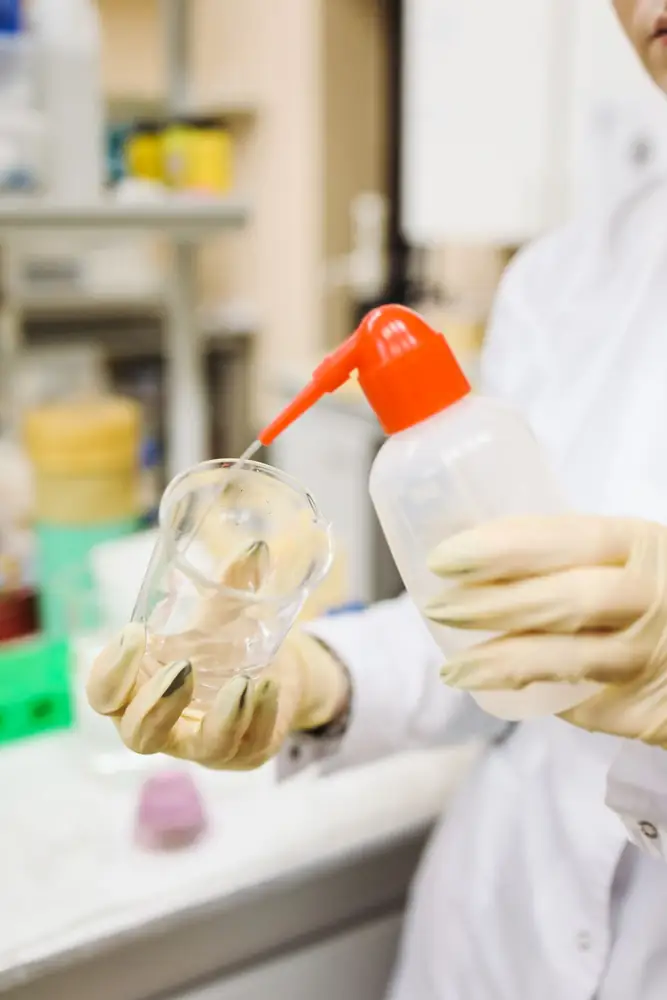
Photograph · source and license
The image, credit, reuse license, editorial context and delivered file are recorded in the exact Sites editorial review. This review is separate from the article’s canonical CIE assessment.
Image and publication standards →At a glance
- Match system, sample and report identifiers before interpreting a result.
- Collection, receipt, analysis and publication are different events.
- Separate a resident’s concern from a laboratory finding and an agency determination.
In this story
One page can sit inside a longer chain
A laboratory page can be the most concrete item in a public conversation about water and still answer only part of the question. Before drawing a conclusion, identify the regulated system, the particular sample and the version of the report.
A result copied out of its document loses the fields that help a reader understand its origin.
VDH’s laboratory information describes the Office of Drinking Water’s role in receiving analytical data and reporting through the Compliance Monitoring Data Portal. The Division of Consolidated Laboratory Services describes certification or accreditation routes and laboratory quality systems.
These official descriptions explain why both the analytical record and its reporting context matter. They establish no finding about a particular Gretna-area sample.
Begin with a question small enough to test
Write the question in one sentence. You may be trying to establish whether a supplied report concerns a named sampling location on a named date.
Or you may be trying to connect a resident’s concern with the records showing what an agency investigated. Those are different inquiries.
Decide which one the available documents can help answer before searching for a broader conclusion.
Keep a resident’s account in a separate note, using the person’s own characterization accurately if permission and context allow publication. A reported color, odor or other concern is evidence of what that resident described.
It is not automatically an analytical identification, a system-wide condition or a finding of cause. The record may eventually connect them, but the connection must be demonstrated.
Make an identity table before a result table
For each file, record the system name and identifier, sample identifier, location wording, document creator and report version. Copy codes exactly.
If two identifiers appear, ask what each represents rather than assuming one is an error. A field used by a laboratory and a field used by a regulator may have different purposes.
VDH says its public Drinking Water Viewer typically includes reported sample results, sampling requirements and other waterworks information. Treat that portal as an additional record source, then compare it carefully with the supplied file.
The viewer’s scope is regulated public waterworks; it does not cover every water supply. A missing match therefore requires clarification about identity, dates and scope before it supports any broader interpretation.
Keep the dates in their own columns
Use separate columns for collection, laboratory receipt, analysis, report issue and the date the public obtained the document. Do not treat a recent email attachment as evidence of a recent sample.
If a field is blank, note that it is blank in the copy reviewed. If a date appears only in correspondence, identify the correspondence as the source.
EPA’s 2017 guidance for unknown contaminants contains a section on sample documentation, including identification, collection records and chain of custody. The document expressly presents guidance rather than universally binding requirements.
Its discussion illustrates the documentary importance of tracking a sample; it should not be turned into a claim that every routine local sample must use an identical form.
Read the actual fields without supplying missing meaning
In a working transcript, preserve the analyte name, result wording, unit, method and any qualifier or footnote exactly as the report presents them. If a symbol or abbreviation is unclear, ask the laboratory or responsible agency what it means in that report.
Resist converting a field into everyday language before its meaning is established.
Keep comparison values in a separate column with their source and applicable date. A casual comparison between two numbers can hide different units, methods, sampling purposes or reporting conventions.
This guide does not supply health thresholds or interpret a particular result. Its practical recommendation is to take a complete record to the official source that can explain those distinctions.
Turn a discrepancy into a specific follow-up
Suppose a resident asks about one street while the file supplied names another location. The next question is which existing record links the sample identifier to the location and purpose of collection.
A field log, collection record or explanatory correspondence may answer it. Do not conclude from the mismatch alone that the result is fraudulent, irrelevant or deliberately substituted.
If the supplied report is revised, preserve both copies. Ask what changed and which version the issuer considers final.
Distinguish a corrected administrative field from a changed analytical finding only when the issuer’s explanation or the documents support that distinction. A revision is a research event whose importance depends on its content, not a predetermined sign of misconduct.
Publish a trail, with the remaining question visible
A responsible public account can state the system and sample identifiers, the document dates, what the report expressly records and what additional record was sought. It can also state that an agency explanation was requested and has not yet been obtained, if that is true in the reporting record.
Do not invent that exchange for a draft or imply that this guide conducted one.
This approach leaves room for both scrutiny and correction. A resident’s concern can be taken seriously while a laboratory result retains its actual scope.
An official explanation can be examined without becoming proof merely because it is official. The result is a documentary conversation in which neighbors know what was reviewed, what each source can establish and which question still needs an answer.
Make the public copy readable without changing the source
For readers, place a short index before a large record collection: file title, document date, sample identifier and the question it helps answer. Link the original where appropriate and make any transcription clearly separate.
A readable index can reduce confusion without altering a laboratory page or pretending to interpret a field that remains unexplained.
Keep private account or personal contact information out of the public index. If a redacted copy is used, describe the redaction at a general level so readers know why the public version differs.
The essential aim is to preserve the analytical and documentary context while giving neighbors a usable route through it.
Sources & verification
Primary agency description of analytical-result reporting through CMDP and Office of Drinking Water oversight. Numeric contaminant thresholds on the page are not used.
Read the sourcePrimary agency explanation of laboratory certification/accreditation and quality systems; no certification finding about a named lab made.
Read the sourceFebruary 2017 guidance, especially section 6 on documentation and chain of custody. Guidance is expressly nonbinding and not a universal checklist for routine samples.
Read the sourceVDH describes the public Drinking Water Viewer and explicitly excludes private wells and other systems outside regulated waterworks.
Read the sourceThis article was written with AI assistance from the linked sources. No firsthand interview or visit is implied. Source dates and limits are identified in the reporting. Advertising does not determine editorial coverage. Request a correction or read our standards.
EVERY NEIGHBOR HAS A VOICE
Keep the conversation going.
Share experiences, ask questions and link evidence for factual claims. Comments here are saved for qualitative source and context review before publication. Comments are independent community discussion, not submissions to a government body.
Sign in to join · freeCommunity standards