
History Community · County
A Pittsylvania family story needs both the courthouse file and the family box
Public records and privately kept memories can deepen a community history when their origins stay visible.
Checking whether this browser can read the story aloud.
Explore related topics
Sources & editorial review
Sites editorial review recorded for this exact revision. This AI-assisted article or learning resource includes source links and credited contextual imagery.
This is a local editorial review, not a canonical Cultural Imprint Engine assessment. No CIE score is claimed. Source review does not verify third-party playback, provider availability or image pixels.
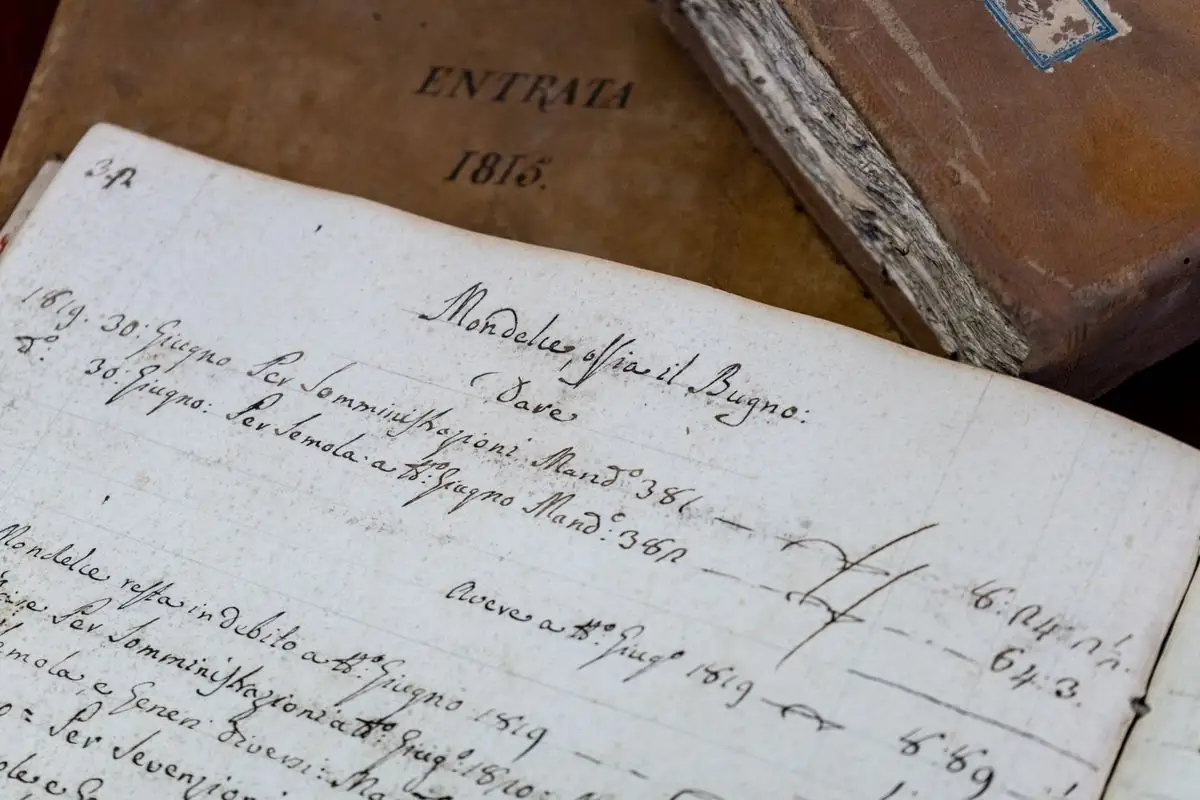
Photograph · source and license
The image, credit, reuse license, editorial context and delivered file are recorded in the exact Sites editorial review. This review is separate from the article’s canonical CIE assessment.
Image and publication standards →At a glance
- The county archive preserves court records from its early history.
- Records of slavery and emancipation need the context of their creation.
- Family material can add a perspective that an official file does not contain.
In this story
Begin with the archive and the question
Pittsylvania County’s Historical Records Division describes county court records dating to the county’s formation in 1767. Its portal links digitized material, marriage records and a Register of Free Negroes for 1807–1865, while explaining that preservation can affect availability.
The public library’s research portal provides another route into genealogy and local history. These institutions offer starting points, not a complete account of every family.
A productive question is smaller than an entire lineage. Choose a person, household or organization, a likely period and a fact to establish.
You might investigate whether two similarly named people are the same person, which locality held a record or where a family connection first appears. State the uncertainty before opening the next search result.
Read why the official document existed
The Library of Virginia’s Virginia Untold account explains the value of bringing several record types together for African American history. The implication for a researcher is to examine the purpose of each document before adopting its description as the story of a person.
A court clerk, property owner or official wrote for a task; that task shaped what the record included.
Historical language can record a system of coercion, legal classification or inequality. Preserve the necessary wording accurately when it is essential to understand the source, but explain who used it and why.
Do not reproduce dehumanizing terms as your own descriptions of people. Nor should a document’s confidence make an unsupported assertion true.
Ask which part records an action, which part records testimony and which part expresses the creator’s judgment.
Keep identity links separate from possibilities
In a name-based search, create an entry for each possible person. Record the spelling, age or approximate period, residence, household relationships and source citation.
When another source seems to match, note the features that support the connection and any feature that conflicts. A common surname in the same county may be promising while still requiring more evidence.
Do not solve a gap by selecting the most convenient record. An apparently fitting date may concern a namesake; a family relationship may have been inferred by a later compiler.
Preserve those possibilities until the evidence distinguishes them. A research notebook can carry an unresolved match without a published account presenting it as established fact.
The next discovery may become useful precisely because earlier uncertainty was kept visible.
Understand the transition represented by a record
The Library of Virginia’s description of the 1866 Roanoke County cohabitation register explains its role in documenting formerly enslaved couples and families after emancipation. It is a Roanoke record, not a Pittsylvania finding.
Used as a contextual example, it shows why the moment and legal purpose of a record matter alongside the names it contains.
A family researcher should ask whether comparable material exists for the locality and period actually under study, then inspect the relevant original or reproduction. Do not transfer a detail from one county’s example to another family.
A register can reveal relationships recorded at a particular time without explaining every earlier separation, reunion or change in household. The evidence can be powerful while the life remains larger than its entry.
A dispute file contains more than a verdict
The Library of Virginia’s Chancery Records Index describes equity cases and their extensive witness testimony, with indexed or digitized material varying by locality. That explains why a family search can benefit from looking beyond a final order or a name index.
A case may include several statements created by people with different roles in the dispute.
Keep each statement attached to its speaker or author and the document date. An allegation in a pleading is not the same as a fact found by the court.
A witness’s recollection is not automatically a complete description of events. Read the disposition when it is available and identify whether a conclusion rests on it or on another item.
Historical reporting should not revive an untested accusation as a settled biography.
The family box has provenance too
Letters, photographs, receipts, programs and handwritten notes can add details absent from official records. Begin by recording who kept the material, how it came to the researcher and any known connection to the subject.
Preserve the order of a group before separating individual items. An envelope, annotation or neighboring photograph may supply context that a scan of the front alone would miss.
The National Archives offers guidance for preserving family papers and photographs, including handling, storage and digitization resources. Consult that guidance before attempting repairs or a display that might damage an original.
A digital copy can make material easier to read while the physical item may retain clues about its creation. Record what the copy includes and what it leaves out, especially when the back, enclosure or original sequence matters.
Prepare for access without assuming it
Before a repository visit, check the specific collection’s access rules and current availability. The county’s historical-records page describes a working archive and restrictions intended to protect records and sensitive information.
Follow the institution’s current instructions rather than arriving with an assumption that personal cameras or copying services will be available.
Send a concise question if help is needed. Include the record title or date range, locality, names and what you have already searched.
Staff can often clarify an index or the location of material more effectively when the question is bounded. Keep their explanation in the research log with its date.
If a record is temporarily unavailable, distinguish that access limit from evidence that the record does not exist.
Write an account another family can test
A finished community history should identify its sources and the connections they establish. Use a clear citation for the courthouse document and a provenance note for family material.
Distinguish an exact date from an approximation, a documented relationship from a suggested one and a remembered scene from a record of the event. Those distinctions let the reader value different forms of evidence without confusing them.
The result need not be a seamless story. A careful account can explain a known connection, acknowledge the next gap and invite additional evidence.
For Pittsylvania families whose experiences appear only partially in official archives, that approach respects both the importance of recovering history and the limits of what survives. It keeps people at the center while leaving a documentary trail strong enough to support correction, continuation and a wider community understanding.
Sources & verification
Primary clerk portal describes records dating to county formation in 1767 and links its Register of Free Negroes, 1807–1865; preservation may affect availability.
Read the sourcePrimary archive account explains how record types can be combined for African American historical research; records must be read in their creation context.
Read the sourceArchive description contextualizes the post-emancipation register. Roanoke example is not presented as a Pittsylvania record.
Read the sourcePrimary archive overview of chancery causes, witness testimony and indexed/digitized availability; no individual case finding asserted.
Read the sourcePrimary archival guidance portal for handling, storing, digitizing and caring for family papers and photographs; specialist conservation issues are not addressed by this draft.
Read the sourceLibrary research portal identifies genealogy resources and local newspaper archive resources. Availability should be confirmed with staff before travel.
Read the sourceThis article was written with AI assistance from the linked sources. No firsthand interview or visit is implied. Source dates and limits are identified in the reporting. Advertising does not determine editorial coverage. Request a correction or read our standards.
EVERY NEIGHBOR HAS A VOICE
Keep the conversation going.
Share experiences, ask questions and link evidence for factual claims. Comments here are saved for qualitative source and context review before publication. Comments are independent community discussion, not submissions to a government body.
Sign in to join · freeCommunity standards