
History Community · County
The missing newspaper years belong in a Southside history, too
An archive’s coverage shapes what a researcher can see about Gretna, Chatham and their regional connections.
Checking whether this browser can read the story aloud.
Explore related topics
Sources & editorial review
Sites editorial review recorded for this exact revision. This AI-assisted article or learning resource includes source links and credited contextual imagery.
This is a local editorial review, not a canonical Cultural Imprint Engine assessment. No CIE score is claimed. Source review does not verify third-party playback, provider availability or image pixels.
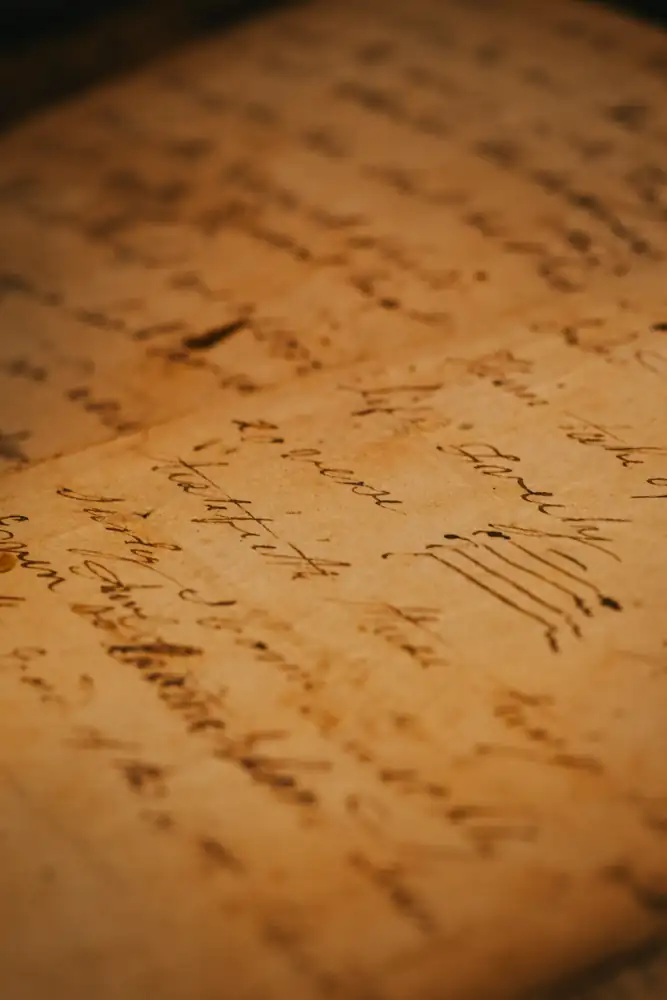
Photograph · source and license
The image, credit, reuse license, editorial context and delivered file are recorded in the exact Sites editorial review. This review is separate from the article’s canonical CIE assessment.
Image and publication standards →At a glance
- Check a title’s holdings and date coverage before interpreting a search.
- Digitized pages are a selection of the surviving record.
- Explain which people appear as speakers and which appear only through others’ accounts.
In this story
The search box does not contain the whole past
The Library of Virginia describes Virginia Chronicle as a freely searchable archive of digitized historical newspapers. The Library of Congress describes Chronicling America as a collection built through institutions selecting and digitizing newspaper pages.
The Library of Virginia’s Newspaper Directory supplies bibliographic and holdings information. Together, these resources help researchers begin; none makes a keyword result a complete account of a community.
For a Gretna or Chatham project connected to Danville, Lynchburg or Roanoke, identify the titles and years actually searched. A person may have been discussed in a neighboring city’s newspaper, in a local title that is not digitized or in an issue that did not survive.
The scope of the search belongs in the account of the result.
Make a coverage map before a narrative
Create a table with newspaper title, place of publication, date range needed, holdings located and digitized range examined. Keep the repository and access date beside each entry.
A catalogue can reveal that issues exist even when they are not available as searchable images. A digital interface may show one portion of a publication’s life rather than every year it printed.
Mark a missing year explicitly. Do not stretch adjacent evidence across it as if the record were continuous.
If a business appears in one available issue and another years later, those appearances establish two documented moments. They do not establish uninterrupted operation between them.
A coverage table makes that limit easy to see and identifies where another source could make the story stronger.
Separate no result from no event
An unsuccessful keyword search establishes the outcome of a particular search using particular terms. It does not establish that an event never happened or that nobody considered it important.
Try variant spellings, older place names and related organizations, then note which searches were attempted. Inspect issue images when the likely period and title make browsing practical.
Keep search decisions visible enough to repeat. Save the exact terms, filters and date range for a consequential claim.
If the interface changes, the record of the method still helps another researcher understand the result. Resist saying that the archive is silent until you can explain what part of it was examined and why that part was expected to contain the evidence.
Ask whose words reached the page
When an item is located, identify who is speaking. A reported statement, editorial, advertisement and letter express different relationships between writer, subject and audience.
A person may appear as an author in one item and as somebody described by another writer in the next. Do not merge those positions into one general claim about what the person believed or experienced.
For a neighborhood or group history, ask whether the available items include first-person voices or mostly outside descriptions. The question does not require assuming that every report is false or that a missing voice can be reconstructed by imagination.
It asks the researcher to state what kind of evidence is present and seek additional sources when the available perspective is too narrow for the intended story.
Treat repetition as a clue about circulation
A similar account may appear in more than one newspaper. Compare wording, dates and credited sources before calling the copies independent confirmation.
One may have reprinted another or drawn on the same announcement. Record that possibility rather than increasing confidence simply because a search produces several hits.
Conversely, a different account may concern a later stage of the same issue. Read the event date as well as the publication date, and preserve changes in what was proposed, reported or disputed.
A story about an expected opening cannot settle whether the opening took place. A correction or later follow-up should stay attached to the earlier clipping when it changes the claim a historian would otherwise make.
Bring another kind of record to the gap
The Library of Congress’s Virginia digital-collections guide offers routes into several types of online historical resources, while Pittsylvania’s public library research portal points to local history and genealogy material. Use those starting points to choose evidence suited to a missing fact.
A map may help locate a building; a court record may identify an action; a family letter may show an experience that never appeared in print.
The alternative source needs its own limits. A directory entry is not a full household story, and a family account may have been written long after the event.
Avoid using one source to repair every weakness in another. Describe how the sources relate: one establishes an address, another records a public statement and a third supplies a later recollection.
The distinction is the method, not an inconvenience to smooth away.
Write the coverage into the history
A concise research note can state the titles and date ranges examined, whether searchable text and page images were both used and what material remained unavailable. It can identify a gap that matters to the conclusion without overwhelming readers with every routine search.
The note should be specific enough that a future researcher knows where to continue.
Use the same discipline in the narrative. Say that a person appears in the issues reviewed, that a claim was printed on a known date or that a particular search found no match.
Avoid saying the newspaper proves a whole town’s opinion or that the absence of an article settles the importance of an event. Precision gives the account durability when new pages or another archive become available.
Let the unfinished archive improve the question
A gap can redirect the project productively. Instead of promising a complete history of a regional trade or community organization, investigate one documented period and explain why the next period remains less visible.
Compare the coverage available in Gretna’s county setting with the neighboring-city material only after identifying the titles and years in each group.
The result is a history that acknowledges how it was made. Readers can see the surviving public words, the missing intervals and the additional perspectives still needed.
That openness does not weaken local memory. It creates room for a family box, a newly catalogued issue or a better-identified photograph to change the account.
Southside’s past becomes more intelligible when the archive’s gaps remain part of the story rather than disappearing behind a confident search result.
Sources & verification
Primary state archive description of freely searchable digitized historical newspapers. Collection-size number is not used.
Read the sourcePrimary repository collection description identifies selection and digitization through participating cultural-heritage institutions. Search-index text retrieved; direct fetch failed.
Read the sourceDirectory describes bibliographic and holdings information for historical newspapers and routes to digitized material.
Read the sourcePrimary repository guide offers routes to online resources for Virginia family and local history. No local digitization completeness claim made.
Read the sourceLibrary research portal identifies genealogy resources and local newspaper archive resources. Availability should be confirmed with staff before travel.
Read the sourceThis article was written with AI assistance from the linked sources. No firsthand interview or visit is implied. Source dates and limits are identified in the reporting. Advertising does not determine editorial coverage. Request a correction or read our standards.
EVERY NEIGHBOR HAS A VOICE
Keep the conversation going.
Share experiences, ask questions and link evidence for factual claims. Comments here are saved for qualitative source and context review before publication. Comments are independent community discussion, not submissions to a government body.
Sign in to join · freeCommunity standards