
History Community · County
At Chatham’s history depot, a smaller question can open a larger story
A research visit works best when a name comes with a place, a period and a question.
Checking whether this browser can read the story aloud.
Explore related topics
Sources & editorial review
Sites editorial review recorded for this exact revision. This AI-assisted article or learning resource includes source links and credited contextual imagery.
This is a local editorial review, not a canonical Cultural Imprint Engine assessment. No CIE score is claimed. Source review does not verify third-party playback, provider availability or image pixels.
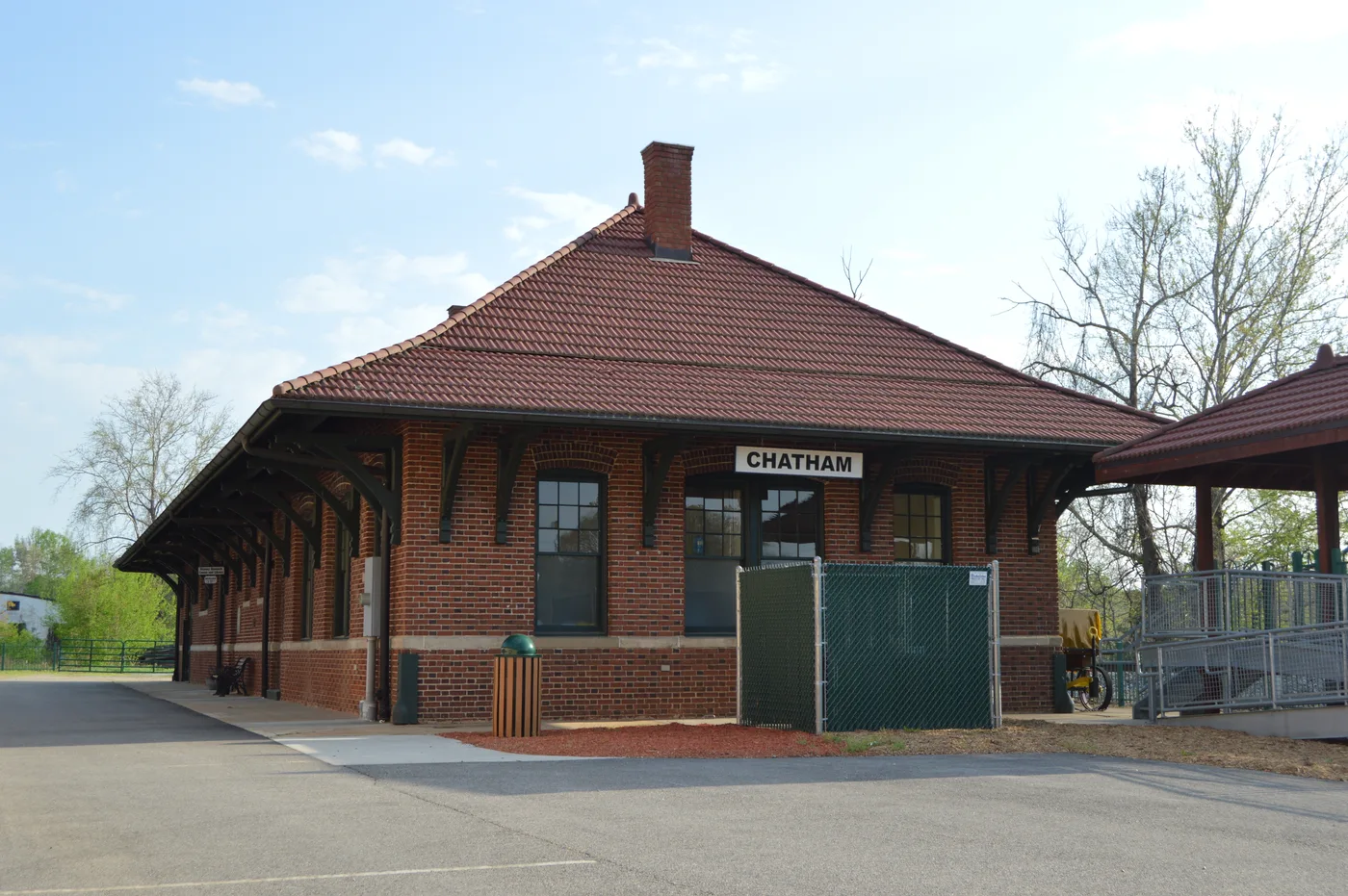
Photograph · source and license
The image, credit, reuse license, editorial context and delivered file are recorded in the exact Sites editorial review. This review is separate from the article’s canonical CIE assessment.
Image and publication standards →At a glance
- The former rail depot became a history research center.
- Start with a bounded question rather than an entire family tree.
- Write down the collection and page for each discovery.
In this story
A building with another working life
Pittsylvania County identifies the History Research Center and Library as operating since 2013 in Chatham’s former 1918 rail depot. The library research portal also points readers toward genealogy and local newspaper resources.
These are starting places for investigating the county’s past, rather than a promise that every family or event has an indexed file.
The depot connection offers a useful question of its own: how did people reach the places where they worked, shopped or attended school? A family name becomes more informative when attached to a route, an address or a nearby institution.
Bring one problem to the desk
Before a visit, write a short research note. Identify the person or organization, an approximate decade, the location used at the time and the particular fact you hope to establish.
A question about where a business stood is easier to work with than a request for everything about a surname. Include variant spellings and explain where the information came from.
Keep a list of sources already checked. It saves repetition and helps staff suggest a different kind of material.
Confirm access arrangements and available equipment with the repository before traveling; a website list does not establish that a fragile item can be handled immediately.
Make the discovery reusable
When an item answers the question, record its title, creator, date, collection identifier and page. When it raises a new question, keep that uncertainty beside the note.
Do not silently change a spelling or turn a rough date into an exact one.
A modest, well-documented discovery can become part of a school project, family account or community history. Its value grows when the next reader can retrace the path, inspect the same material and understand what the researcher still could not establish.
Sources & verification
County account identifies the History Research Center in the former 1918 Chatham depot and operation there since 2013.
Read the sourceLibrary research portal identifies genealogy resources and local newspaper archive resources. Availability should be confirmed with staff before travel.
Read the sourceThis article was written with AI assistance from the linked sources. No firsthand interview or visit is implied. Source dates and limits are identified in the reporting. Advertising does not determine editorial coverage. Request a correction or read our standards.
EVERY NEIGHBOR HAS A VOICE
Keep the conversation going.
Share experiences, ask questions and link evidence for factual claims. Comments here are saved for qualitative source and context review before publication. Comments are independent community discussion, not submissions to a government body.
Sign in to join · freeCommunity standards