History People · Virginia
At Booker T. Washington’s birthplace, the landscape opens a story about learning
A Franklin County visit connects an enslaved childhood, the pursuit of education and the questions left by a national leader’s legacy.
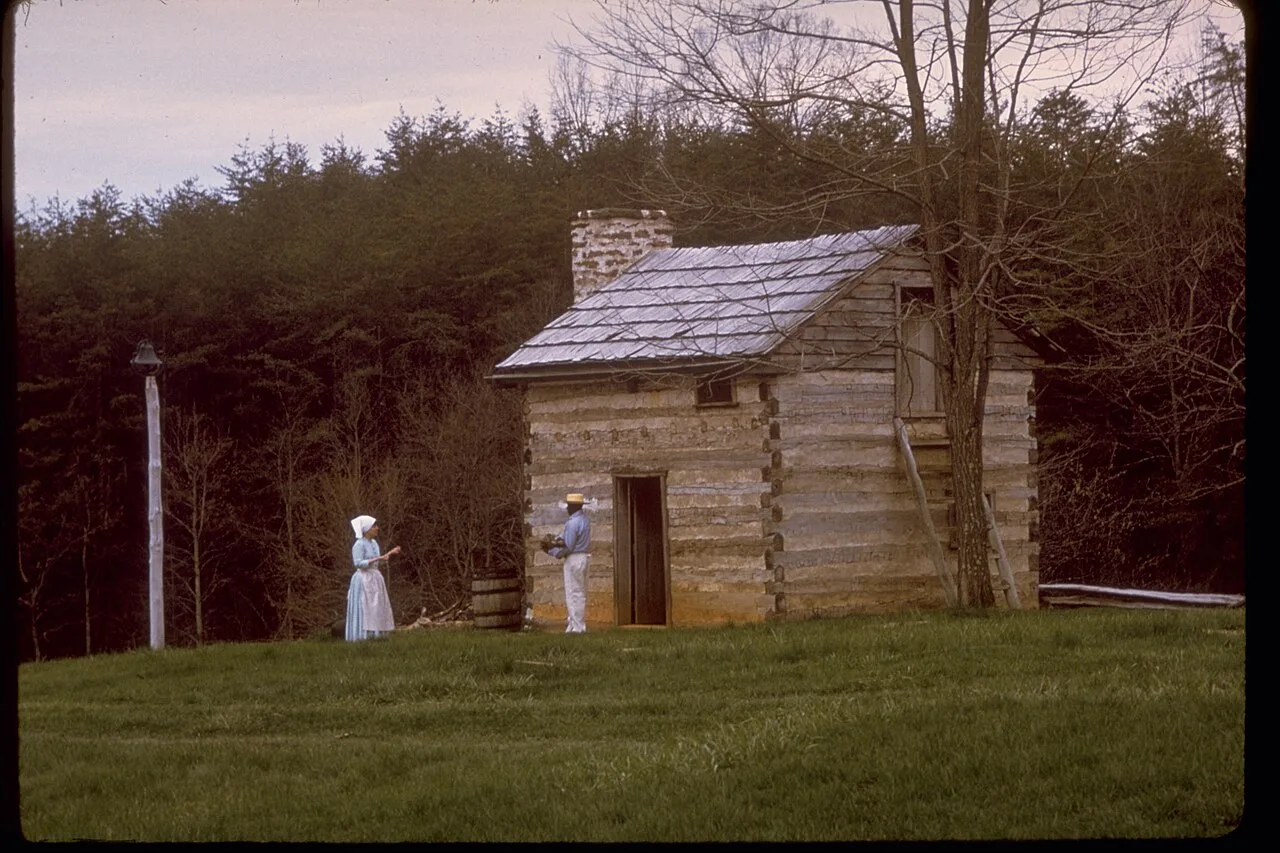
Image provenance · CIE 100/100
Assessment applies to the credited image record and its editorial context. Image delivery and the pictured event’s current status are not certified by a score. Receipt: d9233433-d608-44ff-8958-608572a5b2b1
Image & publication standards →At a glance
- The monument interprets Washington’s childhood on the Burroughs tobacco farm.
- His path to Hampton and Tuskegee linked education with work.
- Grounds and visitor-center hours differ, so choose the visit date accordingly.
In this story
Begin with the child who lived here
Booker T. Washington National Monument in Franklin County offers Gretna-area visitors an unusually direct place to begin a large American story.
Before Washington became a nationally known educator and speaker, he was a child living in slavery on the Burroughs tobacco farm. The park’s historical account places his birth in 1856.
His mother, Jane, was the household cook. Washington shared a one-room kitchen cabin with her and two siblings.
NPS describes childhood tasks that included carrying water to field workers, taking grain to a mill and carrying the Burroughs daughters’ books to school.
The contrast between carrying someone else’s schoolbooks and seeking an education of his own is a useful starting question for a visit. It keeps attention on the conditions of childhood before the story turns to the achievements of the adult.
Freedom opened a difficult journey
The monument’s account of emancipation places the family’s new possibilities within the upheaval following the Civil War. Freedom brought the chance to rebuild family life and pursue opportunities that slavery had denied.
It did not supply a ready-made path to an education.
In 1872, at 16, Washington set out for Hampton Institute in eastern Virginia. NPS describes a journey of more than 500 miles supported by money he had earned through extra domestic work.
When he could no longer afford train travel, he continued on foot.
For a modern family, this is worth considering as a journey with practical requirements: earning money, finding transportation and reaching a school far from home. Those requirements make the ambition concrete without making the obstacles seem small.
The education came with an argument
NPS’s account of the Hampton model describes Washington working as a janitor to support his studies. The school’s founder, Samuel Armstrong, emphasized agricultural and industrial training as a route to economic advancement after slavery.
The same account records the restrictions embedded in Armstrong’s thinking, including his opposition to Black political participation. Washington recognized the model’s practical advantages in a society marked by racial violence.
The educational opportunity and the limiting assumptions around it belonged to the same setting.
That tension deserves more than a slogan about hard work. A useful discussion asks what a school made possible, whose expectations shaped its curriculum, and which rights its educational philosophy failed to embrace.
Visitors can value the pursuit of learning while examining the constraints surrounding it.
A teacher built an institution
The National Park Service’s Tuskegee biography traces Washington from his Hampton graduation to teaching in Malden, West Virginia, and later at Hampton itself. In 1881 he went to Alabama to lead the new school at Tuskegee.
It opened on July 4 with 30 students.
That beginning connects the best-known institutional achievement of his life with earlier experience as both a student and a teacher. It also shifts attention toward the students whose own learning and work made the school possible.
NPS’s teaching materials about The Oaks, Washington’s Tuskegee home, include passages from his autobiography about students making bricks and furniture. Those accounts present practical production as part of education and the building of the institution.
They also invite questions about the demands placed on students and the purposes their labor served.
Read the public figure with questions
The monument’s timeline records the publication of Up from Slavery in 1901 and the emergence of W. E.
B. Du Bois as a prominent critic of Washington through his 1903 essay in The Souls of Black Folk.
Those works provide a route into the arguments surrounding Washington’s influence.
A visit need not settle those arguments to make them visible. Read Washington’s account as the work of a person explaining his own life and purposes, then compare it with criticism and the historical setting.
Ask who the intended audience was and what each writer believed education and citizenship should achieve.
This reading approach is our suggestion for continuing after the trip. It allows the birthplace to introduce a historical conversation whose consequences extended far beyond the farm.
Let the walking route serve the story
The park describes the Plantation Trail as a quarter-mile loop through the historic core, passing reconstructed buildings similar to those on the farm during Washington’s childhood. The distinction matters: these structures help interpret the setting, but they should not all be mistaken for surviving childhood buildings.
For a longer walk, the Jack-O-Lantern Branch Heritage Trail covers one and a half miles through fields and woods. Choose the route that suits your group, leaving time to read signs and talk about what the landscape adds to the history.
The published visitor-center hours are Wednesday through Sunday, 10 a.m. to 4 p.m.; grounds and restrooms are listed as open daily, 9 a.m. to 5 p.m. Check for changes before travel.
Anyone hoping to begin indoors should plan around the visitor-center days, especially when considering a Monday holiday outing.
Cultural & community review
Assessment passed This recorded version passed its cultural and community assessment.
- Reviews the cultural and community context of this editorial item.
- Source, rights and publisher checks remain separate.
- It does not score people or certify every fact.
Read the assessment record & limits
- This record applies to the identified content revision. Later changes require another assessment.
- Asset
- gj:article:booker-washington-birthplace-learning-landscape-2026
- Engine
- ct.algorithm.cie.v1 · 1.0.1
- Receipt
- 4a35f207-9b01-4fae-a5fc-24bd819f6a40
- Assessed
- Revision
- sha256-950eff2ae5e72f05e3eb2a37952089dfda7f58061dcb011b36fa608b16dc4cc0
- Record state
- eligible · PASS
- Binding
- BOUND
Sources & verification
March 30, 2015; checked September 7, 2026. Childhood, Jane, household and farm work.
Read the sourceFebruary 26, 2015; checked September 7, 2026. Postwar context and 1872 journey to Hampton.
Read the sourceFebruary 26, 2015; checked September 7, 2026. Educational philosophy, Washington’s employment and Armstrong’s restrictive political views.
Read the sourceFebruary 7, 2020; checked September 7, 2026. Teaching career and Tuskegee opening.
Read the sourceMay 11, 2023; checked September 7, 2026. Educational excerpts about student brickmaking and furniture work.
Read the sourceFebruary 26, 2015; checked September 7, 2026. 1901 autobiography and 1903 Du Bois criticism.
Read the sourceSeptember 3, 2026; checked September 7, 2026. Trail lengths and identification of reconstructed farm buildings.
Read the sourceJanuary 25, 2026; checked September 7, 2026. Separate visitor-center and grounds hours.
Read the sourceThis article was written with AI assistance from the linked sources. No firsthand interview or visit is implied. Source dates and limits are identified in the reporting. Advertising does not determine editorial coverage. Request a correction or read our standards.
EVERY NEIGHBOR HAS A VOICE
Keep the conversation going.
Share experiences, ask questions and link evidence for factual claims. Automated checks assess each version; posts that pass publish immediately with their CIE score and reasons. Comments are independent community discussion, not submissions to a government body.
Sign in to join · freeCommunity standards