
Explainer Science · World
Why an asteroid’s impact odds can disappear without the asteroid changing course
NASA’s March update on 2024 YR4 shows how better observations narrow uncertainty about a future path.
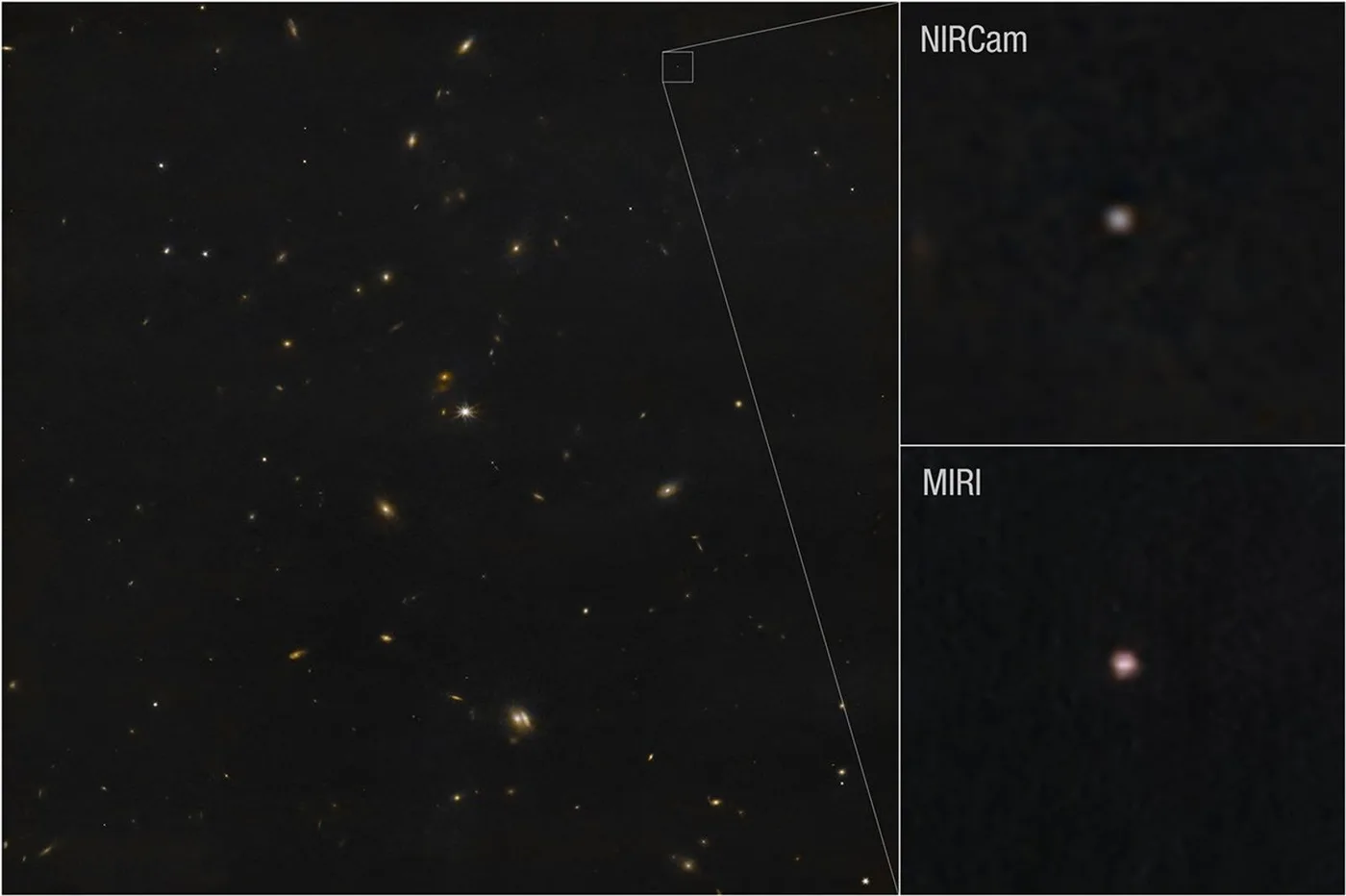
Image provenance · CIE 100/100
Assessment applies to the credited image record and its editorial context. Image delivery and the pictured event’s current status are not certified by a score. Receipt: 5af9d3a7-50a7-4d8c-9cd4-70eda83fa499
Image & publication standards →At a glance
- NASA ruled out a 2032 lunar impact in its March 5 update.
- The change reflected improved orbit knowledge.
- Risk tables describe possible paths consistent with available observations.
In this story
The updated finding
NASA reported March 5 that new James Webb Space Telescope observations ruled out asteroid 2024 YR4 hitting the Moon on December 22, 2032. Observations made February 18 and 26 allowed specialists at the Center for Near-Earth Object Studies to refine the asteroid’s orbit.
The updated calculation placed the expected passage about 13,200 miles above the lunar surface. Earlier analysis had put the lunar-impact probability at 4.3%.
NASA explicitly explained that the update reflected greater precision about the asteroid’s future location, rather than a change in its orbital path.
The agency also said earlier observations had established that the object poses no significant impact risk to Earth in 2032 or through the following century. The lunar question and the Earth-impact question should therefore be kept distinct.
An orbit begins as a range of possibilities
A newly discovered asteroid may have been observed for only a short time. Several slightly different paths can fit those observations within their measurement uncertainty.
Some possible paths can pass nearer Earth than others.
NASA’s Sentry introduction explains that additional observations constrain the range. An asteroid may appear in the impact-risk table while a collision remains among the paths consistent with the evidence, then leave the table when further observations exclude that possibility.
That does not mean the initial assessment was a fabricated scare. It means the assessment described what could be established at the time.
A useful report makes the uncertainty visible and updates the public when it changes.
A risk list is a monitoring tool
Sentry’s frequently asked questions distinguish a potential impact from a certain one. Its calculations examine future encounters and the uncertainty around orbital predictions.
An entry in the system is a reason for further analysis, not a statement that a collision will happen.
The quantity of available data matters, as does the length of time over which an object has been tracked. A narrowly measured orbit supports a different level of confidence from an orbit estimated from a brief initial sighting.
Read the update before sharing the old headline
When an asteroid story reappears in a social feed, check the object’s exact designation, the target body, the predicted encounter date and the date of the latest assessment. A headline about the Moon can become misleading when a repost drops that detail.
For students and families, 2024 YR4 offers a concrete example of science improving an answer. The important event was the collection of better observations.
The useful habit for readers is to follow the changing evidence, keeping the old percentage attached to the date when it applied.
Cultural & community review
Assessment passed This recorded version passed its cultural and community assessment.
- Reviews the cultural and community context of this editorial item.
- Source, rights and publisher checks remain separate.
- It does not score people or certify every fact.
Read the assessment record & limits
- This record applies to the identified content revision. Later changes require another assessment.
- Asset
- gj:article:asteroid-yr4-risk-update-explainer
- Engine
- ct.algorithm.cie.v1 · 1.0.1
- Receipt
- a4732730-9f77-4d2d-97c3-4c9ea9669754
- Assessed
- Revision
- sha256-bd2006619d3989c7c1c006135823fce470805f3111ba12e6bde6abba12d8211f
- Record state
- eligible · PASS
- Binding
- BOUND
Sources & verification
March 5, 2026; updated March 6, 2026; checked September 7, 2026. Primary YR4 orbit update and Earth-risk context.
Read the sourceUndated; checked September 7, 2026. Explains orbit uncertainty and removal of objects from risk tables.
Read the sourceUndated; checked September 7, 2026. Potential impact interpretation and monitoring context.
Read the sourceThis article was written with AI assistance from the linked sources. No firsthand interview or visit is implied. Source dates and limits are identified in the reporting. Advertising does not determine editorial coverage. Request a correction or read our standards.
EVERY NEIGHBOR HAS A VOICE
Keep the conversation going.
Share experiences, ask questions and link evidence for factual claims. Automated checks assess each version; posts that pass publish immediately with their CIE score and reasons. Comments are independent community discussion, not submissions to a government body.
Sign in to join · freeCommunity standards