News brief Science · World
Webb’s Lion Nebula pictures show what a dying star leaves behind
An August NASA release reveals gas and dust shaped by a star’s remains, with a useful lesson about reading space pictures.
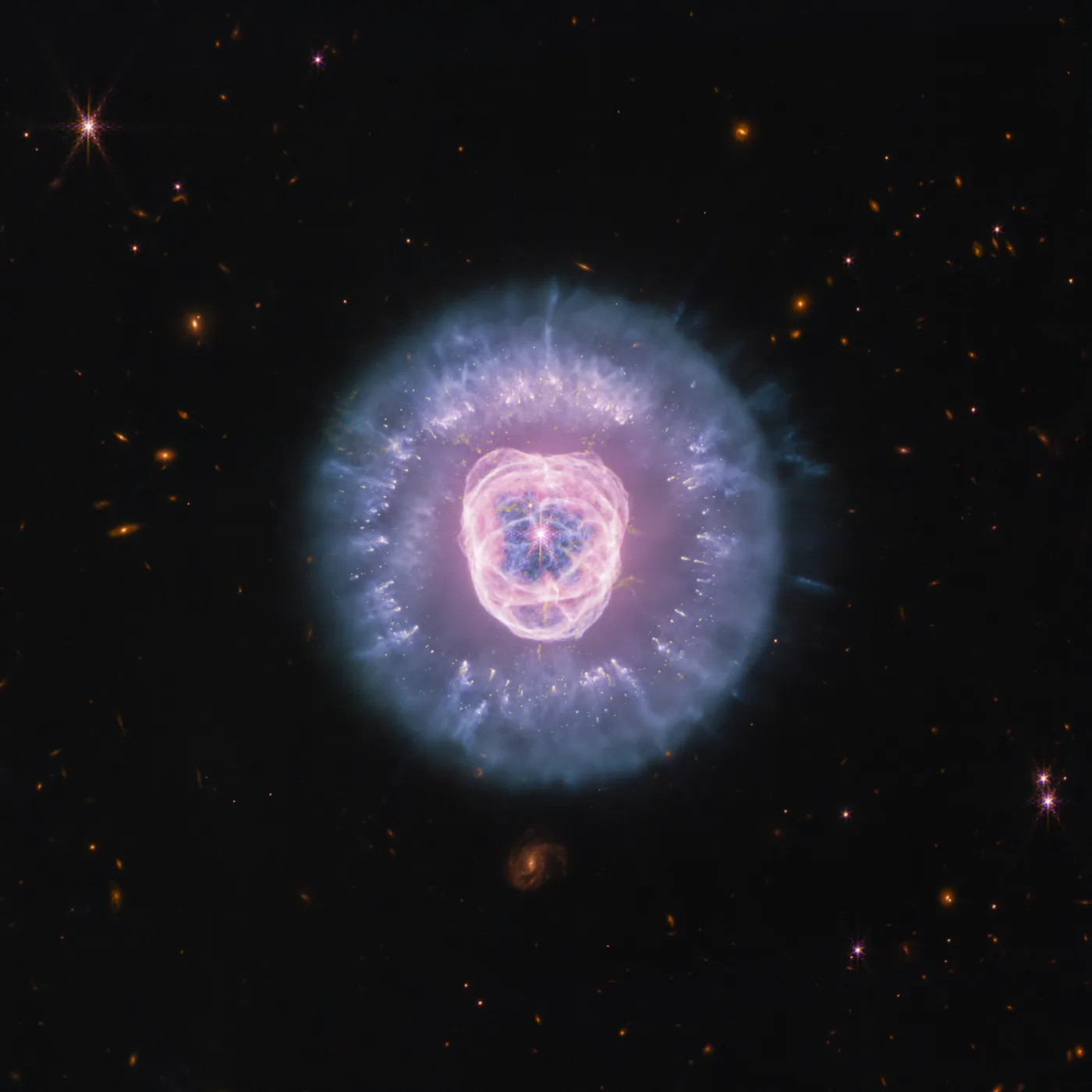
Image provenance · CIE 100/100
Assessment applies to the credited image record and its editorial context. Image delivery and the pictured event’s current status are not certified by a score. Receipt: 932a3e7c-3ea3-48e2-90ad-a1405fea041d
Image & publication standards →At a glance
- NASA released the new images August 10, 2026.
- Two Webb instruments reveal different structures in the nebula.
- The object is called a planetary nebula, but the picture is about a star’s late life.
In this story
A star at the center of the story
NASA released new James Webb Space Telescope views of the Lion Nebula on August 10, showing intricate gas and dust around a dying star’s remains. The object, cataloged as NGC 2392, takes its nickname from an appearance that suggests a face surrounded by a mane.
The images combine observations from Webb’s Near Infrared Camera and Mid Infrared Instrument. NASA says the infrared observations bring out compact dust clumps and ionized gas.
Radiation from the central stellar remnant continues to shape material that took thousands of years to reach its present arrangement.
Read the caption with the picture
Hubble observed the same nebula in visible light in 2000. Comparing the views is a chance to ask what different instruments reveal, rather than treating the newer picture as a simple replacement for the older one.
They observe different portions of the light spectrum.
For a family science conversation, start by locating the central star, then compare the surrounding rings and outer clumps. Read NASA’s instrument and processing credits alongside the image.
NASA’s separate image guide also explains that Webb pictures appear through multiple research organizations and that publicly available raw observations can be processed by others. When a striking space image circulates without context, the official image page is the best place to recover its object name, caption and origin.
Cultural & community review
Assessment passed This recorded version passed its cultural and community assessment.
- Reviews the cultural and community context of this editorial item.
- Source, rights and publisher checks remain separate.
- It does not score people or certify every fact.
Read the assessment record & limits
- This record applies to the identified content revision. Later changes require another assessment.
- Asset
- gj:article:webb-lion-nebula-august-2026
- Engine
- ct.algorithm.cie.v1 · 1.0.1
- Receipt
- e1ce5e3f-a080-4362-ae7d-92f90ff01daa
- Assessed
- Revision
- sha256-8f875e270cb65215913170c4604583b7d40fb308973fed8a6ffd88ce1c1bda5d
- Record state
- eligible · PASS
- Binding
- BOUND
Sources & verification
August 10, 2026; checked September 7, 2026. Primary mission release and image explanation.
Read the sourcePage includes April 28, 2026 update; checked September 7, 2026. Official guide to image sources and processing.
Read the sourceThis article was written with AI assistance from the linked sources. No firsthand interview or visit is implied. Source dates and limits are identified in the reporting. Advertising does not determine editorial coverage. Request a correction or read our standards.
EVERY NEIGHBOR HAS A VOICE
Keep the conversation going.
Share experiences, ask questions and link evidence for factual claims. Automated checks assess each version; posts that pass publish immediately with their CIE score and reasons. Comments are independent community discussion, not submissions to a government body.
Sign in to join · freeCommunity standards